
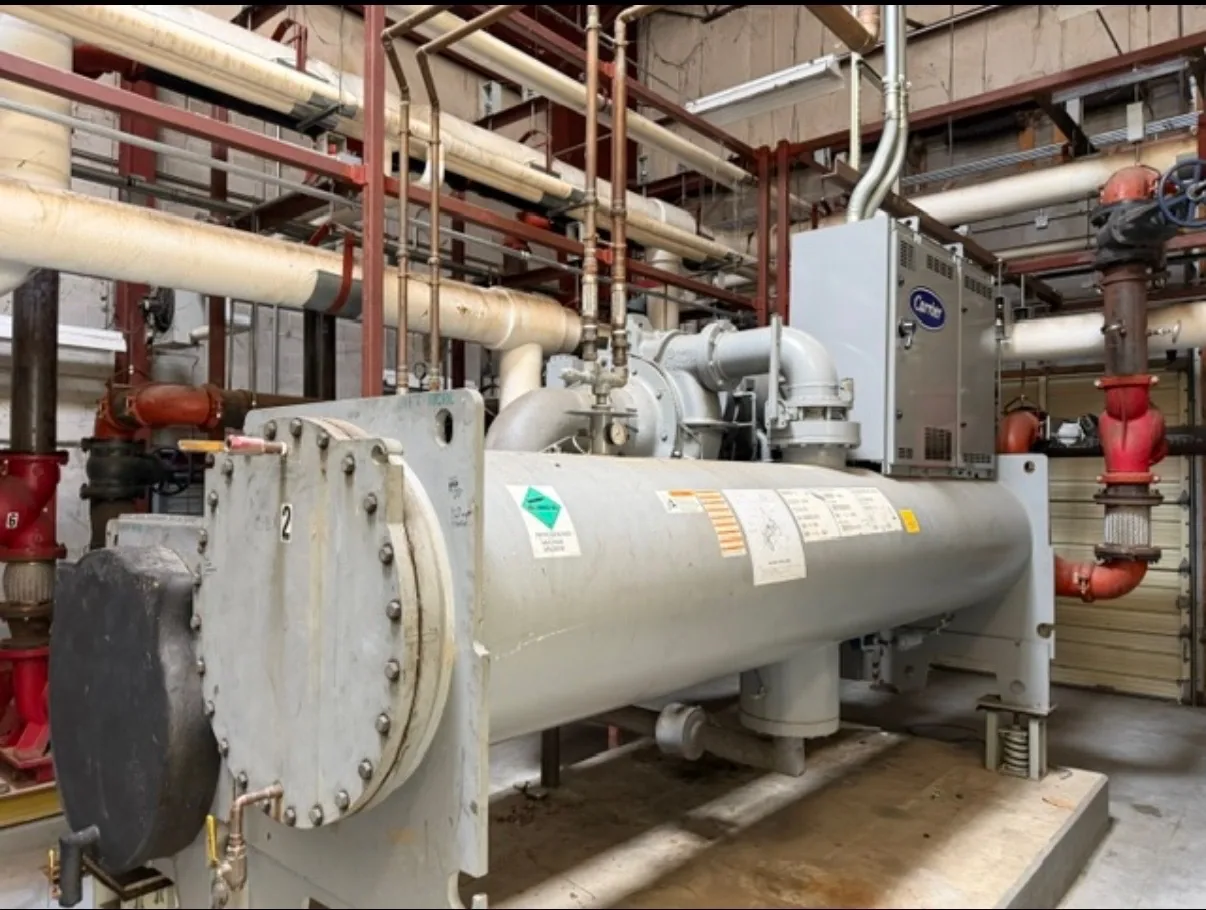

Facilities in Martinsburg, WV can contact us about selling a 50–99-ton chiller, even if the machine has already been retired. We buy air-cooled and water-cooled industrial chillers from 20 tons to 2,000-plus tons and provide cash offers and upfront payment. Testing is not required. Explain the machine's condition and what is included, then identify any access needs so the covered removal can be coordinated around the actual site.
Identify your 50–99-ton chiller
For a chiller in the 50–99 ton range, send the rated capacity shown on the unit or in a reliable schedule along with model and serial details. Do not add the capacities of several machines unless you also list each chiller individually. A clear inventory helps distinguish a single sale from a larger equipment package.
Describe where the chiller sits and whether removal involves a roof edge, equipment yard, interior corridor or other constraint. Include the approximate space around it if known. A shutdown unit can be reviewed without starting it; pictures, existing documentation and an honest description are the appropriate first steps.
Consider the needs of a hospital
A healthcare facility may need to keep other building systems operating while one chiller is retired. Identify which machine is available and whether nearby equipment must remain accessible. If a facilities team has restrictions on noise, patient routes, work windows or contractor access, share those requirements early. The seller does not need to put the chiller back into service or run a test for us.
When the plate is hard to read
A faded or inaccessible plate should not lead you to make up a model or capacity. Provide a safe photo of what is visible, plus any drawing, invoice or maintenance record you already have. Tell us which details are estimates. Another person familiar with the plant may be able to identify the machine, but no one should enter a hazardous area merely to gather information.
When several units share a plant
If other chillers share the room, mark the one being sold in a wide photograph and show the access path without disturbing active equipment. Explain which surrounding machines, pipes or controls need to remain in place. The layout of the particular plant determines the work sequence. A simple marked-up photo can prevent misunderstandings about the boundaries of the removal.
Selling from a property transition
During a building sale, lease change or closure, establish who owns the equipment and when access will be available. An inventory may identify the chiller, but current photographs show whether it still matches the paperwork. Let us know which contact can approve the transaction and which person can coordinate entry. A unit does not have to be running to be considered.
Allow for a staged facility transition
When a new cooling system is being installed, the old chiller may not become available on the same day as the purchase decision. Share the expected sequence and flag which dates are still tentative. The site contact can identify access needs and equipment that must remain active. We can begin discussing the chiller from current photos and records without requiring it to be tested or removed first.
From connection points to freight
We cover the disconnects, refrigerant recovery, rigging, crane work when needed, loading and freight for the purchased chiller. If the machine is connected to a shared system, identify the equipment that stays and explain any operating restrictions. The crew can plan around the real installation; the seller does not need to take apart piping or electrical connections to request an offer.
Request an offer from photos
Send the nameplate, a whole-unit photo and a short description to (614) 715-3047. Include the West Virginia location, condition and the best contact for access. We buy rather than sell chillers and can make a cash offer with upfront payment. You do not need to run a test, repair the chiller or obtain a new performance report before reaching out.
Bring existing information, not a test
A manufacturer plate, existing service record or clear photograph can answer many initial questions. You do not need to commission a report or start the chiller to establish an operating history. Send what you have, label estimates and explain missing information. Once the equipment and access are understood, the offer and covered removal can be coordinated with the appropriate owner and site contact.