
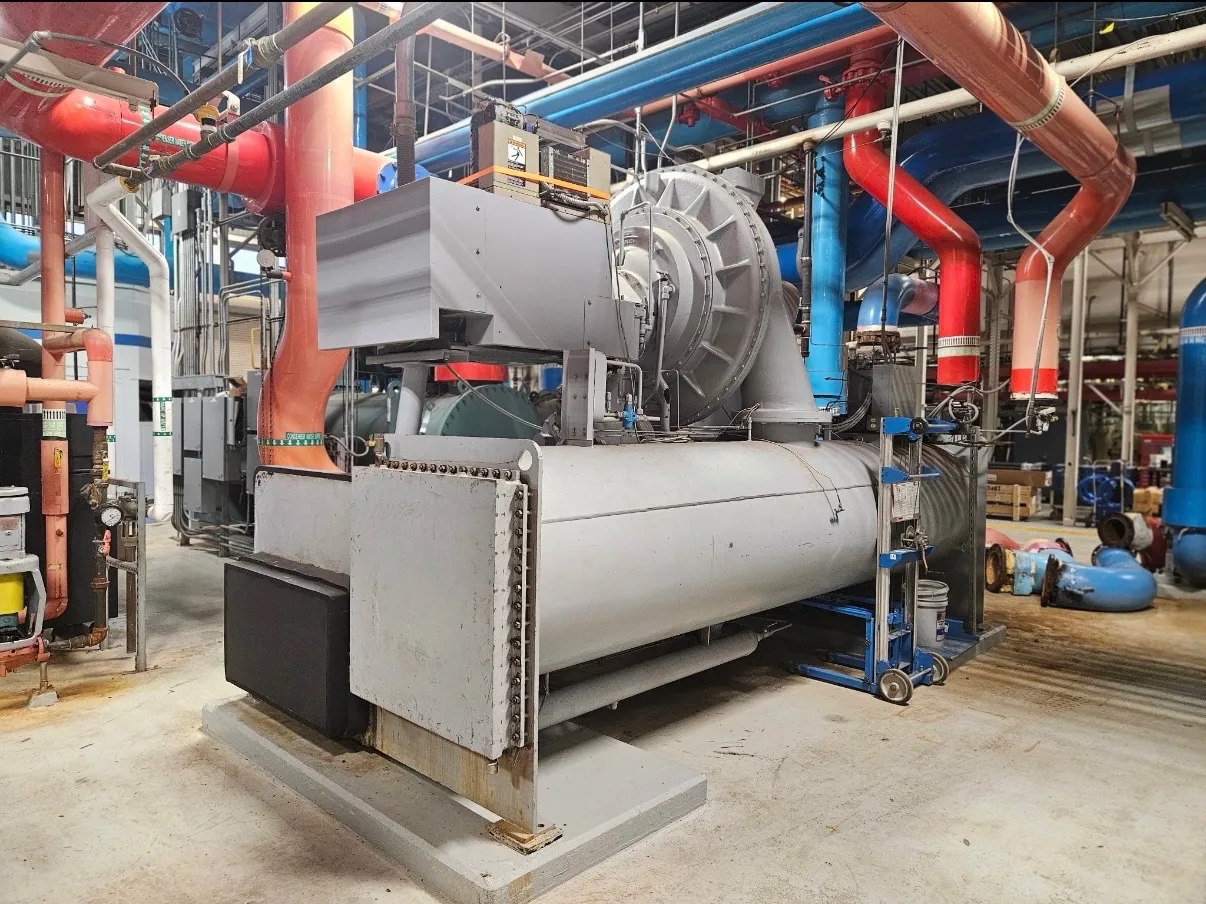
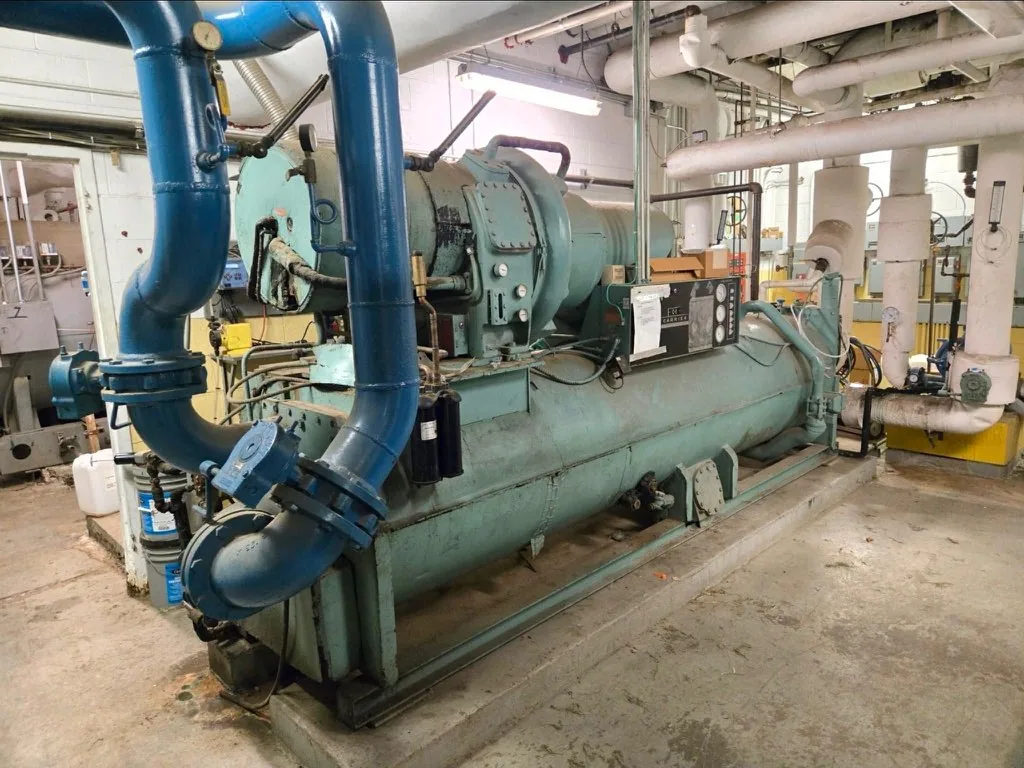
Owners of a 100–249-ton chiller in Martinsburg, WV can ask us about a sale whether the equipment is running or shut down. We buy air-cooled and water-cooled industrial chillers from 20 tons to 2,000-plus tons, with cash offers and upfront payment. No testing is required. Good photos, a clear description of what is included and a contact who understands the facility can make the next steps easier to coordinate.
Identify your 100–249-ton chiller
For a 100–249 ton chiller, start with its individual rated capacity and identifying plate. If the rating is missing or the only figure available is a plant total, explain that distinction. Photos of the complete assembly and any separate control or starter cabinet make it easier to define the equipment included in the sale.
Ask the site contact about the route between the chiller and a truck-accessible area. Doors, turns, curbs and occupied spaces may matter more than the capacity number alone. We consider both operating and nonrunning chillers and do not require the seller to run an operational test before requesting an offer.
Consider the needs of an office building
At an occupied office building, decide which chiller is included and whether an active tenant, parking area or loading dock affects access. The facilities team can flag building rules and the best contact for coordinating work. A photograph of the machine and its plate is more valuable than trying to estimate how much office space it once cooled. An operational demonstration is not needed.
Record the present condition
Describe the equipment as it sits today: connected or disconnected, complete or partly removed, running or shut down. Note visible damage or missing pieces and distinguish what you know from what is uncertain. Photos and an honest account are more useful than promising a performance level. We can review nonrunning equipment and do not require operational testing.
Considering a tight equipment yard
An outdoor equipment yard may contain fences, piping, curbs or other units that limit access. Take a wide picture from a safe position and note any gates or sections that cannot be disturbed. Show where the chiller ends and neighboring equipment begins. A clear boundary helps the removal discussion without assuming the machine can simply be rolled onto a truck.
When the schedule is uncertain
You can begin with equipment details even if the exact pickup date is not yet known. Explain the decision milestones, any proposed shutdown window and who must approve access. An early discussion helps define what information is missing without forcing the site to rush a removal. The final plan should reflect the actual unit, the facility's operating needs and an agreed schedule.
Read capacity and electrical information separately
Tons describe cooling capacity, while a motor or electrical rating describes a different characteristic. Do not convert an electrical number into a chiller capacity by assumption. If the plate lists several values and you are unsure which applies, send a clear photo rather than choosing one. For a plant with multiple machines, distinguish the individual unit's rating from any aggregate capacity shown on a building schedule.
What to tell the removal coordinator
Identify the chiller's location, the site contact and any restrictions on working hours or the route to a truck. We cover rigging, a crane when needed, disconnects, refrigerant recovery, loading and freight. Existing measurements or drawings are useful, but do not guess at the weight. The removal method is planned for the actual machine and verified site conditions.
Request an offer from photos
Send the nameplate, a whole-unit photo and a short description to (614) 715-3047. Include the West Virginia location, condition and the best contact for access. We buy rather than sell chillers and can make a cash offer with upfront payment. You do not need to run a test, repair the chiller or obtain a new performance report before reaching out.
Keep photos tied to the unit
A photograph of a label is useful only if it can be matched to the machine for sale. Include the whole chiller in a separate view and number the images when several units are present. Note whether a separate starter or control cabinet belongs to that machine. A small amount of organization helps both the offer discussion and the later removal handoff.