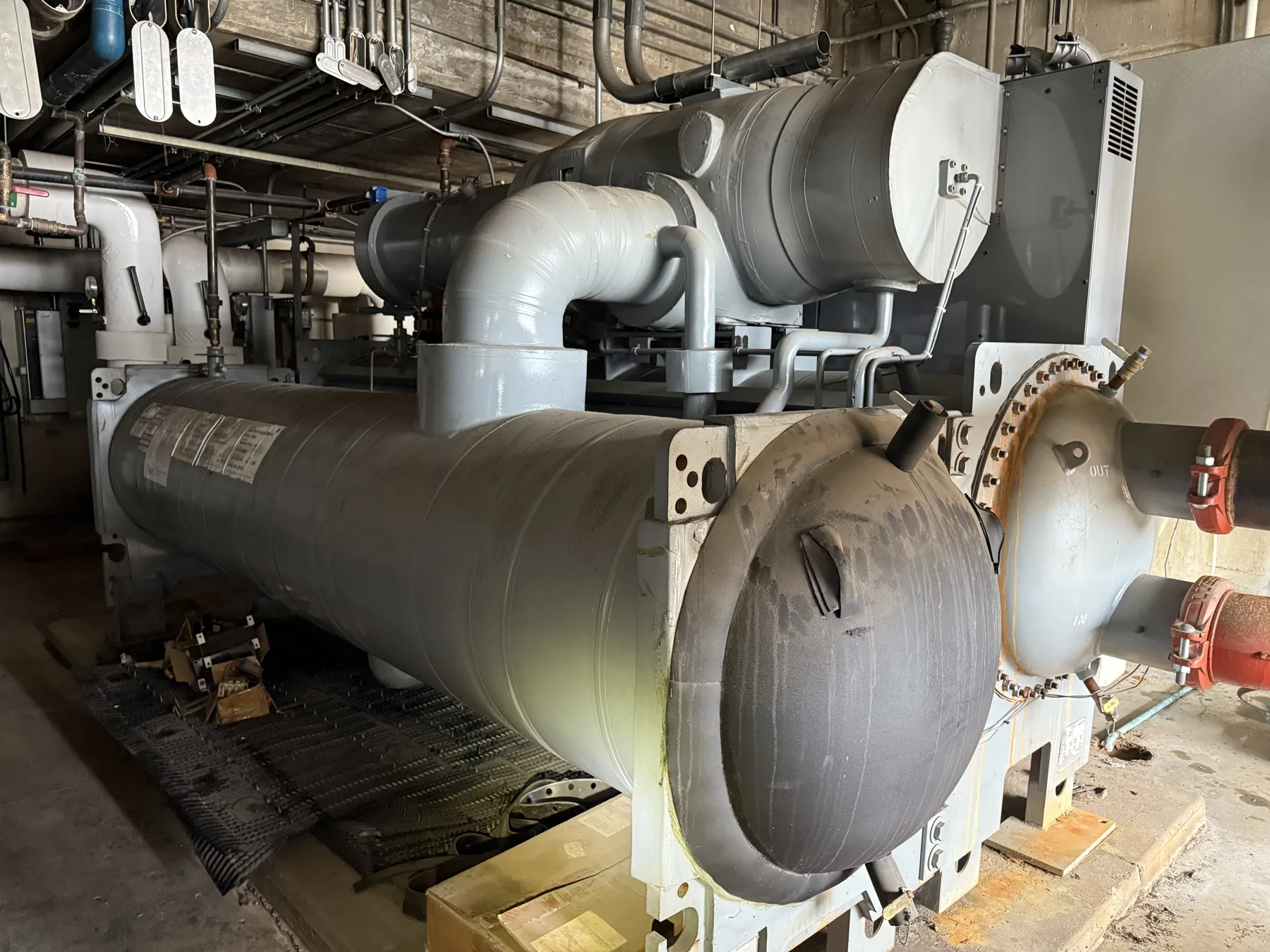
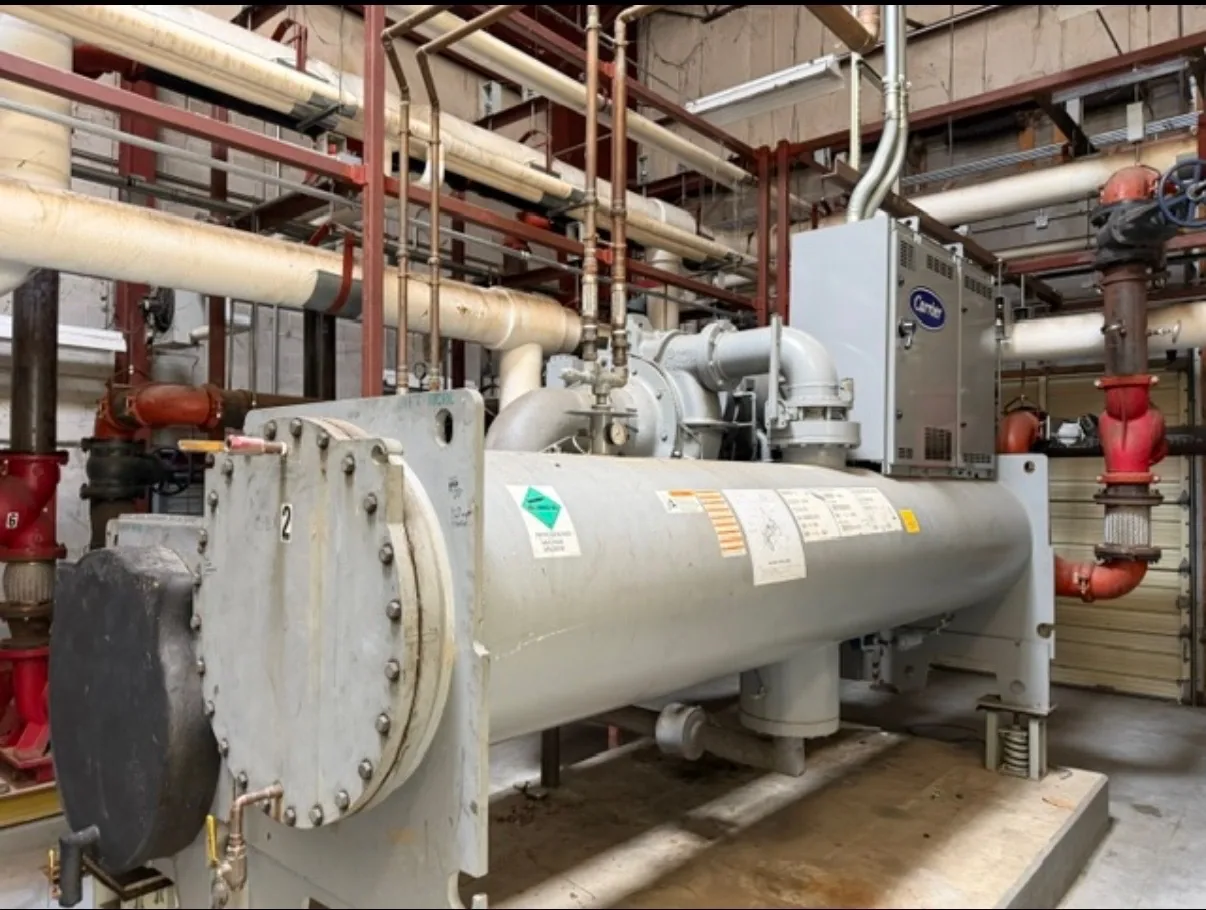
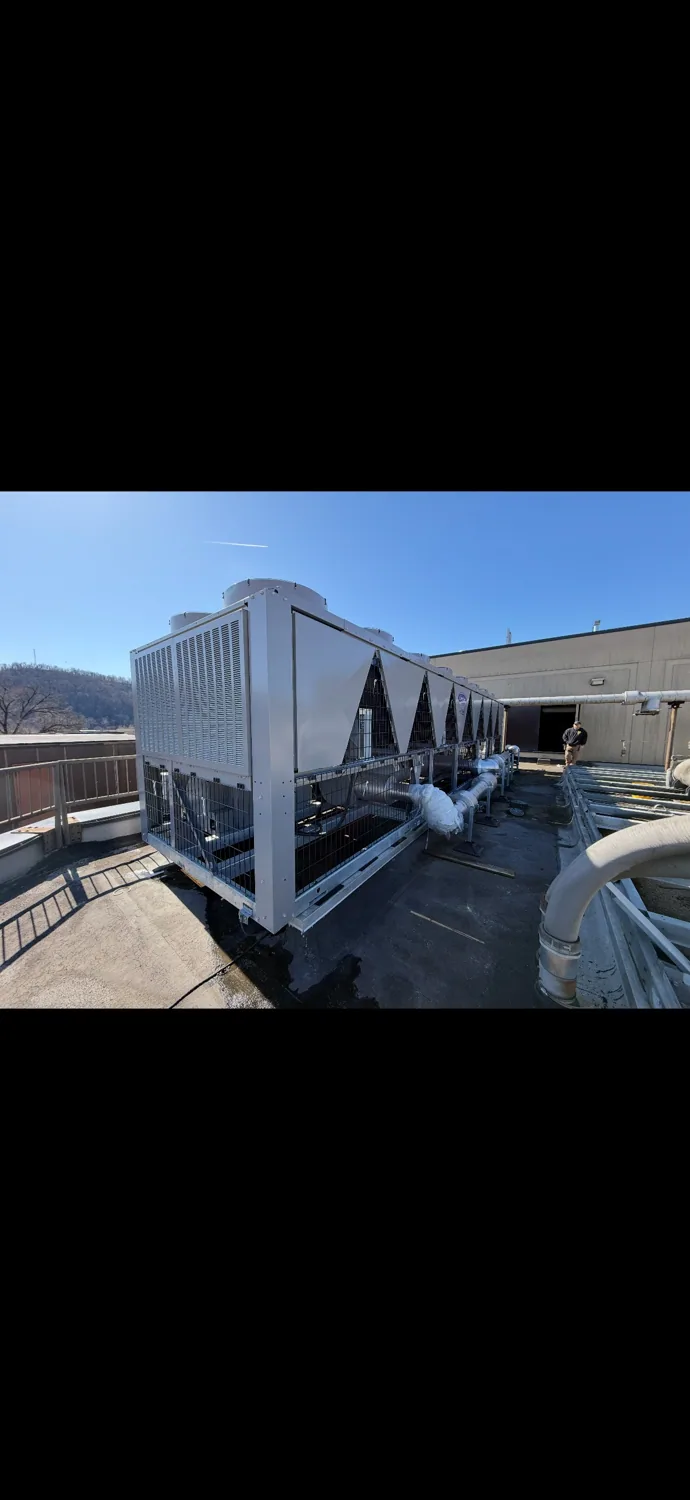
If a 50–99-ton chiller is scheduled for replacement or already shut down in Beckley, WV, a sale can start with current photos and the information you have. We buy commercial and industrial air-cooled and water-cooled chillers from 20 tons to 2,000-plus tons. Our process offers upfront payment and a cash offer without requiring testing. This page covers equipment identification, facility access and the removal work we handle.
Identify your 50–99-ton chiller
For a chiller in the 50–99 ton range, send the rated capacity shown on the unit or in a reliable schedule along with model and serial details. Do not add the capacities of several machines unless you also list each chiller individually. A clear inventory helps distinguish a single sale from a larger equipment package.
Describe where the chiller sits and whether removal involves a roof edge, equipment yard, interior corridor or other constraint. Include the approximate space around it if known. A shutdown unit can be reviewed without starting it; pictures, existing documentation and an honest description are the appropriate first steps.
Consider the needs of a manufacturing facility
At a manufacturing site, a chiller may have served either the building or a production process. Tell us what it cooled if known, but do not assume that its prior duty establishes its current condition. A production calendar, restricted loading area or clearance around adjacent lines can shape the removal schedule. Mark any equipment that must stay in place and identify the person coordinating site access.
Start with the nameplate
Photograph the equipment nameplate straight on if you can do so safely. Model, serial number, rated tons and electrical information may appear there, although labels vary. Include a wider picture so the plate can be matched to the right machine. If it is damaged or missing, say so and send whatever existing records or photographs are available instead of guessing at the numbers.
Overhead clearance and obstacles
For equipment near low ceilings, utility lines or overhead structures, mention the constraints you can see and share existing measurements if available. Avoid approaching an electrical hazard or climbing for a better angle. The crew can plan the actual rigging around the verified conditions. A description of obstacles is useful whether the machine is inside a plant room or outside in an equipment area.
If several departments are involved
A disposal decision may involve facilities, accounting and the property owner. Agree on the equipment being sold and appoint one contact to collect the model details and photographs. A second contact can coordinate site access if necessary. That division keeps the equipment description separate from the logistics and helps prevent a removed component from being mistaken for something still needed.
Tell us how the cooling was used
A chiller might have served a building's comfort cooling, a manufacturing process or another load. That history can help explain the installation, but it does not prove the machine's present capacity or condition. Share what is known and identify any equipment that still serves an active load. If the previous use is uncertain, say so; the actual chiller plate and photographs remain useful starting points.
Planning the work as a package
The service we cover spans rigging, crane work when needed, disconnects, refrigerant recovery, loading and freight. If the chiller has separate controls or loose pieces, identify whether they are included so the collection plan reflects the actual sale. Explain any building access or scheduling requirements early. Different machines need different handling; a tonnage figure alone is not a lift plan.
Getting the sale started
Text (614) 715-3047 with your chiller photos and the information already available to you. Include the equipment location and say whether the machine is still connected. We purchase rather than sell chillers, make cash offers and provide upfront payment for a purchase. A machine may be reviewed without being run or operationally tested, so there is no need to restart it for us.
Be clear about the equipment history
If you know the chiller was modified, damaged or taken out of service, say so and provide the available records. Unknown is an acceptable answer when a prior owner or contractor handled the work. Avoid assuming that a recent repair applies to every component in a multi-unit plant. The buyer can review what is documented without asking for a new operating test.