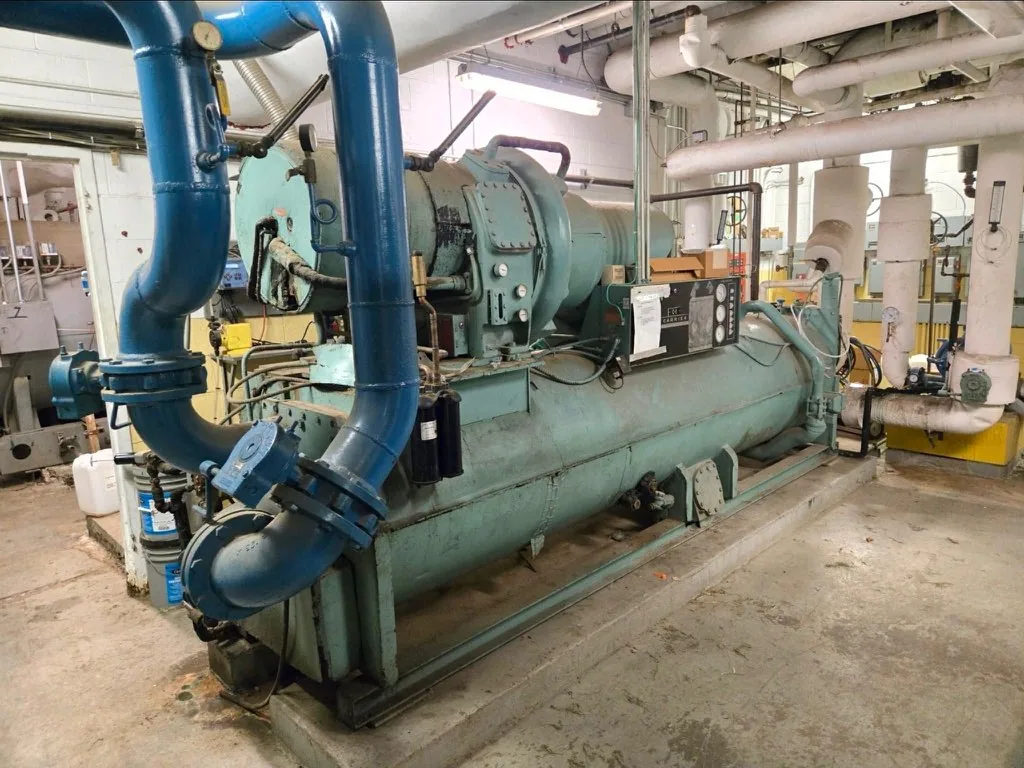


A chiller sale in Wheeling, WV starts with a clear picture of the equipment. If you own a 50–99-ton chiller, tell us its location, rated capacity if known and present condition. We buy commercial and industrial air-cooled and water-cooled chillers from 20 tons to 2,000-plus tons. Cash offers and upfront payment are part of our process, and we do not require testing. The following details help the owner and site team prepare.
Identify your 50–99-ton chiller
For a chiller in the 50–99 ton range, send the rated capacity shown on the unit or in a reliable schedule along with model and serial details. Do not add the capacities of several machines unless you also list each chiller individually. A clear inventory helps distinguish a single sale from a larger equipment package.
Describe where the chiller sits and whether removal involves a roof edge, equipment yard, interior corridor or other constraint. Include the approximate space around it if known. A shutdown unit can be reviewed without starting it; pictures, existing documentation and an honest description are the appropriate first steps.
Consider the needs of a hotel
For a hotel or other occupied lodging property, flag guest areas, delivery hours and any access routes that must remain open. A roof or mechanical-room location can affect how the unit leaves, so include a safe photograph of the surroundings. The previous cooling load does not need to be calculated to start a sale. Existing equipment identification and a practical access contact are more useful.
List separate components
Some chillers have a starter, controls or other components in a separate cabinet. Tell us what belongs to the machine and what is included in the proposed sale. Label loose items and note components already removed. A photograph showing the relationship between the main unit and separate cabinets can be especially helpful when the facility has more than one chiller.
When several units share a plant
If other chillers share the room, mark the one being sold in a wide photograph and show the access path without disturbing active equipment. Explain which surrounding machines, pipes or controls need to remain in place. The layout of the particular plant determines the work sequence. A simple marked-up photo can prevent misunderstandings about the boundaries of the removal.
Preparing without extra work
There is no need to clean, repair or restart a chiller just to begin a conversation. Gather existing pictures and the information you can safely read, then describe the location and condition. Tell us about known deadlines and the person responsible for access. We can review the machine without operational testing and coordinate the covered removal services as part of the transaction.
Keep the first photo set useful
A few organized images are more useful than a large collection with no labels. Include the whole machine, its identification plate, obvious missing components and a safe view of the surroundings. If multiple chillers are involved, use the same number for each unit's photos and notes. Avoid sending security credentials, private employee information or unrelated building documents when a basic equipment description will do.
Removal without arranging separate crews
Our purchase includes covered rigging, crane service when needed, disconnects, refrigerant recovery, loading and freight. A roof installation, a crowded mechanical room and a ground-level yard may each need a different sequence. Describe the actual setting and any known facility rules. The point is to coordinate the whole removal around the equipment rather than ask the seller to organize those services independently.
How the cash offer works
Text current photos and the machine's basic details to (614) 715-3047. We buy chillers; we do not sell replacement equipment. We review the information and can make a cash offer, with upfront payment for a purchase. No operational testing is required. If the model, capacity or condition is uncertain, tell us rather than delaying the conversation or guessing.
Protect the active operation
If other equipment must remain in service, show which chiller is being sold and tell the site coordinator what cannot be interrupted. Do not make assumptions about shared connections from appearance alone. Facility staff can provide existing drawings and explain operational boundaries. The removal plan should address the actual installation rather than treating every machine in a plant as independent.