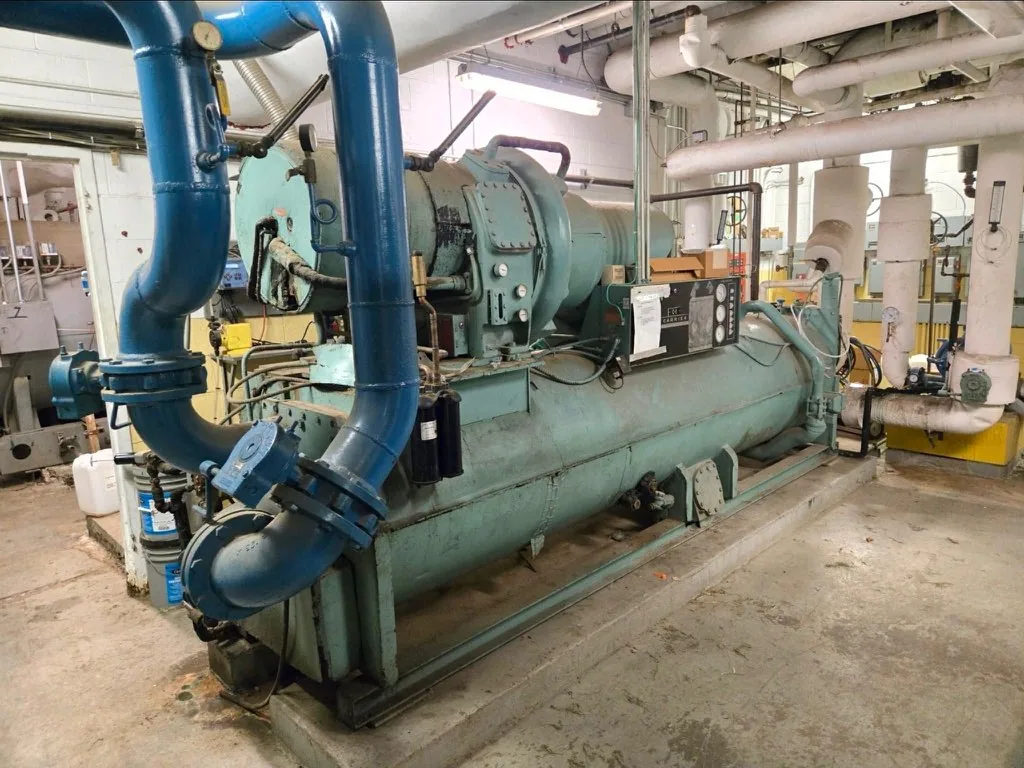


Owners of a 50–99-ton chiller in Clarksburg, WV can ask us about a sale whether the equipment is running or shut down. We buy air-cooled and water-cooled industrial chillers from 20 tons to 2,000-plus tons, with cash offers and upfront payment. No testing is required. Good photos, a clear description of what is included and a contact who understands the facility can make the next steps easier to coordinate.
Identify your 50–99-ton chiller
For a chiller in the 50–99 ton range, send the rated capacity shown on the unit or in a reliable schedule along with model and serial details. Do not add the capacities of several machines unless you also list each chiller individually. A clear inventory helps distinguish a single sale from a larger equipment package.
Describe where the chiller sits and whether removal involves a roof edge, equipment yard, interior corridor or other constraint. Include the approximate space around it if known. A shutdown unit can be reviewed without starting it; pictures, existing documentation and an honest description are the appropriate first steps.
Consider the needs of a food-processing facility
A food-processing site may have hygiene, traffic or production restrictions that affect the removal route. Explain any site-specific requirements to the removal coordinator and identify whether the retired chiller served a process or a building loop, if known. Do not disturb nearby equipment for a photograph. List the machine and any components being sold separately from systems that must remain active.
List separate components
Some chillers have a starter, controls or other components in a separate cabinet. Tell us what belongs to the machine and what is included in the proposed sale. Label loose items and note components already removed. A photograph showing the relationship between the main unit and separate cabinets can be especially helpful when the facility has more than one chiller.
Access around occupied operations
An occupied property may have delivery vehicles, staff movement or customer areas near the proposed route. Indicate the times or places that need special coordination and identify the person who can approve access. Photographs taken from a safe location can show the general setting. The goal is to plan the chiller removal around the real site, not assume that every facility has a clear path.
If several departments are involved
A disposal decision may involve facilities, accounting and the property owner. Agree on the equipment being sold and appoint one contact to collect the model details and photographs. A second contact can coordinate site access if necessary. That division keeps the equipment description separate from the logistics and helps prevent a removed component from being mistaken for something still needed.
Decide which supporting equipment stays
A chiller may be near pumps, a cooling tower, piping or controls that support the rest of a facility. Their proximity does not automatically make them part of the sale. Mark the chiller and any separate items being offered, and tell the site coordinator what must remain. Existing drawings can help, but a current photo is important if the installation has changed since the drawings were produced.
Removal without arranging separate crews
Our purchase includes covered rigging, crane service when needed, disconnects, refrigerant recovery, loading and freight. A roof installation, a crowded mechanical room and a ground-level yard may each need a different sequence. Describe the actual setting and any known facility rules. The point is to coordinate the whole removal around the equipment rather than ask the seller to organize those services independently.
From first photos to an offer
Show the equipment as it is and send the pictures to (614) 715-3047. Add the model, rated tons and refrigerant if known, plus a short note about access. We are a chiller buyer and make cash offers with upfront payment. We do not require operational testing and do not sell replacement chillers. An accurate description helps keep the transaction focused.
Keep the right contacts together
The person who can authorize a sale is not always the person who can open the equipment room. Provide a contact for ownership decisions and, if different, a site contact for entry and work coordination. Note any requirements for notifying building occupants. That simple handoff is especially useful when a chiller is being removed from a property that continues to operate.