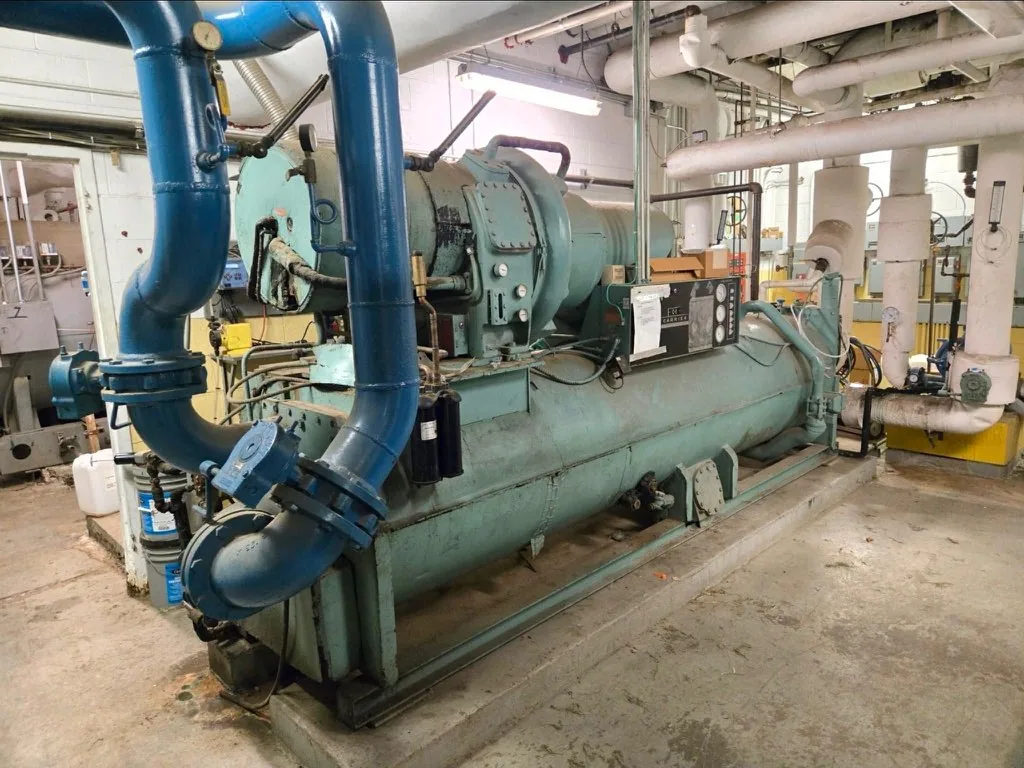


Selling a 50–99-ton chiller in Charleston, WV begins with a clear description of the unit and the place where it sits. We purchase industrial and commercial chillers from 20 tons to 2,000-plus tons, both air-cooled and water-cooled. You can request a cash offer without testing, and purchases include upfront payment. Use the guidance below to gather existing details and think through the site requirements before the equipment leaves.
Identify your 50–99-ton chiller
For a chiller in the 50–99 ton range, send the rated capacity shown on the unit or in a reliable schedule along with model and serial details. Do not add the capacities of several machines unless you also list each chiller individually. A clear inventory helps distinguish a single sale from a larger equipment package.
Describe where the chiller sits and whether removal involves a roof edge, equipment yard, interior corridor or other constraint. Include the approximate space around it if known. A shutdown unit can be reviewed without starting it; pictures, existing documentation and an honest description are the appropriate first steps.
Consider the needs of a hospital
A healthcare facility may need to keep other building systems operating while one chiller is retired. Identify which machine is available and whether nearby equipment must remain accessible. If a facilities team has restrictions on noise, patient routes, work windows or contractor access, share those requirements early. The seller does not need to put the chiller back into service or run a test for us.
Separate capacity from plant totals
Capacity is useful only when its scope is clear. A building schedule may show the combined capacity of several chillers, while the sale may include just one. Send the individual machine rating if available and identify any uncertainty. If there are several units, number them and photograph each plate. This avoids mistaking a plant total for the size of a single chiller.
Checking the loading area
A truck-accessible loading area is useful information even when the chiller itself is indoors. Note dock height, gate width if known, vehicle restrictions and whether another tenant controls the approach. These are planning questions, not a request for the seller to arrange transport. We cover loading and freight and coordinate the practical route with the site contact after reviewing the equipment.
If the chiller is already retired
A unit that has been off for months or years can still be submitted. Tell us when it was last known to operate if that information exists, but do not start it merely for a sale. Describe what is connected, what has been removed and whether the site is accessible. A practical account of the present condition matters more than an unsupported performance claim.
Describe the route without guessing the lift
A roof, equipment yard or interior plant room can each present different constraints. Note the location, accessible openings and nearby obstructions if you know them, and provide safe wide-angle photographs. Do not estimate a crane size or lift weight from the chiller's appearance. Those decisions depend on verified equipment and site details. We cover rigging and crane service when needed as part of the removal.
A practical removal discussion
An offer discussion can include the equipment's current location and how a crew could reach it. We cover rigging, crane service when needed, disconnects, refrigerant recovery, loading and freight. Let us know about occupied spaces, gates, plant-room doors or roof access, as applicable. The actual plan will depend on the unit and site, not an assumed standard procedure.
What to send for a cash offer
A nameplate photo, a view of the entire unit and a description of its present condition are a good start. Text them to (614) 715-3047 along with the city or county and a contact name. We buy chillers, provide upfront payment for a purchase and do not require operational testing. If you have more than one machine, label each photo set separately.
Use one inventory for multiple units
When selling several machines, keep an inventory with the same identifiers used in your photographs. Include each unit's location, model and capacity if known, plus the related loose parts. Mark units that are not for sale. This makes it easier to coordinate a staged pickup and avoids confusing a plant-wide capacity with the equipment included in one purchase.