
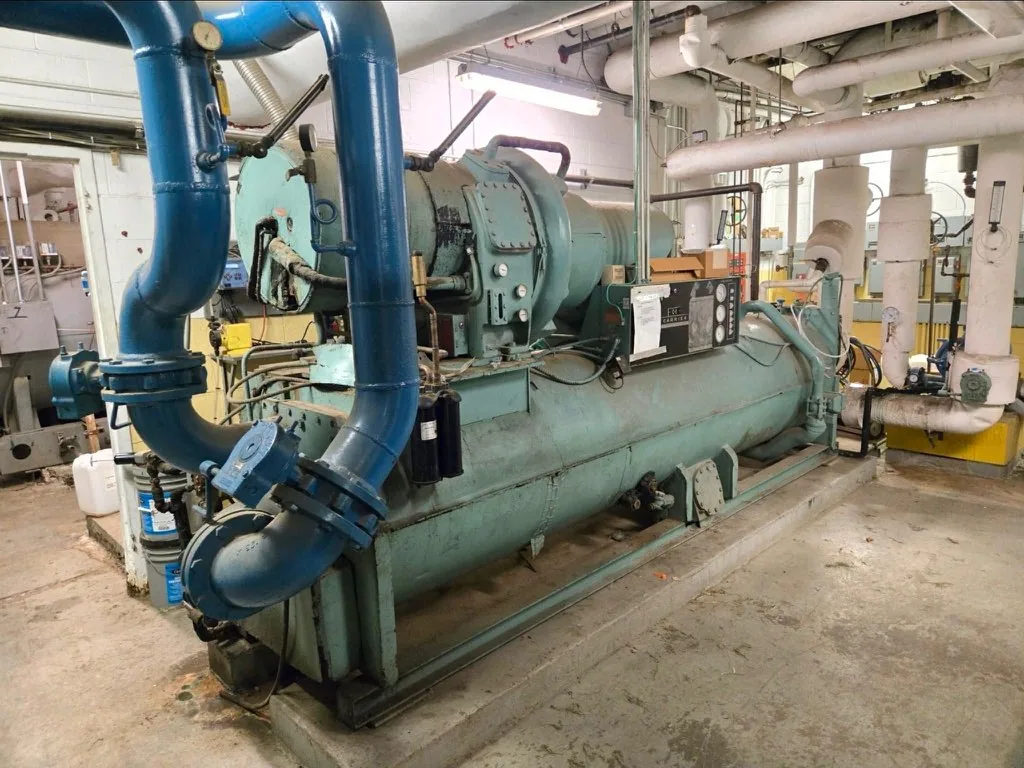
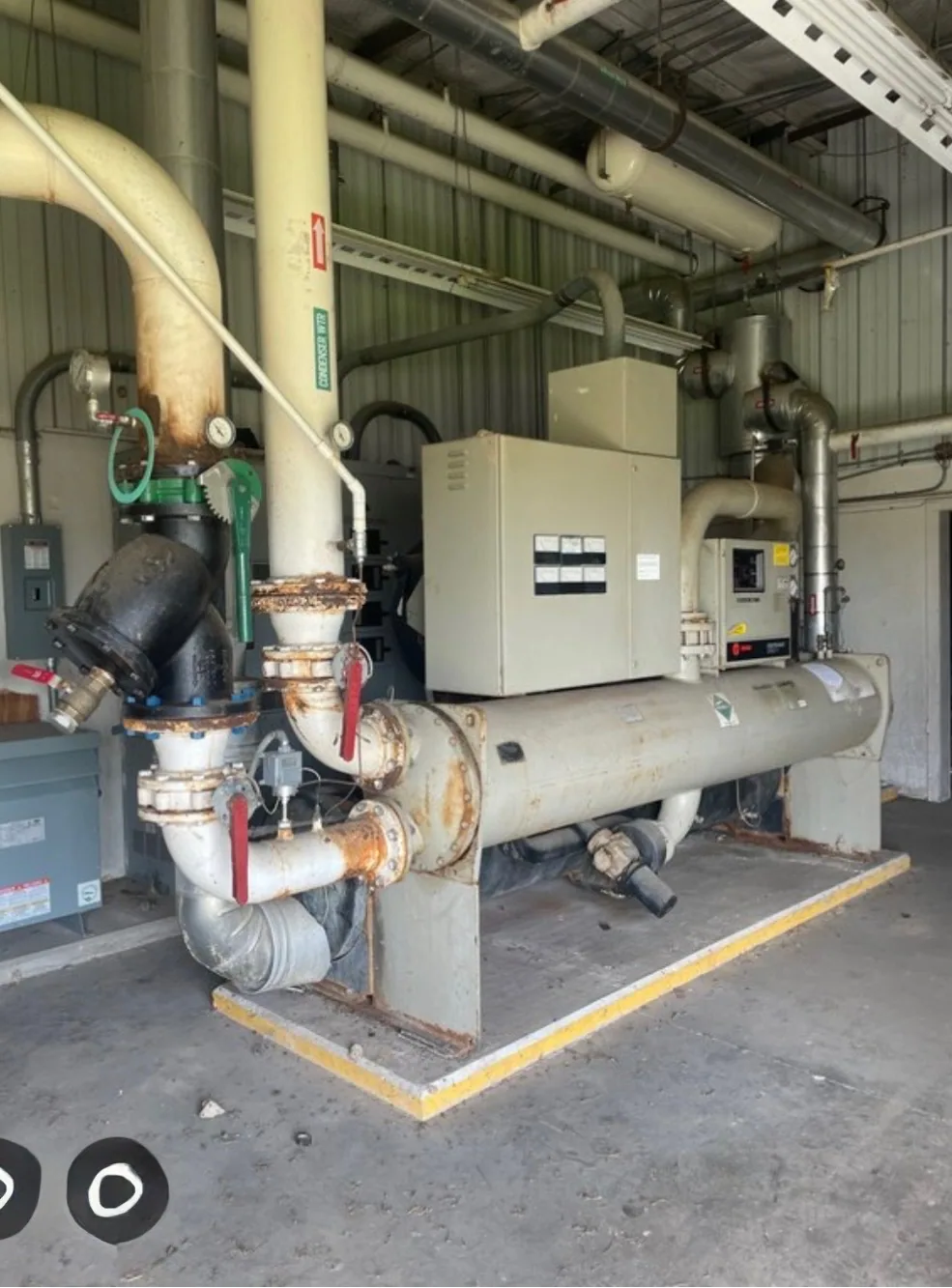
Selling a 500–999-ton chiller in Morgantown, West Virginia, does not require bringing an idle machine back online to prove what it is. We buy industrial and commercial water-cooled and air-cooled centrifugal, screw and scroll chillers across a range from 20 tons to 2,000-plus tons. We make cash offers, pay upfront, do not require testing and cover freight. We also handle the removal work required for the purchase, including disconnects, refrigerant recovery, loading, hauling, rigging and crane work when needed. To begin, share the details you can confirm and a few current photographs; you do not have to prepare the unit for operation or dismantle it before contacting us. A large chiller sale is easier to assess when the equipment description is separated from assumptions about the installation. Start with the capacity shown on the nameplate, the chiller type and its visible condition. If the capacity is uncertain, or if a figure describes multiple machines together rather than one chiller, say so. A clear wide view, a safe photo of the plate and a brief description of the site can help establish what is included and what removal may involve. Honest estimates are more useful than guessed model numbers or unverified operating claims.
Identify the unit and what is included
For a chiller in this capacity range, photograph the entire machine and its identification plate if it is safely accessible. Include the manufacturer, model and serial information when legible, along with the stated tonnage and whether the unit is air-cooled or water-cooled. If the label is faded, blocked or difficult to reach, send a safe image of what can be seen and tell us which details are uncertain. Existing drawings, invoices or maintenance records may provide additional clues; there is no need to enter a hazardous area to obtain them.
Make a separate list of items being offered with the chiller. A starter, control panel or loose component may be part of the sale, while nearby pumps, a cooling tower, piping or building controls may need to remain. Marking what is included prevents confusion during planning. If several chillers share the stated capacity, identify the individual unit or units for sale rather than treating the combined plant rating as the capacity of one machine.
Describe condition without restarting it
A working test is not required to request an offer. If the machine is shut down, disconnected, incomplete or of unknown operating condition, state that plainly. You can note any condition information already available, such as an equipment record or a visible issue, but do not restart a unit solely to demonstrate it. Current photos and a straightforward description allow an initial conversation without claiming performance that has not been verified.
Photograph the machine from several useful angles, including its nameplate, visible controls and any separate parts you intend to include. Avoid removing guards or opening equipment to obtain images. If photographs are not available, share the known details by phone or email and explain what you cannot confirm. The goal is to describe the chiller as it stands, not to complete a diagnostic inspection before asking whether a purchase is possible.
Account for building access and site coordination
The route from a mechanical room to a loading area can matter as much as the chiller’s footprint. If known, describe door and corridor dimensions, tight turns, floor-level changes, overhead limits, exterior openings and the distance to the loading area. Mention whether drawings exist and whether nearby equipment must stay in service. For an outdoor machine, note visible access restrictions or overhead obstacles that may affect lift planning. These details are helpful context, not a request for you to devise the removal method.
On a mixed-use or occupied property, the person authorized to approve a sale may not control access to shared rooms, parking or loading areas. Identify who can authorize the transaction and, if different, who can arrange entry and coordinate site requirements. Note any known tenant, parking, notification or scheduling constraints. A clear division of responsibilities helps keep approval separate from site logistics while the property continues to operate.
Keep the removal scope clear
A capacity number alone is not a lifting plan. Let us know what is known about the machine’s location, the route out and any access limitations. Do not cut openings, disconnect the chiller or move surrounding equipment before contacting us. The removal work can include the necessary disconnects, refrigerant recovery, rigging or crane work, loading and hauling, with freight covered. The specific handling plan depends on the actual unit and site, so sharing known constraints early is useful.
If controls or loose components are included, identify where they are and how they relate to the chiller. Likewise, point out equipment that looks connected but must stay in service. Drawings can help explain the installation, but they may not reflect later changes; current photographs and a note about any differences are valuable. You are not expected to perform recovery or rigging yourself.
Request an offer
Call or text (614) 715-3047, or email saleselectricalbuyers@gmail.com. Include the Morgantown location, the stated capacity, chiller type, known condition and what equipment is included. Photos can help, but if the capacity plate is unreadable or the condition is unknown, share the facts you have and label estimates as estimates. We buy all tonnages and refrigerants within our range, from 20 tons to 2,000-plus tons, and do not require an operational test.
A concise first message might identify one water-cooled chiller, its approximate capacity, whether it is indoors or outdoors, and any known access concern. If another person handles building access, provide that contact or explain how coordination works. We buy chillers; we do not sell them. Once the equipment and site details are understood, the conversation can address the purchase and the removal scope without asking you to restart the machine or arrange the heavy work yourself.