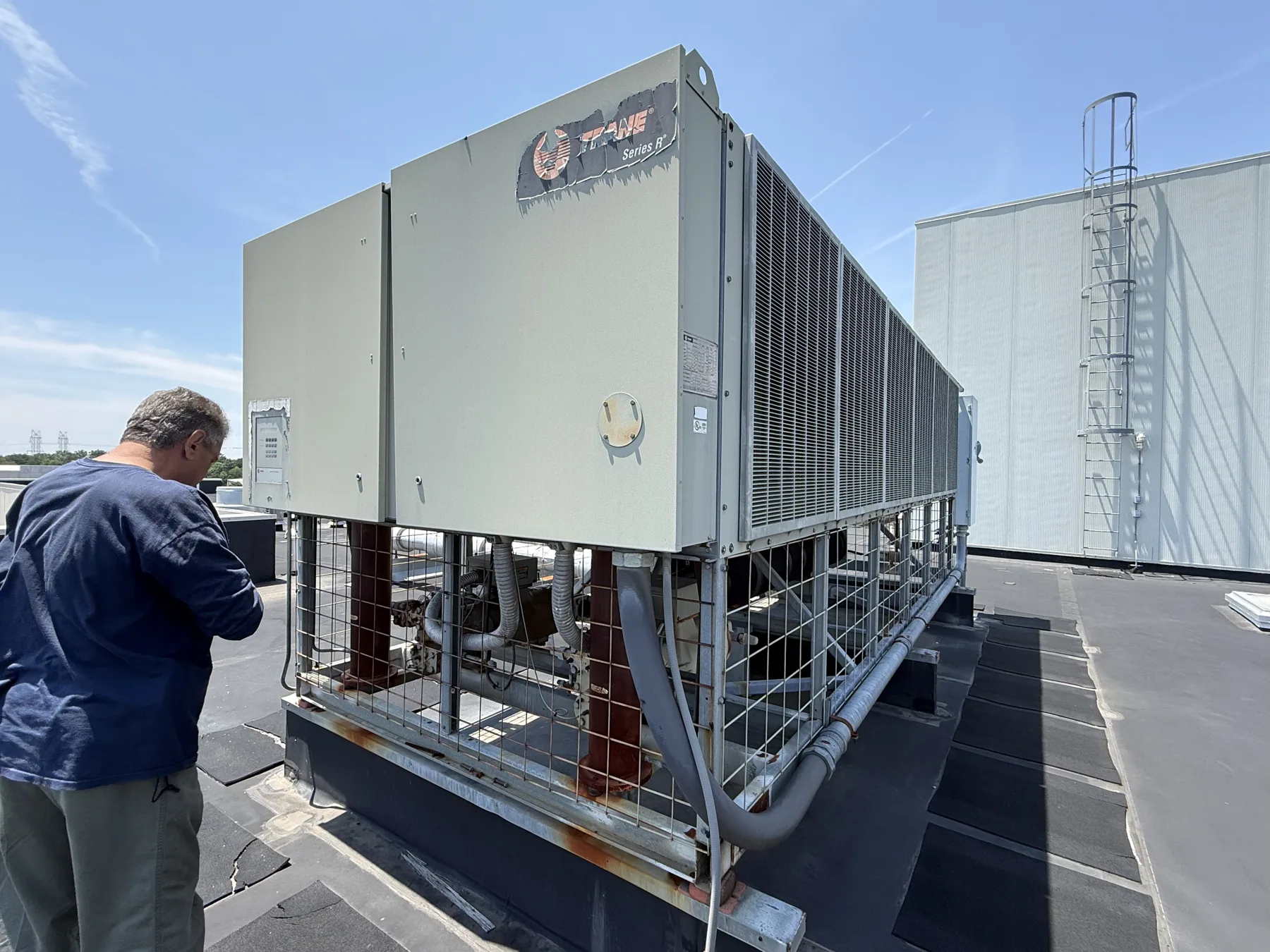

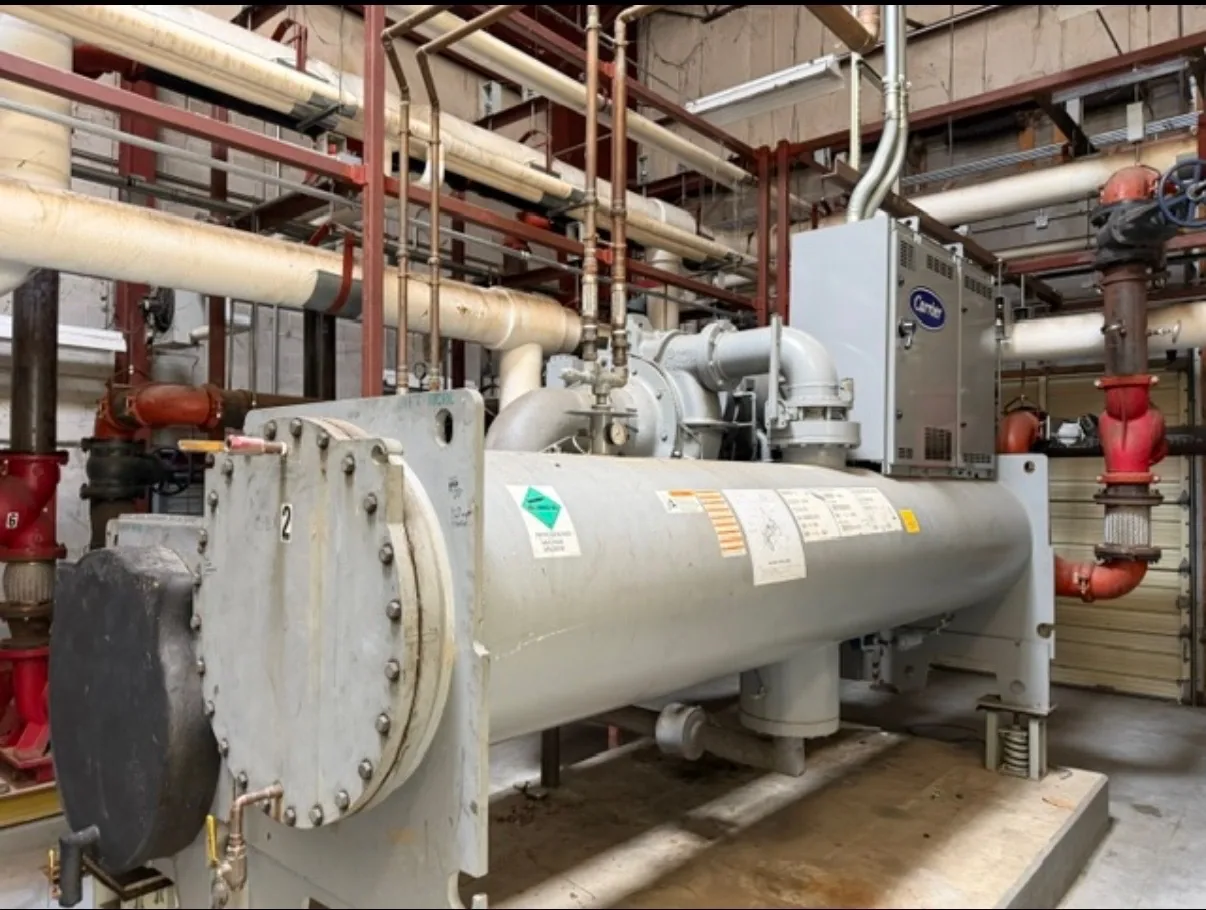
If you need to sell a 500–999-ton chiller in Parkersburg, WV, start with the equipment you actually have, not an assumed market value or a test run. We buy commercial and industrial chillers from 20 tons to 2,000-plus tons, including air-cooled and water-cooled units. Our buying process includes cash offers and upfront payment, and a test is not required. The guidance below explains how to identify the machine and prepare for removal.
Identify your 500–999-ton chiller
For a 500–999 ton chiller, the capacity plate and a wide view of the entire machine provide a useful starting point. Let us know if the capacity figure refers to the individual unit or to multiple chillers together. Label any separate starter, controls or loose components so that the equipment included is clear.
An indoor machine of any size may face a constrained path to the loading area, while an outdoor unit may need a carefully planned lift. Tell us about accessible openings, overhead limitations and available drawings. We review the unit in its current condition without asking you to conduct an operational test.
Consider the needs of a warehouse or distribution facility
At a warehouse or distribution facility, coordinate around loading traffic, delivery appointments and any temperature-sensitive spaces that remain in operation. Identify the chiller rather than assuming that every piece of refrigeration equipment is included. Photos should show the unit and a safe view of the surrounding route. Let the site contact explain any required separation from ongoing vehicle or pedestrian activity.
When the plate is hard to read
A faded or inaccessible plate should not lead you to make up a model or capacity. Provide a safe photo of what is visible, plus any drawing, invoice or maintenance record you already have. Tell us which details are estimates. Another person familiar with the plant may be able to identify the machine, but no one should enter a hazardous area merely to gather information.
Access around occupied operations
An occupied property may have delivery vehicles, staff movement or customer areas near the proposed route. Indicate the times or places that need special coordination and identify the person who can approve access. Photographs taken from a safe location can show the general setting. The goal is to plan the chiller removal around the real site, not assume that every facility has a clear path.
Preparing without extra work
There is no need to clean, repair or restart a chiller just to begin a conversation. Gather existing pictures and the information you can safely read, then describe the location and condition. Tell us about known deadlines and the person responsible for access. We can review the machine without operational testing and coordinate the covered removal services as part of the transaction.
Allow for a staged facility transition
When a new cooling system is being installed, the old chiller may not become available on the same day as the purchase decision. Share the expected sequence and flag which dates are still tentative. The site contact can identify access needs and equipment that must remain active. We can begin discussing the chiller from current photos and records without requiring it to be tested or removed first.
One coordinated exit plan
Our covered scope includes rigging, a crane when needed, disconnects, refrigerant recovery, loading and freight. The chiller's location, weight and route determine how those tasks are coordinated. Share available dimensions and site drawings, but do not attempt to rig or lift the machine yourself. An informed site contact can help the crew understand what must remain accessible during the work.
Getting the sale started
Text (614) 715-3047 with your chiller photos and the information already available to you. Include the equipment location and say whether the machine is still connected. We purchase rather than sell chillers, make cash offers and provide upfront payment for a purchase. A machine may be reviewed without being run or operationally tested, so there is no need to restart it for us.
Bring existing information, not a test
A manufacturer plate, existing service record or clear photograph can answer many initial questions. You do not need to commission a report or start the chiller to establish an operating history. Send what you have, label estimates and explain missing information. Once the equipment and access are understood, the offer and covered removal can be coordinated with the appropriate owner and site contact.