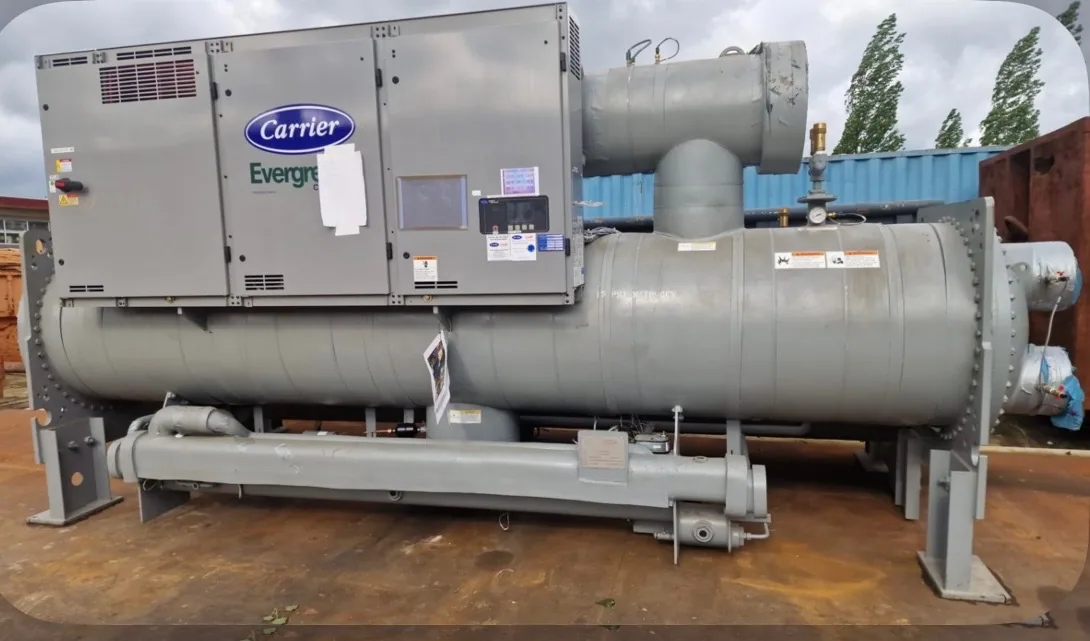
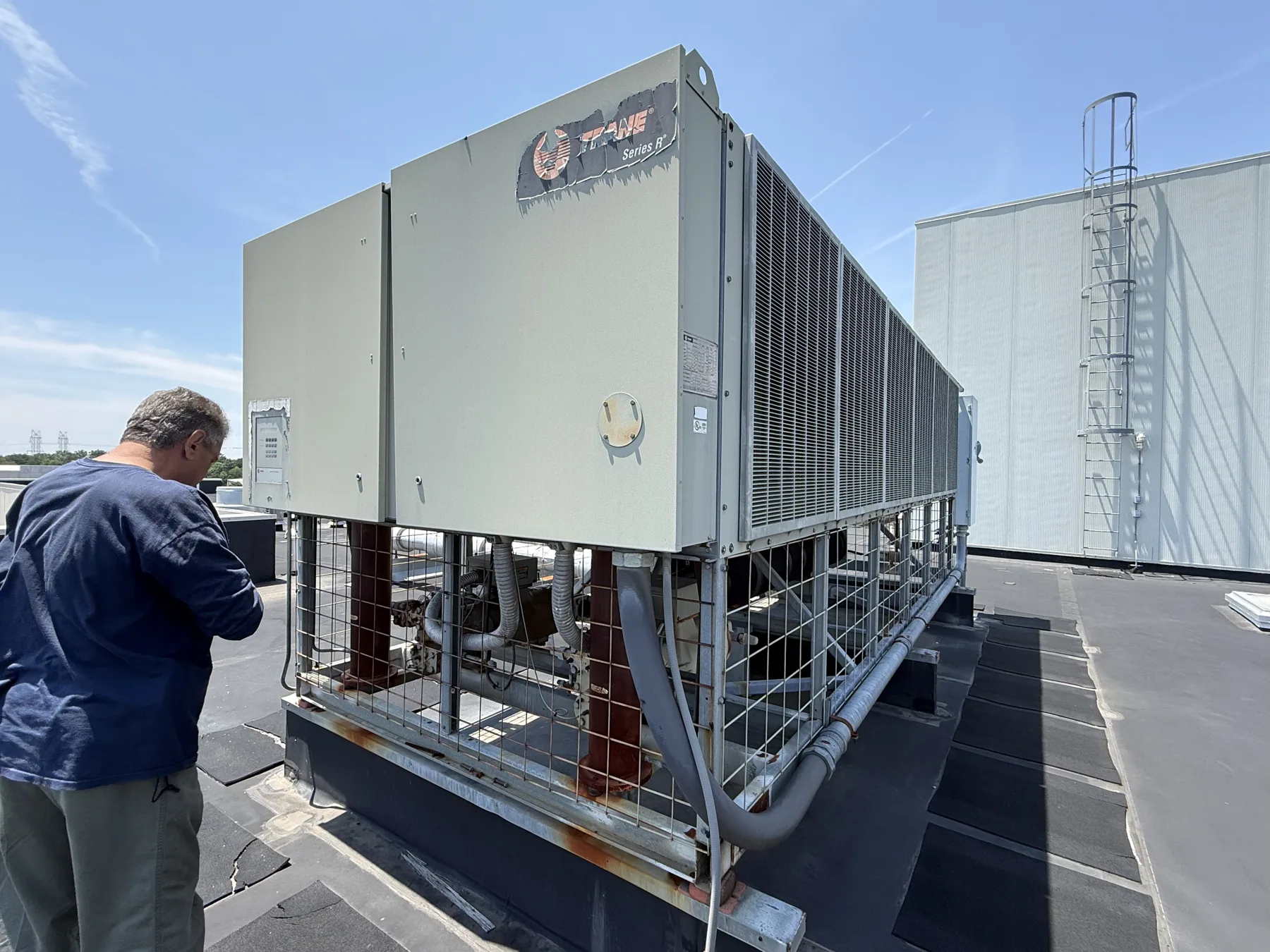
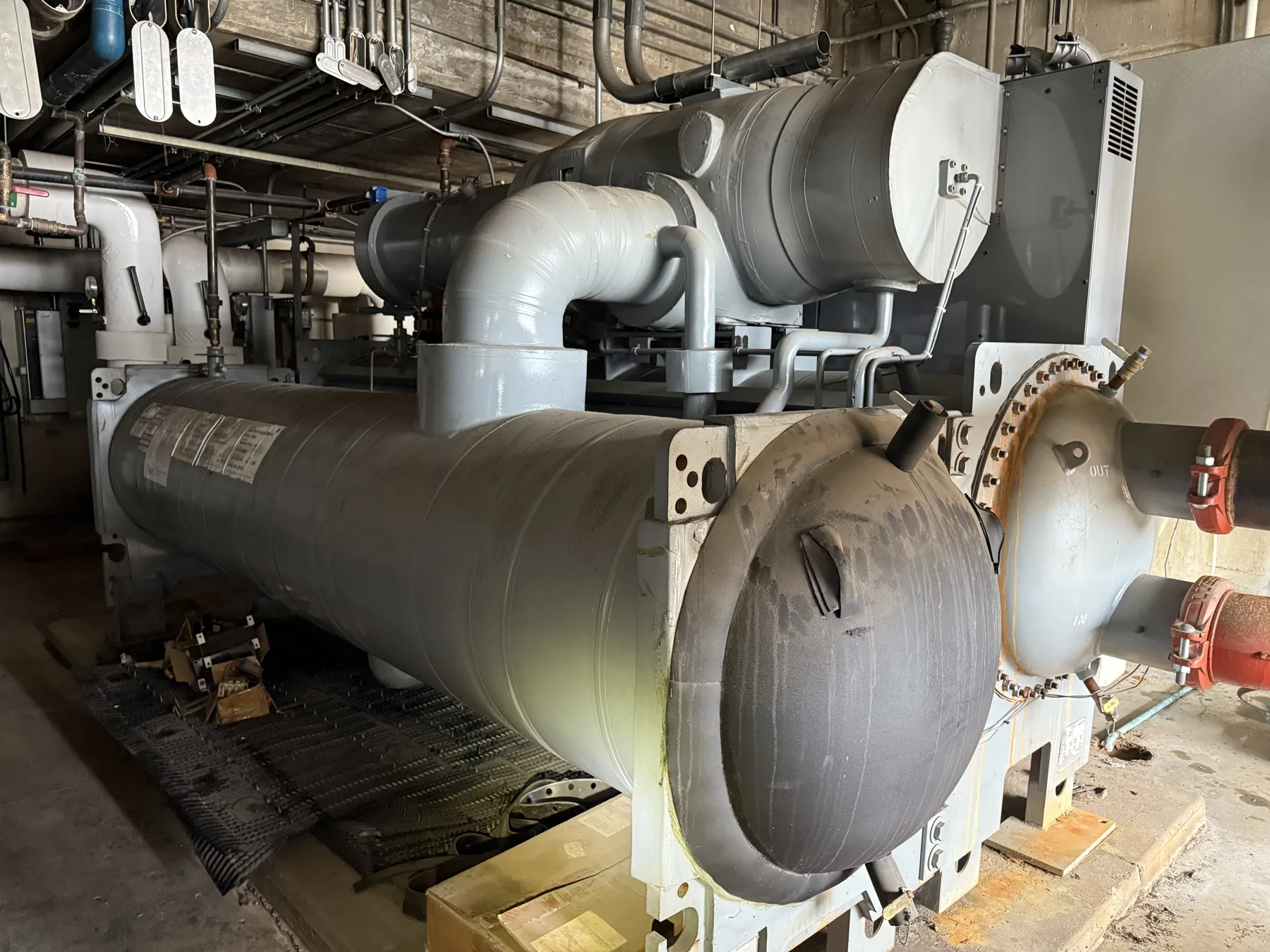
Finding a buyer for a 100–249-ton chiller in Morgantown, WV should not require restarting the machine just to demonstrate it. We buy industrial and commercial chillers from 20 tons to 2,000-plus tons, including air-cooled and water-cooled units. We make cash offers, provide upfront payment and do not require testing. A few current photographs and an honest description of the equipment and site are a useful place to begin.
Identify your 100–249-ton chiller
For a 100–249 ton chiller, start with its individual rated capacity and identifying plate. If the rating is missing or the only figure available is a plant total, explain that distinction. Photos of the complete assembly and any separate control or starter cabinet make it easier to define the equipment included in the sale.
Ask the site contact about the route between the chiller and a truck-accessible area. Doors, turns, curbs and occupied spaces may matter more than the capacity number alone. We consider both operating and nonrunning chillers and do not require the seller to run an operational test before requesting an offer.
Consider the needs of a mixed-use property
In a mixed-use building, the chiller owner and the parties affected by a removal are not always the same. Clarify who can approve the sale and who can coordinate access to shared areas. Point out tenant, parking or loading constraints without assuming they prevent a transaction. The seller can request an offer with existing photos and records; restarting the machine is not necessary.
Identify each machine separately
For a multi-unit sale, give each chiller a simple number and use the same number on its plate, overall photo and condition notes. Tell us whether capacities are individual ratings or a combined figure. An existing inventory is helpful, but a short handwritten list can work too. Separate identification lets the discussion focus on the equipment actually being offered.
Access around occupied operations
An occupied property may have delivery vehicles, staff movement or customer areas near the proposed route. Indicate the times or places that need special coordination and identify the person who can approve access. Photographs taken from a safe location can show the general setting. The goal is to plan the chiller removal around the real site, not assume that every facility has a clear path.
When the schedule is uncertain
You can begin with equipment details even if the exact pickup date is not yet known. Explain the decision milestones, any proposed shutdown window and who must approve access. An early discussion helps define what information is missing without forcing the site to rush a removal. The final plan should reflect the actual unit, the facility's operating needs and an agreed schedule.
Use records as evidence, not assumptions
Maintenance logs, invoices and drawings can explain a chiller's history, but they may be outdated or refer to a neighboring unit. Match the serial number when possible and show any known changes in current photos. If there is a difference between a plate and a later record, send both and note the discrepancy. You do not need to settle every technical question before contacting the buyer.
Removal without arranging separate crews
Our purchase includes covered rigging, crane service when needed, disconnects, refrigerant recovery, loading and freight. A roof installation, a crowded mechanical room and a ground-level yard may each need a different sequence. Describe the actual setting and any known facility rules. The point is to coordinate the whole removal around the equipment rather than ask the seller to organize those services independently.
How the cash offer works
Text current photos and the machine's basic details to (614) 715-3047. We buy chillers; we do not sell replacement equipment. We review the information and can make a cash offer, with upfront payment for a purchase. No operational testing is required. If the model, capacity or condition is uncertain, tell us rather than delaying the conversation or guessing.
Decide what is included
Before accepting an offer, make sure both parties are discussing the same chiller and any separate controls or loose components. Identify items that stay with the property or serve another unit. If the equipment is part of a larger project, use the model, serial number and photos to mark the sale boundary. Clear scope protects the seller from confusion when the removal team arrives.