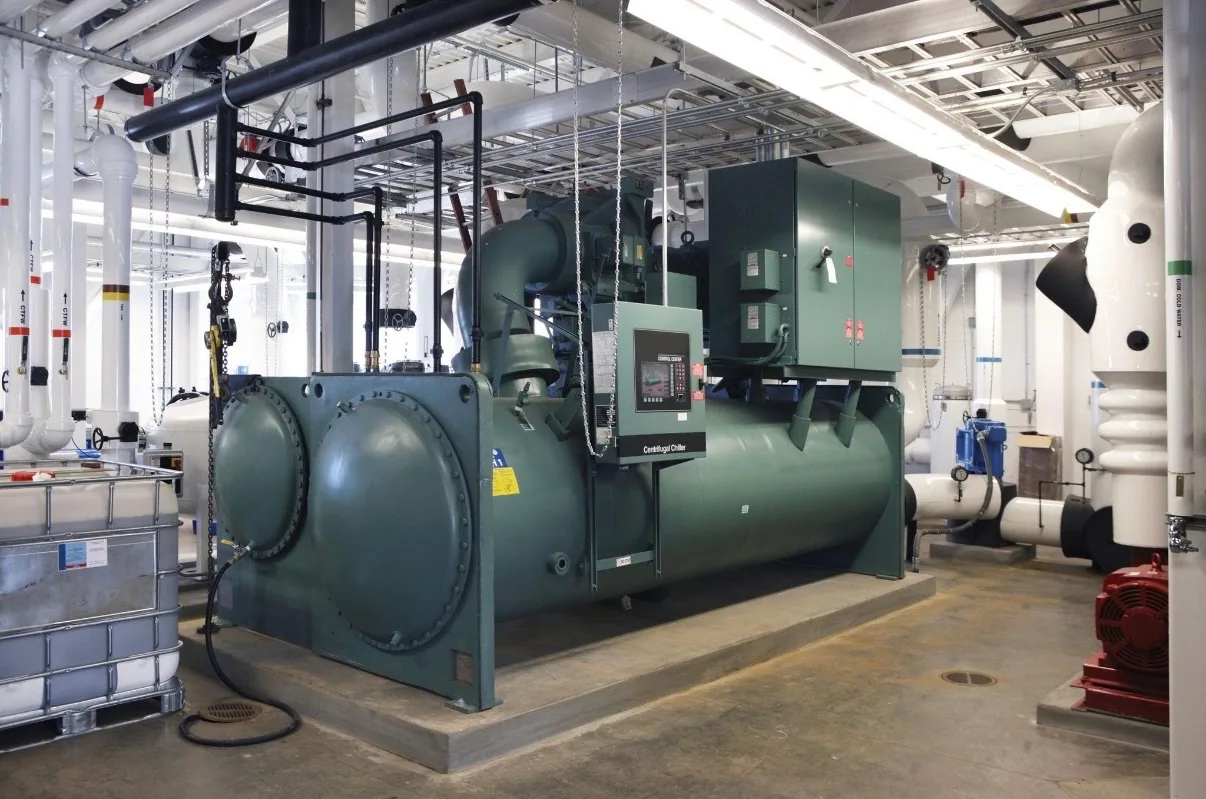
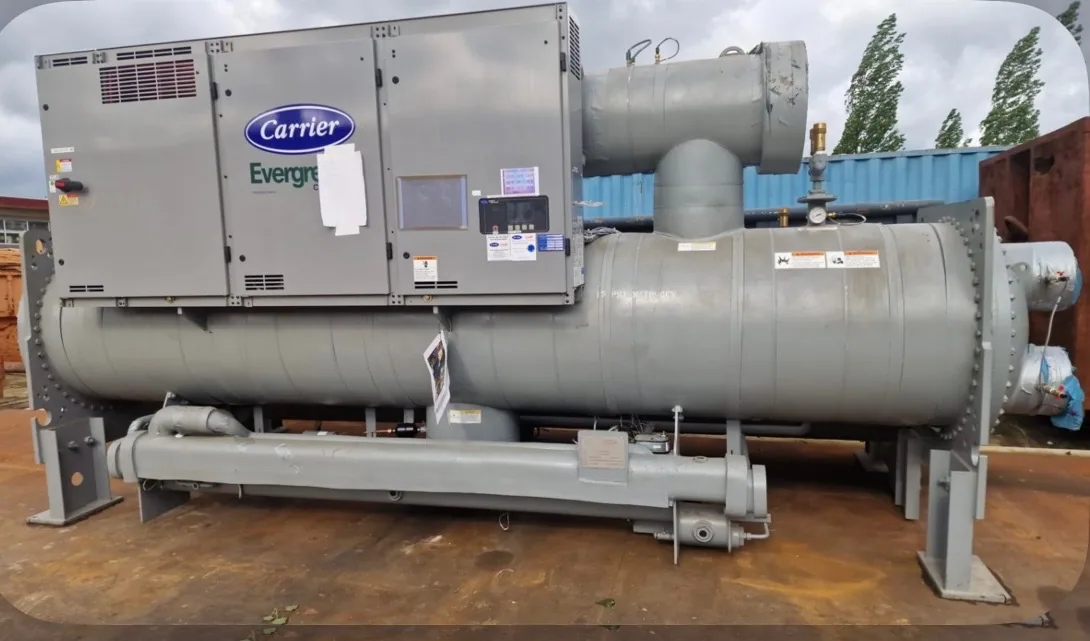
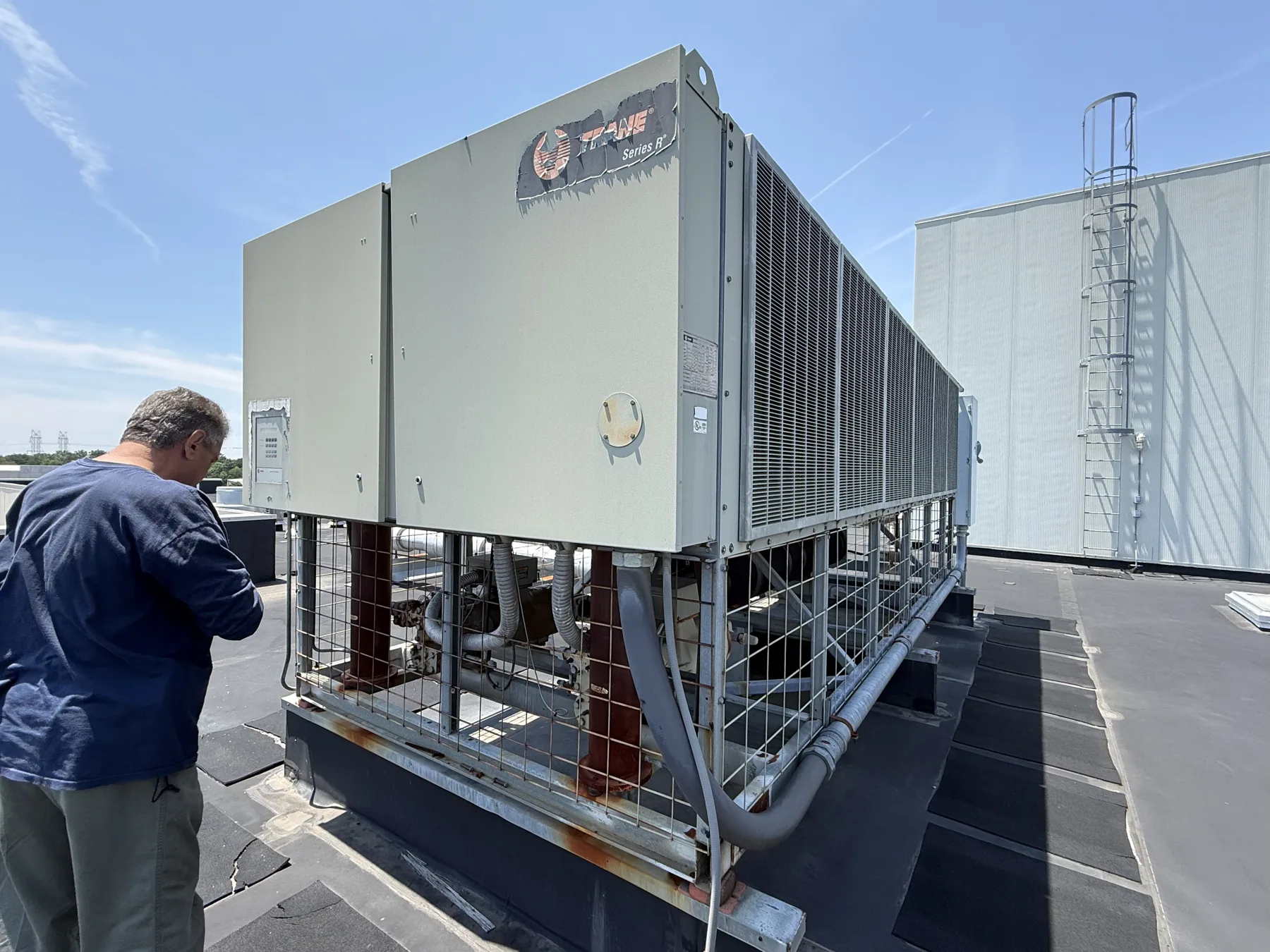
Owners of a 1,000–2,000+-ton chiller in Morgantown, WV can ask us about a sale whether the equipment is running or shut down. We buy air-cooled and water-cooled industrial chillers from 20 tons to 2,000-plus tons, with cash offers and upfront payment. No testing is required. Good photos, a clear description of what is included and a contact who understands the facility can make the next steps easier to coordinate.
Identify your 1,000–2,000+-ton chiller
For a chiller rated from 1,000 tons through 2,000 tons or more, provide the actual rated capacity and model information if available. A large central plant can contain multiple assemblies, so mark which machine is for sale and whether its starter and controls are included. A site plan or photographs showing the whole room can clarify the boundaries of the transaction.
Allow room in the discussion for the real exit path, equipment dimensions and coordination with an occupied facility. No specific dismantling method should be assumed from the tonnage. We buy chillers in this range without operational testing, and we cover the removal-related services described on this page.
Consider the needs of a school or education facility
A school or education facility may need to coordinate work around classes, events or an unoccupied period. Identify the equipment owner and the person authorized to arrange the sale, then describe any site-entry and scheduling requirements. Note whether other chillers must remain available during the work. Those details help plan a removal without assuming that every campus has the same equipment or calendar.
Start with the nameplate
Photograph the equipment nameplate straight on if you can do so safely. Model, serial number, rated tons and electrical information may appear there, although labels vary. Include a wider picture so the plate can be matched to the right machine. If it is damaged or missing, say so and send whatever existing records or photographs are available instead of guessing at the numbers.
Planning from a closed facility
A closed or temporarily inaccessible facility can still be discussed using existing photographs and records. Tell us when someone with keys or authorization can provide access, and mention any known site restrictions. Do not enter an unsafe or secured area for a new picture. The removal schedule can be coordinated around actual access once the machine and sale authority are clear.
If the chiller is already retired
A unit that has been off for months or years can still be submitted. Tell us when it was last known to operate if that information exists, but do not start it merely for a sale. Describe what is connected, what has been removed and whether the site is accessible. A practical account of the present condition matters more than an unsupported performance claim.
Understand what the nameplate can tell you
The equipment plate may identify the manufacturer, model, serial number and rated capacity, although the exact fields differ by machine. It is a starting point, not proof that all original components remain in place or that the unit will run. Combine its information with current photographs and a candid condition description. If the label cannot be read safely, send whatever existing documentation is available.
What to tell the removal coordinator
Identify the chiller's location, the site contact and any restrictions on working hours or the route to a truck. We cover rigging, a crane when needed, disconnects, refrigerant recovery, loading and freight. Existing measurements or drawings are useful, but do not guess at the weight. The removal method is planned for the actual machine and verified site conditions.
From first photos to an offer
Show the equipment as it is and send the pictures to (614) 715-3047. Add the model, rated tons and refrigerant if known, plus a short note about access. We are a chiller buyer and make cash offers with upfront payment. We do not require operational testing and do not sell replacement chillers. An accurate description helps keep the transaction focused.
Agree on the timing
Tell us about an intended shutdown, a property handover or a date when access changes. If the timetable is tentative, describe it as tentative. A site contact can then coordinate the removal around the actual decision and operating schedule. Before work begins, make sure the equipment included and any nearby systems that remain in place are understood by the relevant parties.