
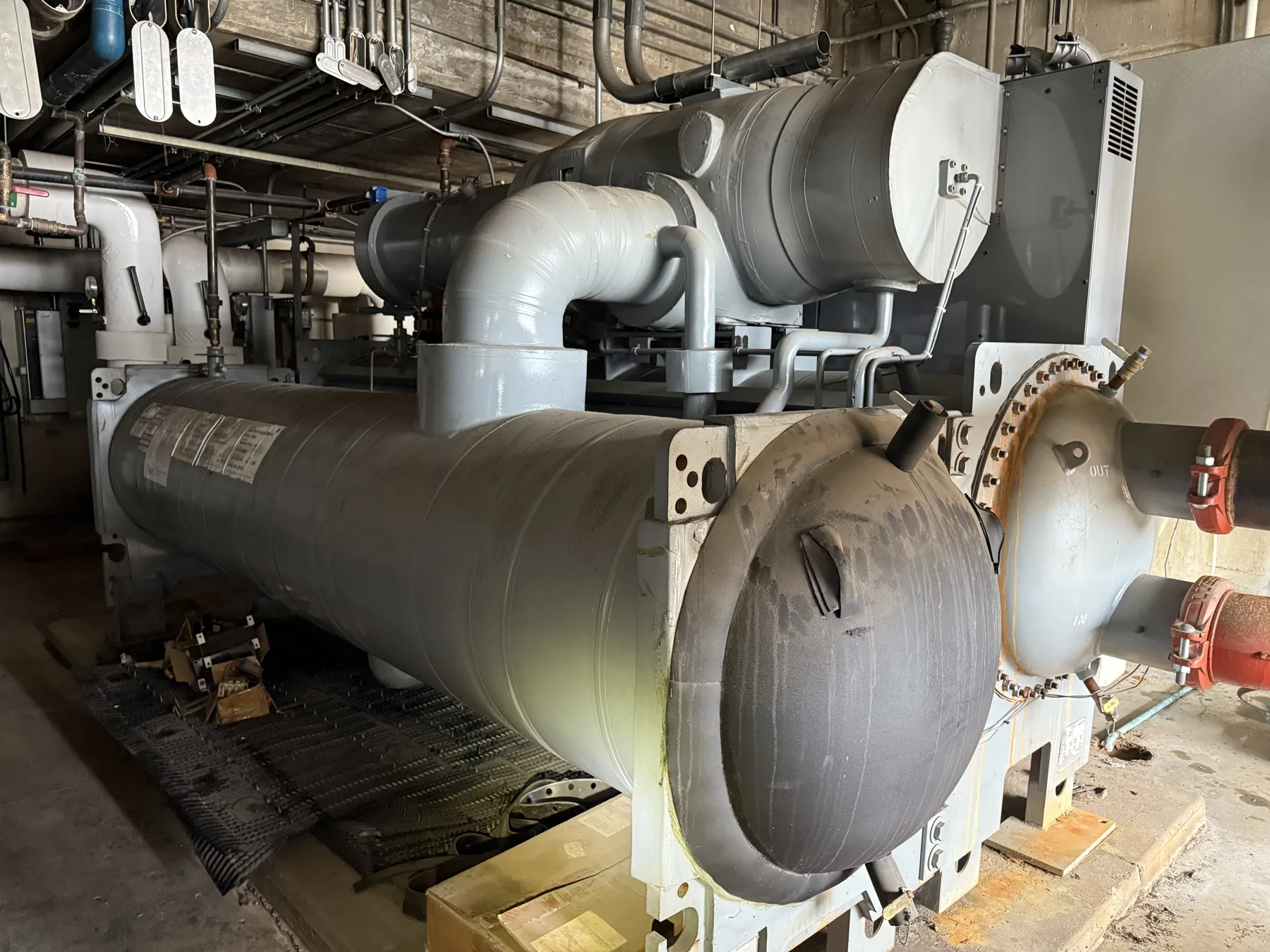
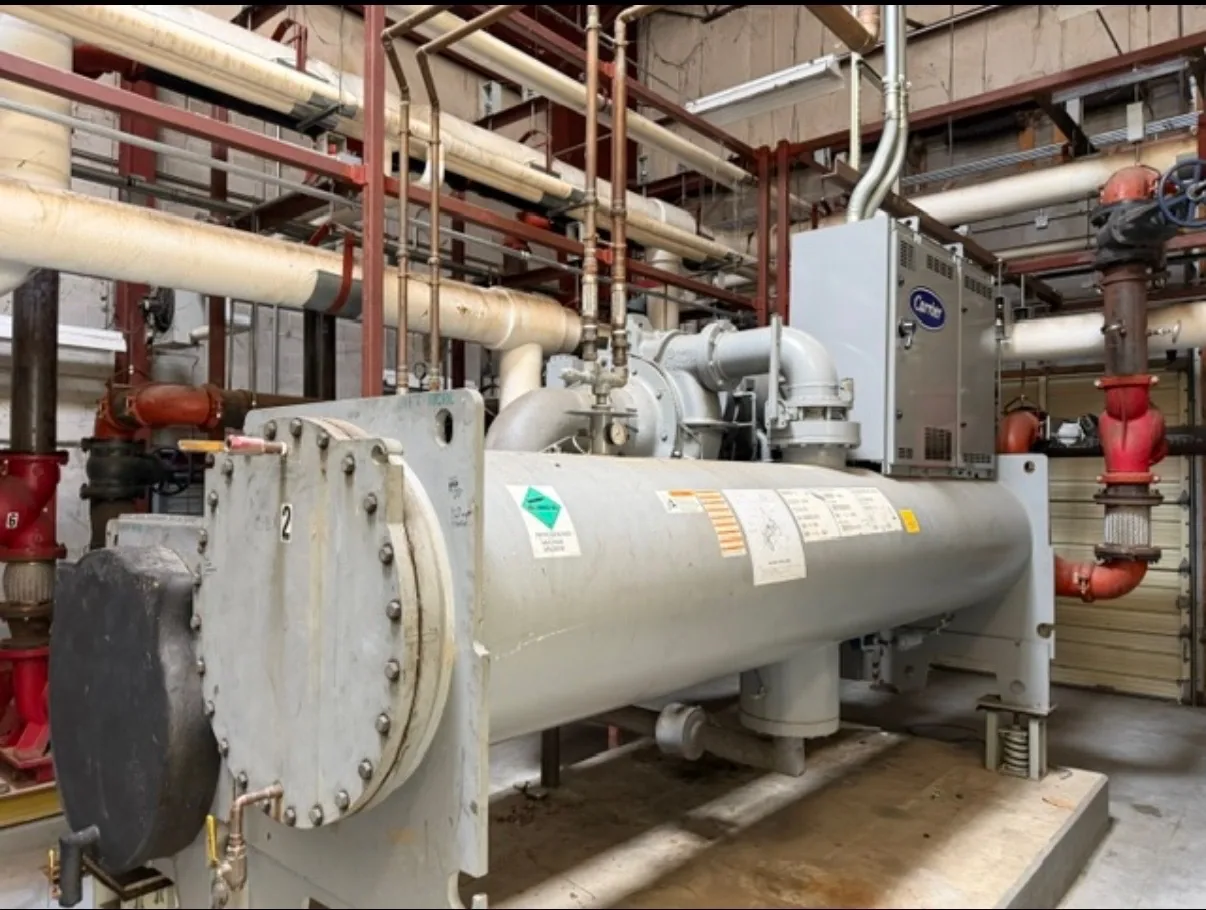
There is no need to restart a chiller to ask about selling a 500–999-ton chiller in Huntington, WV. We buy industrial and commercial chillers between 20 tons and 2,000-plus tons, including water-cooled and air-cooled equipment. We make cash offers and provide upfront payment, with no test required. Existing photos, identification and information about the site can help define the equipment and prepare for a practical removal discussion.
Identify your 500–999-ton chiller
For a 500–999 ton chiller, the capacity plate and a wide view of the entire machine provide a useful starting point. Let us know if the capacity figure refers to the individual unit or to multiple chillers together. Label any separate starter, controls or loose components so that the equipment included is clear.
An indoor machine of any size may face a constrained path to the loading area, while an outdoor unit may need a carefully planned lift. Tell us about accessible openings, overhead limitations and available drawings. We review the unit in its current condition without asking you to conduct an operational test.
Consider the needs of a mixed-use property
In a mixed-use building, the chiller owner and the parties affected by a removal are not always the same. Clarify who can approve the sale and who can coordinate access to shared areas. Point out tenant, parking or loading constraints without assuming they prevent a transaction. The seller can request an offer with existing photos and records; restarting the machine is not necessary.
Start with the nameplate
Photograph the equipment nameplate straight on if you can do so safely. Model, serial number, rated tons and electrical information may appear there, although labels vary. Include a wider picture so the plate can be matched to the right machine. If it is damaged or missing, say so and send whatever existing records or photographs are available instead of guessing at the numbers.
Access through a shared building
When an exit route passes through common space, identify who controls that space and whether there are access hours or tenant restrictions. Elevators, corridors and doors can be relevant, but their suitability cannot be determined without the actual dimensions and site review. Do not promise a route based on an old drawing alone. A current photo and the right building contact are a good beginning.
Working around an active plant
If the rest of the cooling plant must stay in service, identify the chiller to be removed and explain the boundaries around active equipment. The site team can flag operating constraints and preferred work windows. Do not disconnect shared piping or electrical equipment yourself to accelerate the sale. We cover disconnects and coordinate the removal scope for the unit being purchased.
Compare the complete scope
When weighing what to do with a retired chiller, compare the whole scope rather than looking only at a headline offer. Ask who will arrange and cover disconnections, refrigerant recovery, lifting, loading and transportation, and how payment will be handled. Our purchase includes those covered services and upfront payment. A comparison based on the same equipment and work scope makes it easier to understand the practical differences between options.
From connection points to freight
We cover the disconnects, refrigerant recovery, rigging, crane work when needed, loading and freight for the purchased chiller. If the machine is connected to a shared system, identify the equipment that stays and explain any operating restrictions. The crew can plan around the real installation; the seller does not need to take apart piping or electrical connections to request an offer.
What to send for a cash offer
A nameplate photo, a view of the entire unit and a description of its present condition are a good start. Text them to (614) 715-3047 along with the city or county and a contact name. We buy chillers, provide upfront payment for a purchase and do not require operational testing. If you have more than one machine, label each photo set separately.
Keep the right contacts together
The person who can authorize a sale is not always the person who can open the equipment room. Provide a contact for ownership decisions and, if different, a site contact for entry and work coordination. Note any requirements for notifying building occupants. That simple handoff is especially useful when a chiller is being removed from a property that continues to operate.