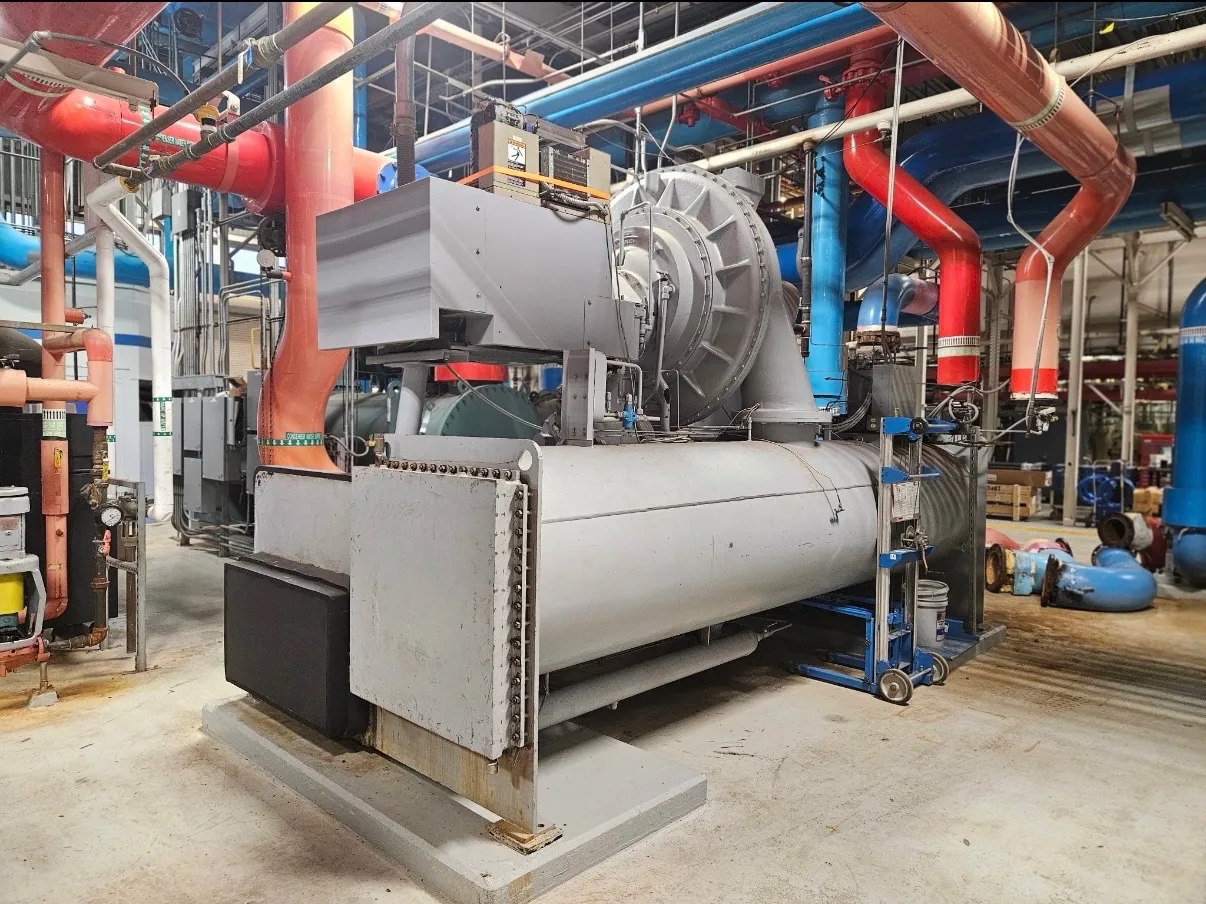
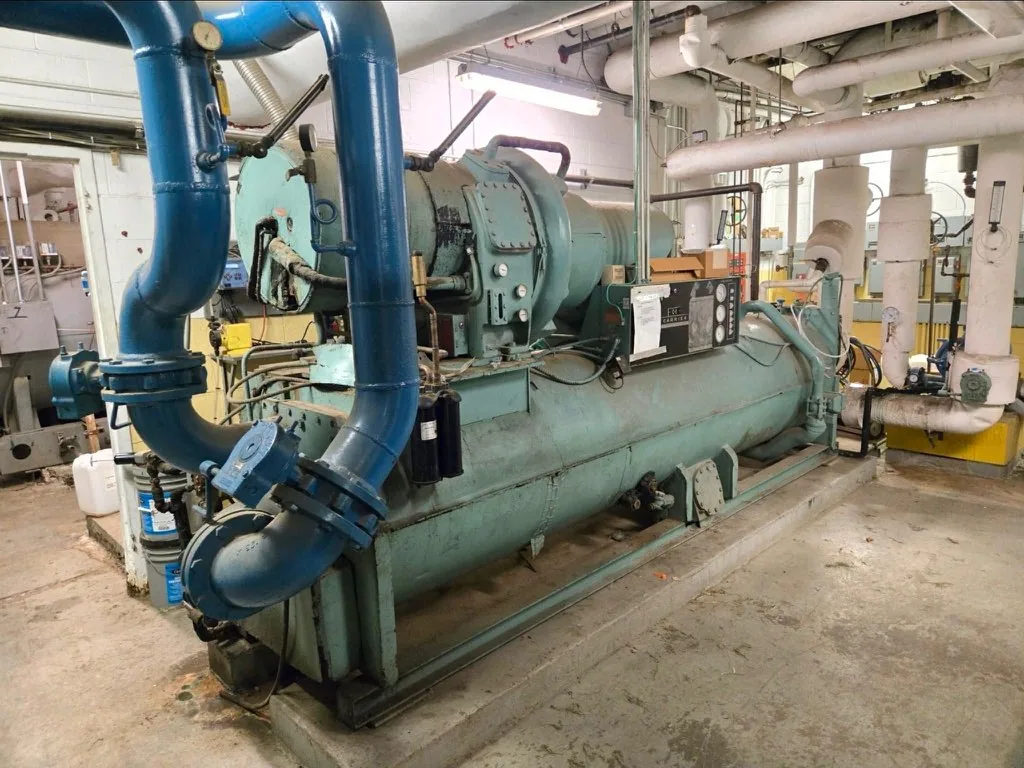
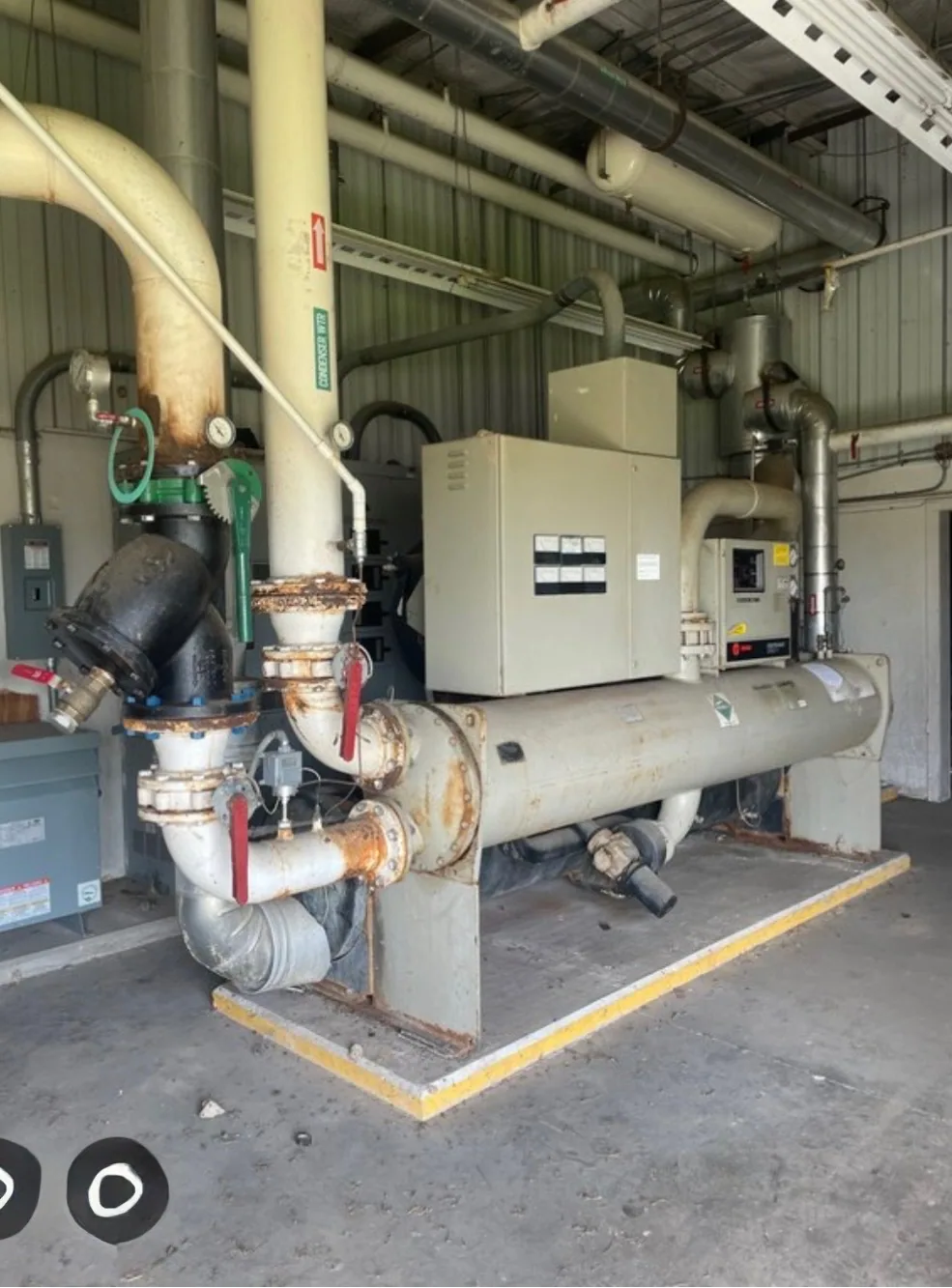
A chiller sale in Parkersburg, WV starts with a clear picture of the equipment. If you own a York chiller, tell us its location, rated capacity if known and present condition. We buy commercial and industrial air-cooled and water-cooled chillers from 20 tons to 2,000-plus tons. Cash offers and upfront payment are part of our process, and we do not require testing. The following details help the owner and site team prepare.
Identify the York chiller
A York label alone does not establish capacity, refrigerant or compressor design. A clear image of the actual nameplate is the best place to begin. Include a full-length photo and note whether the chiller is intact, partially dismantled or still connected to the building. If there are multiple units, identify the one offered in each photograph.
Describe the starter, controls and other components you intend to include, especially if any are in a separate cabinet or have already been removed. A useful offer discussion depends on the complete scope, not just the name on the front. There is no need to make the machine run or prove its performance for our review.
Consider the needs of a data center
In a data center or other critical-load building, the equipment being sold should be clearly distinguished from cooling that remains in use. Provide the site contact's access rules, relevant work windows and any boundaries around active equipment. Avoid sending confidential security information with an initial photo set; a basic description of the chiller and a safe route to it can begin the conversation.
Record the present condition
Describe the equipment as it sits today: connected or disconnected, complete or partly removed, running or shut down. Note visible damage or missing pieces and distinguish what you know from what is uncertain. Photos and an honest account are more useful than promising a performance level. We can review nonrunning equipment and do not require operational testing.
Access around occupied operations
An occupied property may have delivery vehicles, staff movement or customer areas near the proposed route. Indicate the times or places that need special coordination and identify the person who can approve access. Photographs taken from a safe location can show the general setting. The goal is to plan the chiller removal around the real site, not assume that every facility has a clear path.
Selling from a property transition
During a building sale, lease change or closure, establish who owns the equipment and when access will be available. An inventory may identify the chiller, but current photographs show whether it still matches the paperwork. Let us know which contact can approve the transaction and which person can coordinate entry. A unit does not have to be running to be considered.
Compare the complete scope
When weighing what to do with a retired chiller, compare the whole scope rather than looking only at a headline offer. Ask who will arrange and cover disconnections, refrigerant recovery, lifting, loading and transportation, and how payment will be handled. Our purchase includes those covered services and upfront payment. A comparison based on the same equipment and work scope makes it easier to understand the practical differences between options.
Planning the work as a package
The service we cover spans rigging, crane work when needed, disconnects, refrigerant recovery, loading and freight. If the chiller has separate controls or loose pieces, identify whether they are included so the collection plan reflects the actual sale. Explain any building access or scheduling requirements early. Different machines need different handling; a tonnage figure alone is not a lift plan.
How the cash offer works
Text current photos and the machine's basic details to (614) 715-3047. We buy chillers; we do not sell replacement equipment. We review the information and can make a cash offer, with upfront payment for a purchase. No operational testing is required. If the model, capacity or condition is uncertain, tell us rather than delaying the conversation or guessing.
Protect the active operation
If other equipment must remain in service, show which chiller is being sold and tell the site coordinator what cannot be interrupted. Do not make assumptions about shared connections from appearance alone. Facility staff can provide existing drawings and explain operational boundaries. The removal plan should address the actual installation rather than treating every machine in a plant as independent.