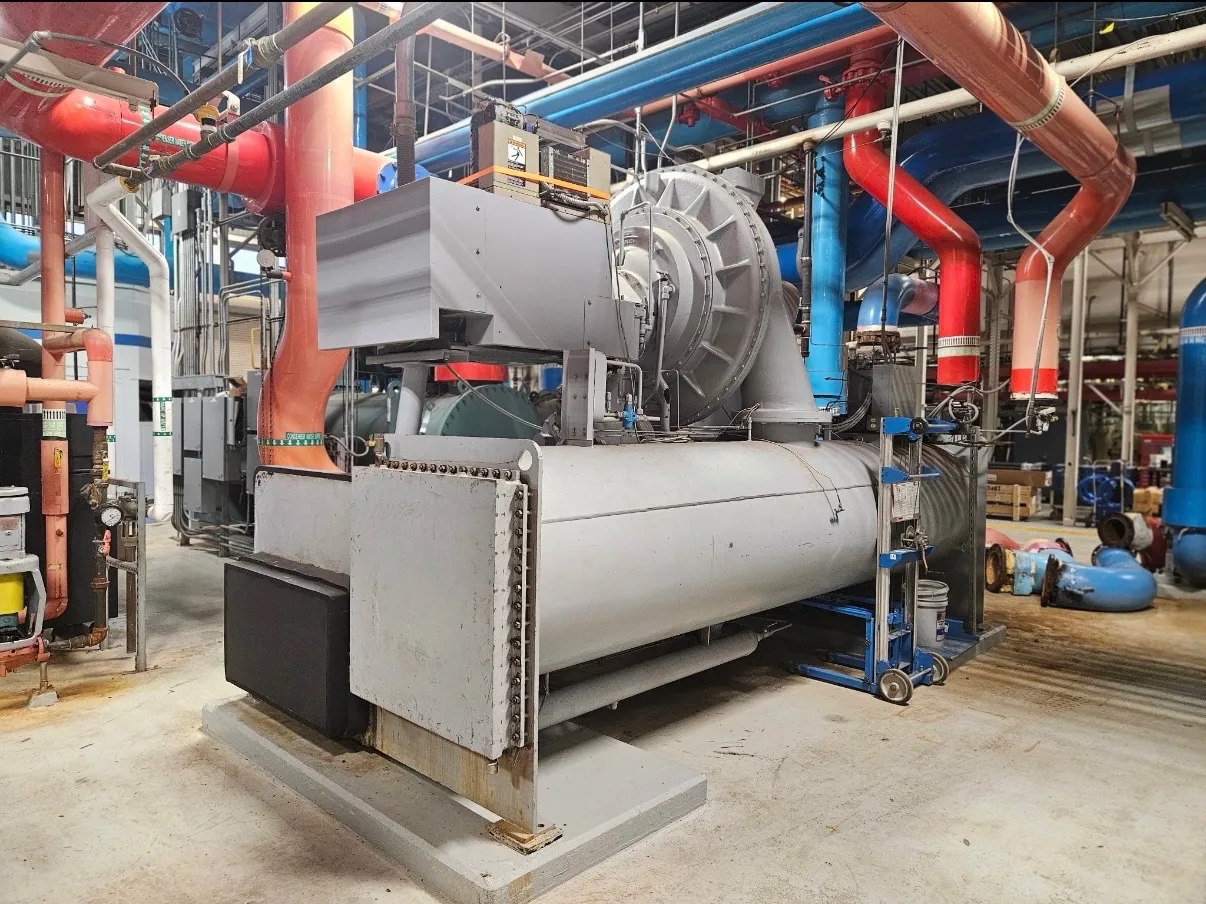
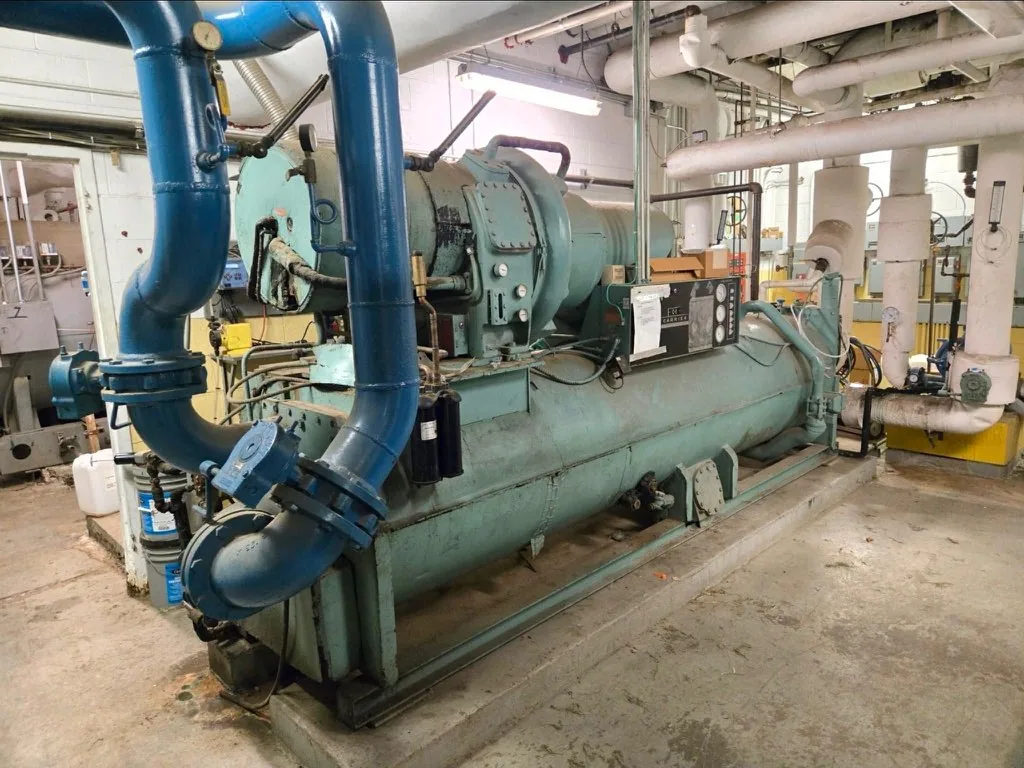

If a York chiller is scheduled for replacement or already shut down in Beckley, WV, a sale can start with current photos and the information you have. We buy commercial and industrial air-cooled and water-cooled chillers from 20 tons to 2,000-plus tons. Our process offers upfront payment and a cash offer without requiring testing. This page covers equipment identification, facility access and the removal work we handle.
Identify the York chiller
A York label alone does not establish capacity, refrigerant or compressor design. A clear image of the actual nameplate is the best place to begin. Include a full-length photo and note whether the chiller is intact, partially dismantled or still connected to the building. If there are multiple units, identify the one offered in each photograph.
Describe the starter, controls and other components you intend to include, especially if any are in a separate cabinet or have already been removed. A useful offer discussion depends on the complete scope, not just the name on the front. There is no need to make the machine run or prove its performance for our review.
Consider the needs of a municipal building
For publicly owned or other institutionally controlled property, establish who is authorized to dispose of the chiller before arranging a sale. Existing approval or inventory procedures may affect the schedule. Identify the specific machine, its location and the contact who can explain access requirements. We can discuss equipment details while the owner handles its own internal authorization process.
Start with the nameplate
Photograph the equipment nameplate straight on if you can do so safely. Model, serial number, rated tons and electrical information may appear there, although labels vary. Include a wider picture so the plate can be matched to the right machine. If it is damaged or missing, say so and send whatever existing records or photographs are available instead of guessing at the numbers.
Working from a mechanical room
An interior plant room calls for a look at more than the equipment footprint. Describe doors, corridor turns and changes in floor level between the chiller and the outside, if known. Indicate whether nearby equipment must stay in service. Existing drawings and a few safe photographs can help the removal team plan; you do not need to cut a path or dismantle the machine before asking for an offer.
If replacement is already planned
When a replacement project is underway, identify when the old chiller will be available and whether the new equipment must remain in service during removal. Coordinate the seller's project contact with the person responsible for building access. Do not assume that a construction date automatically establishes a clear exit route. A proposed window and current site photos allow the removal conversation to start early.
Understand what the nameplate can tell you
The equipment plate may identify the manufacturer, model, serial number and rated capacity, although the exact fields differ by machine. It is a starting point, not proof that all original components remain in place or that the unit will run. Combine its information with current photographs and a candid condition description. If the label cannot be read safely, send whatever existing documentation is available.
A practical removal discussion
An offer discussion can include the equipment's current location and how a crew could reach it. We cover rigging, crane service when needed, disconnects, refrigerant recovery, loading and freight. Let us know about occupied spaces, gates, plant-room doors or roof access, as applicable. The actual plan will depend on the unit and site, not an assumed standard procedure.
Contact the buyer directly
For a cash offer, text photos and a description of your chiller to (614) 715-3047. We buy industrial chillers from 20 tons to 2,000-plus tons and provide upfront payment for a purchase. We do not ask for an operational test and do not sell chillers. Mention the equipment's location, condition and any known removal constraints in your first message.
Bring existing information, not a test
A manufacturer plate, existing service record or clear photograph can answer many initial questions. You do not need to commission a report or start the chiller to establish an operating history. Send what you have, label estimates and explain missing information. Once the equipment and access are understood, the offer and covered removal can be coordinated with the appropriate owner and site contact.