Finding a buyer for a Trane chiller in Beckley, WV should not require restarting the machine just to demonstrate it. We buy industrial and commercial chillers from 20 tons to 2,000-plus tons, including air-cooled and water-cooled units. We make cash offers, provide upfront payment and do not require testing. A few current photographs and an honest description of the equipment and site are a useful place to begin.
Identify the Trane chiller
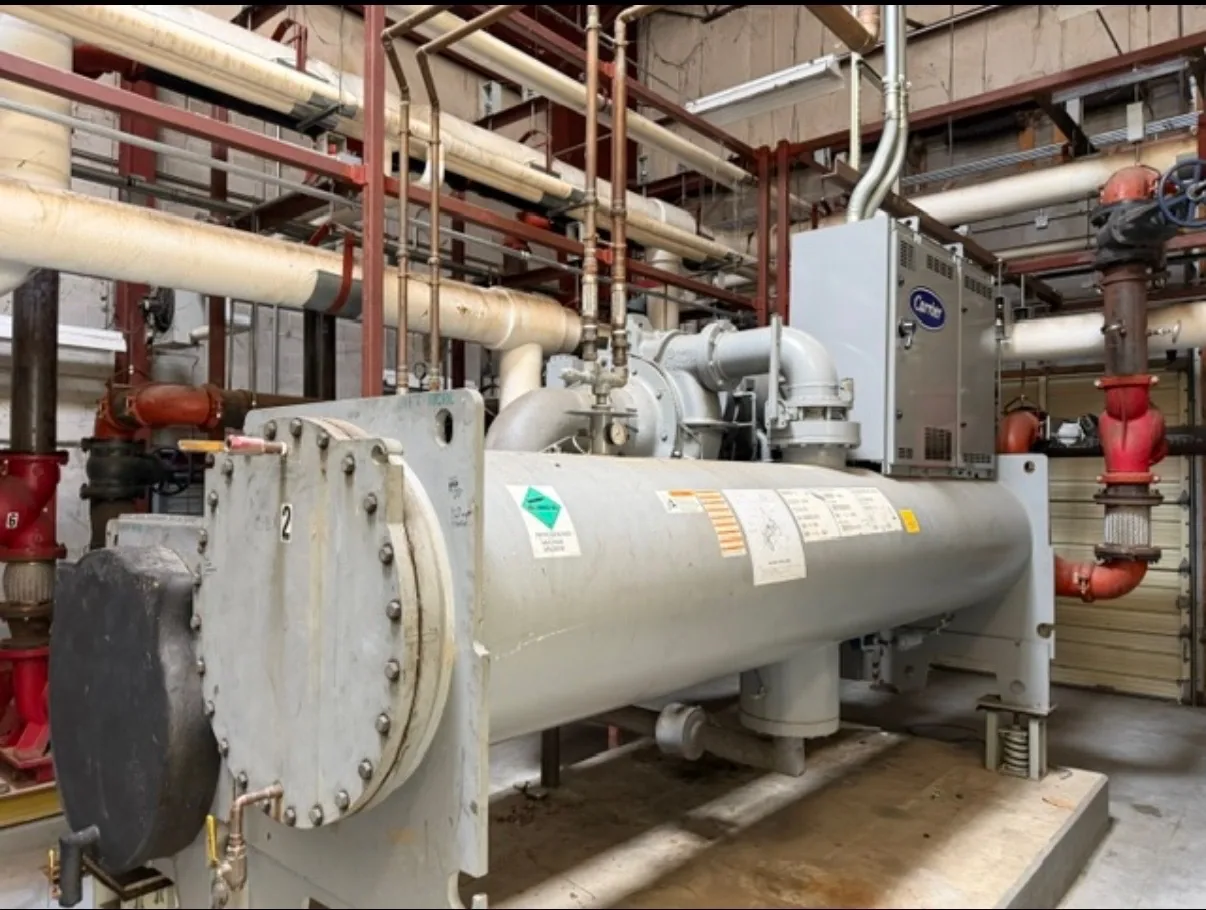
For a Trane chiller, start with the exact identification plate rather than a description such as large building unit. Include the model, serial number and indicated capacity if they are legible. Pictures of the whole assembly, electrical cabinet and any detached parts show what is included in the sale and help distinguish one machine from another.
If a screen, controller or starter has been replaced, mention it and share the information you have. Original documentation is helpful but not required to begin a conversation. Do not energize an idle machine or run a demonstration for us; we buy equipment without operational testing and assess the details supplied by the seller.
Consider the needs of a hospital
A healthcare facility may need to keep other building systems operating while one chiller is retired. Identify which machine is available and whether nearby equipment must remain accessible. If a facilities team has restrictions on noise, patient routes, work windows or contractor access, share those requirements early. The seller does not need to put the chiller back into service or run a test for us.
Clarify equipment ownership
Before a sale is finalized, confirm who owns the chiller and who is authorized to transfer it. The building owner, tenant, property manager and maintenance contractor may have different roles. If the equipment is part of a larger replacement project, specify what is included and who controls access. Clear ownership and a named site contact prevent delays without requiring the machine to be tested.
Checking the loading area
A truck-accessible loading area is useful information even when the chiller itself is indoors. Note dock height, gate width if known, vehicle restrictions and whether another tenant controls the approach. These are planning questions, not a request for the seller to arrange transport. We cover loading and freight and coordinate the practical route with the site contact after reviewing the equipment.
If the chiller is already retired
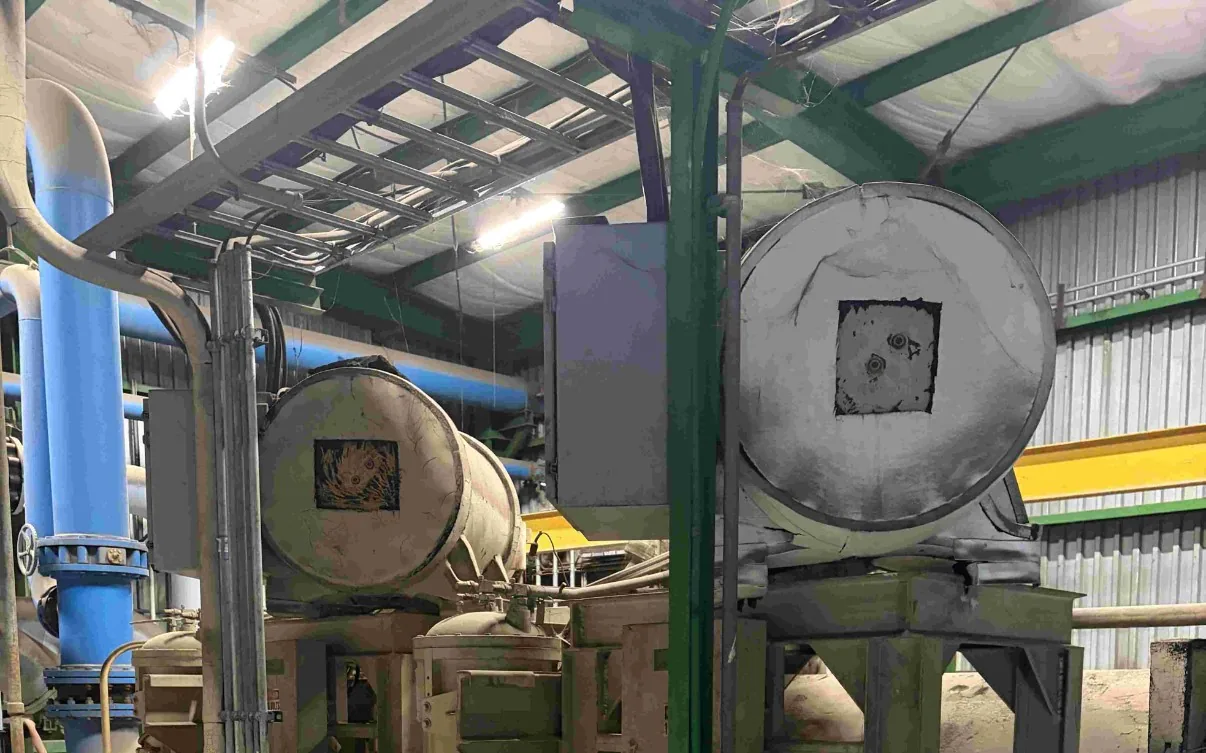
A unit that has been off for months or years can still be submitted. Tell us when it was last known to operate if that information exists, but do not start it merely for a sale. Describe what is connected, what has been removed and whether the site is accessible. A practical account of the present condition matters more than an unsupported performance claim.
Describe the route without guessing the lift
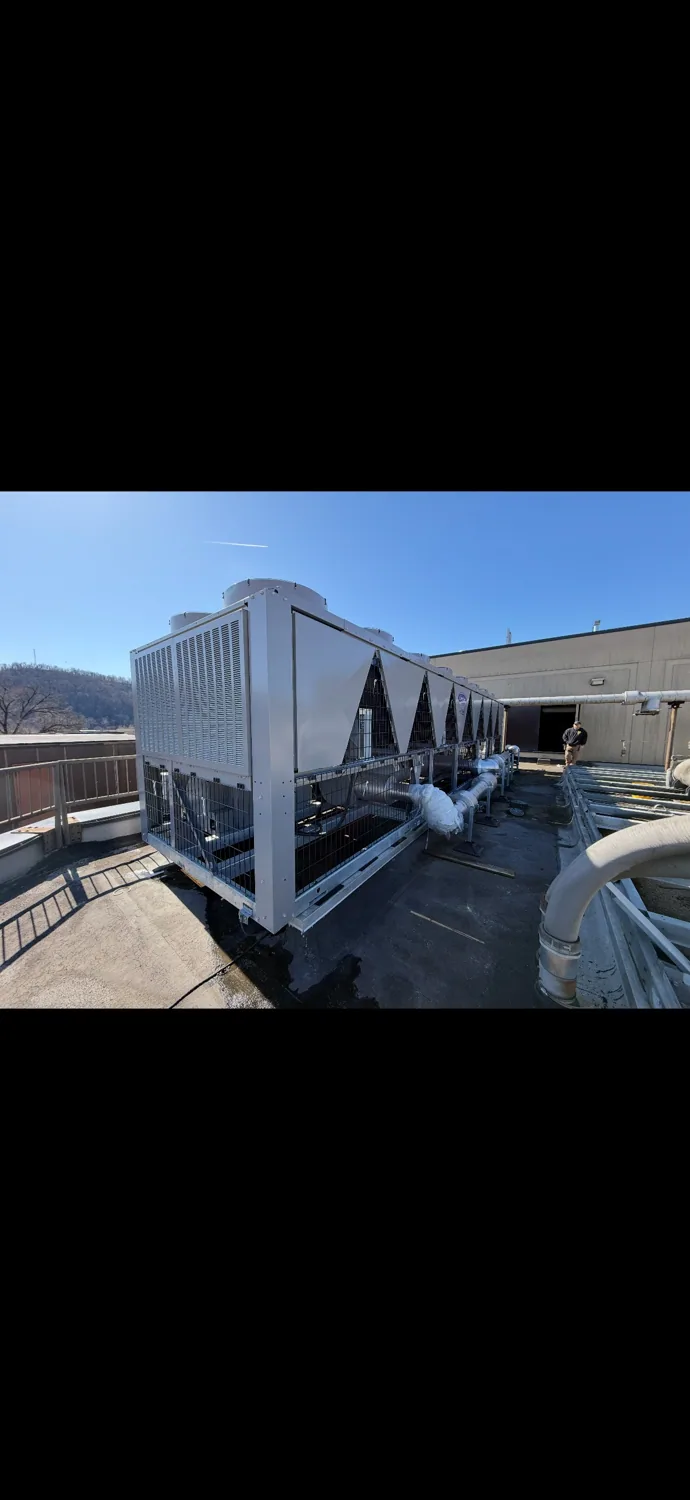
A roof, equipment yard or interior plant room can each present different constraints. Note the location, accessible openings and nearby obstructions if you know them, and provide safe wide-angle photographs. Do not estimate a crane size or lift weight from the chiller's appearance. Those decisions depend on verified equipment and site details. We cover rigging and crane service when needed as part of the removal.
What our removal scope covers
We cover rigging, crane service when needed, disconnects, refrigerant recovery, loading and freight for the chiller we buy. That scope is intended to avoid leaving the seller to arrange the major steps separately. The method and sequence depend on the actual unit and site. Tell us about known access restrictions, nearby active equipment and any relevant facility requirements at the outset.
A straightforward seller conversation
Start by texting (614) 715-3047 with the manufacturer, model, capacity if known, location and a few photos. We buy industrial and commercial chillers and can make a cash offer with upfront payment. The machine does not have to be operating, and no operational test is required. We do not sell chillers; this service is for owners who want to sell theirs.
Keep the right contacts together
The person who can authorize a sale is not always the person who can open the equipment room. Provide a contact for ownership decisions and, if different, a site contact for entry and work coordination. Note any requirements for notifying building occupants. That simple handoff is especially useful when a chiller is being removed from a property that continues to operate.