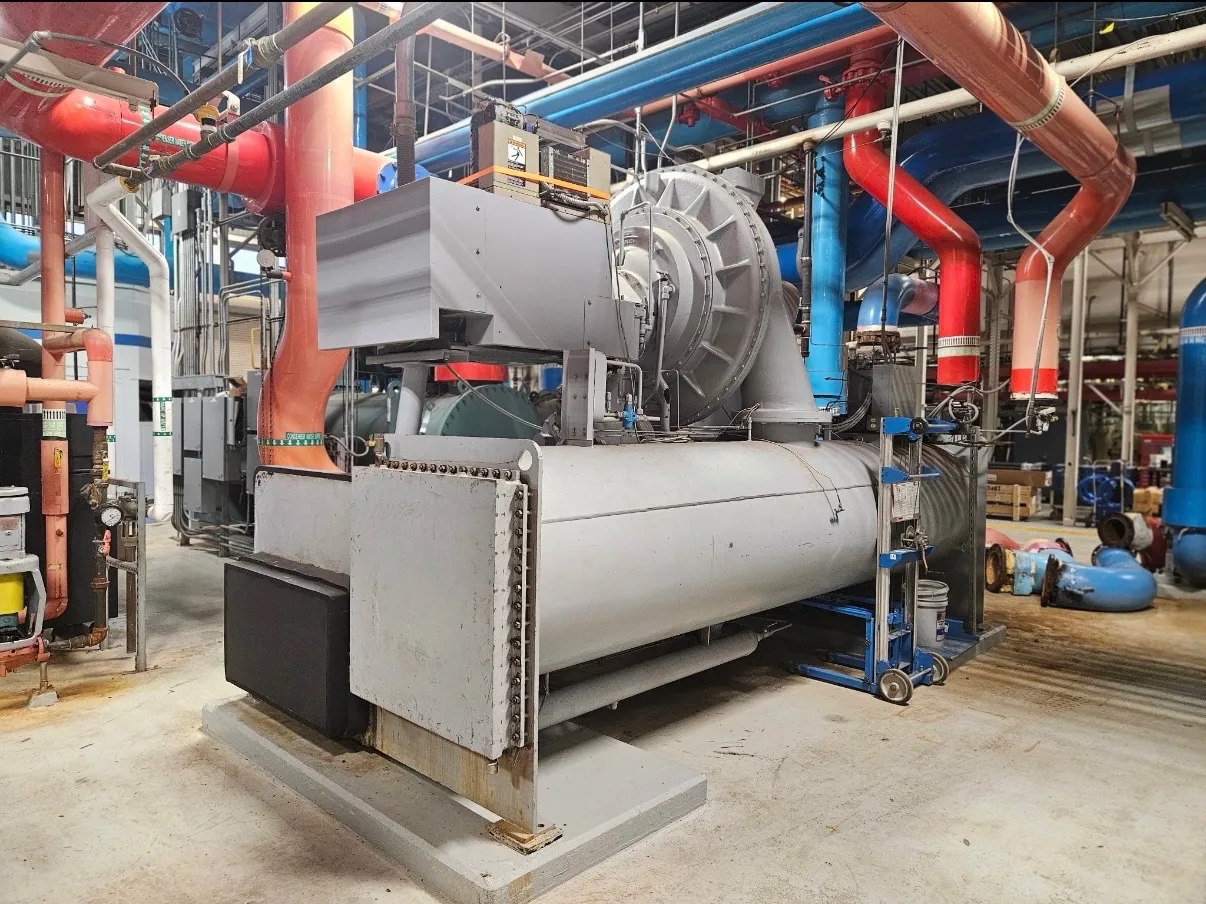
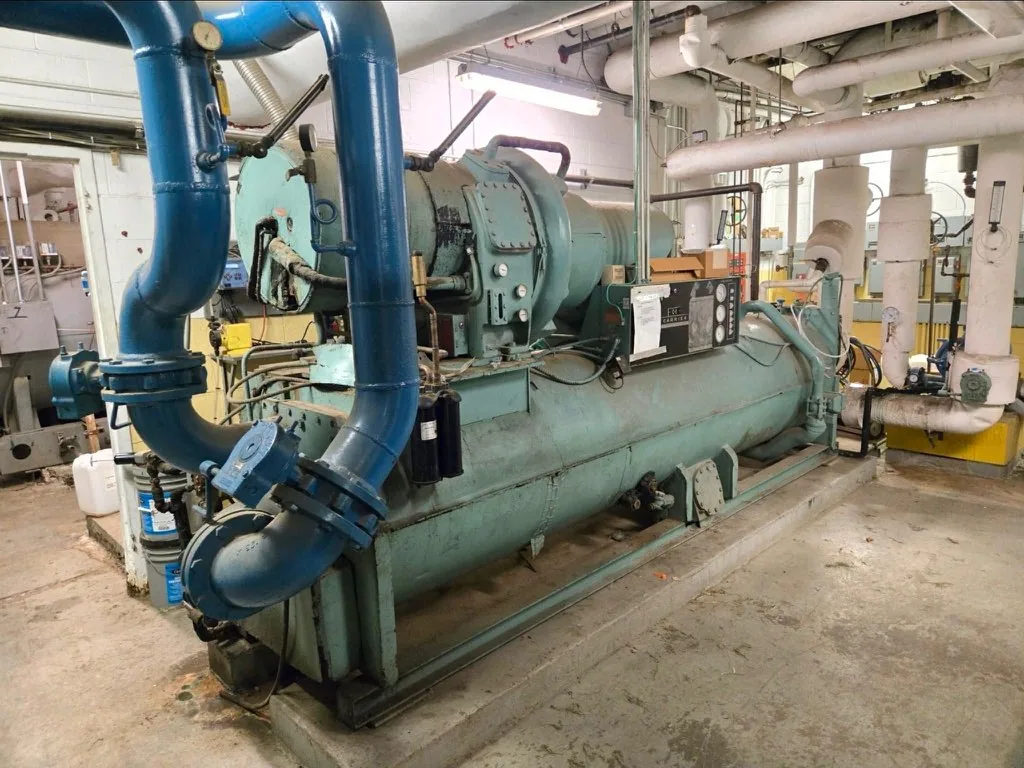

Finding a buyer for a York chiller in Martinsburg, WV should not require restarting the machine just to demonstrate it. We buy industrial and commercial chillers from 20 tons to 2,000-plus tons, including air-cooled and water-cooled units. We make cash offers, provide upfront payment and do not require testing. A few current photographs and an honest description of the equipment and site are a useful place to begin.
Identify the York chiller
A York label alone does not establish capacity, refrigerant or compressor design. A clear image of the actual nameplate is the best place to begin. Include a full-length photo and note whether the chiller is intact, partially dismantled or still connected to the building. If there are multiple units, identify the one offered in each photograph.
Describe the starter, controls and other components you intend to include, especially if any are in a separate cabinet or have already been removed. A useful offer discussion depends on the complete scope, not just the name on the front. There is no need to make the machine run or prove its performance for our review.
Consider the needs of a school or education facility
A school or education facility may need to coordinate work around classes, events or an unoccupied period. Identify the equipment owner and the person authorized to arrange the sale, then describe any site-entry and scheduling requirements. Note whether other chillers must remain available during the work. Those details help plan a removal without assuming that every campus has the same equipment or calendar.
Separate capacity from plant totals
Capacity is useful only when its scope is clear. A building schedule may show the combined capacity of several chillers, while the sale may include just one. Send the individual machine rating if available and identify any uncertainty. If there are several units, number them and photograph each plate. This avoids mistaking a plant total for the size of a single chiller.
Planning from a closed facility
A closed or temporarily inaccessible facility can still be discussed using existing photographs and records. Tell us when someone with keys or authorization can provide access, and mention any known site restrictions. Do not enter an unsafe or secured area for a new picture. The removal schedule can be coordinated around actual access once the machine and sale authority are clear.
If several departments are involved
A disposal decision may involve facilities, accounting and the property owner. Agree on the equipment being sold and appoint one contact to collect the model details and photographs. A second contact can coordinate site access if necessary. That division keeps the equipment description separate from the logistics and helps prevent a removed component from being mistaken for something still needed.
Compare the complete scope
When weighing what to do with a retired chiller, compare the whole scope rather than looking only at a headline offer. Ask who will arrange and cover disconnections, refrigerant recovery, lifting, loading and transportation, and how payment will be handled. Our purchase includes those covered services and upfront payment. A comparison based on the same equipment and work scope makes it easier to understand the practical differences between options.
Removal without arranging separate crews
Our purchase includes covered rigging, crane service when needed, disconnects, refrigerant recovery, loading and freight. A roof installation, a crowded mechanical room and a ground-level yard may each need a different sequence. Describe the actual setting and any known facility rules. The point is to coordinate the whole removal around the equipment rather than ask the seller to organize those services independently.
What to send for a cash offer
A nameplate photo, a view of the entire unit and a description of its present condition are a good start. Text them to (614) 715-3047 along with the city or county and a contact name. We buy chillers, provide upfront payment for a purchase and do not require operational testing. If you have more than one machine, label each photo set separately.
Use one inventory for multiple units
When selling several machines, keep an inventory with the same identifiers used in your photographs. Include each unit's location, model and capacity if known, plus the related loose parts. Mark units that are not for sale. This makes it easier to coordinate a staged pickup and avoids confusing a plant-wide capacity with the equipment included in one purchase.