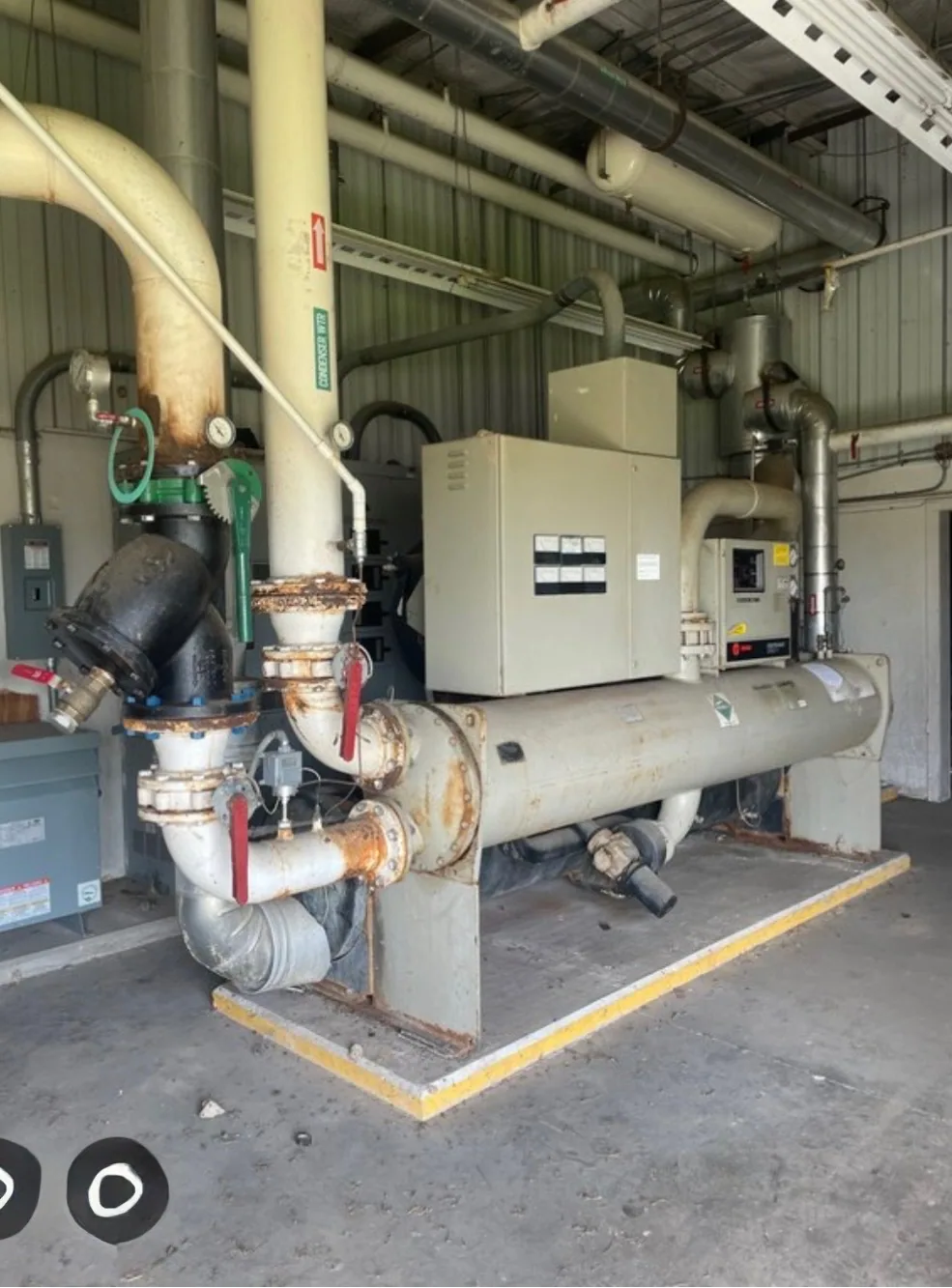
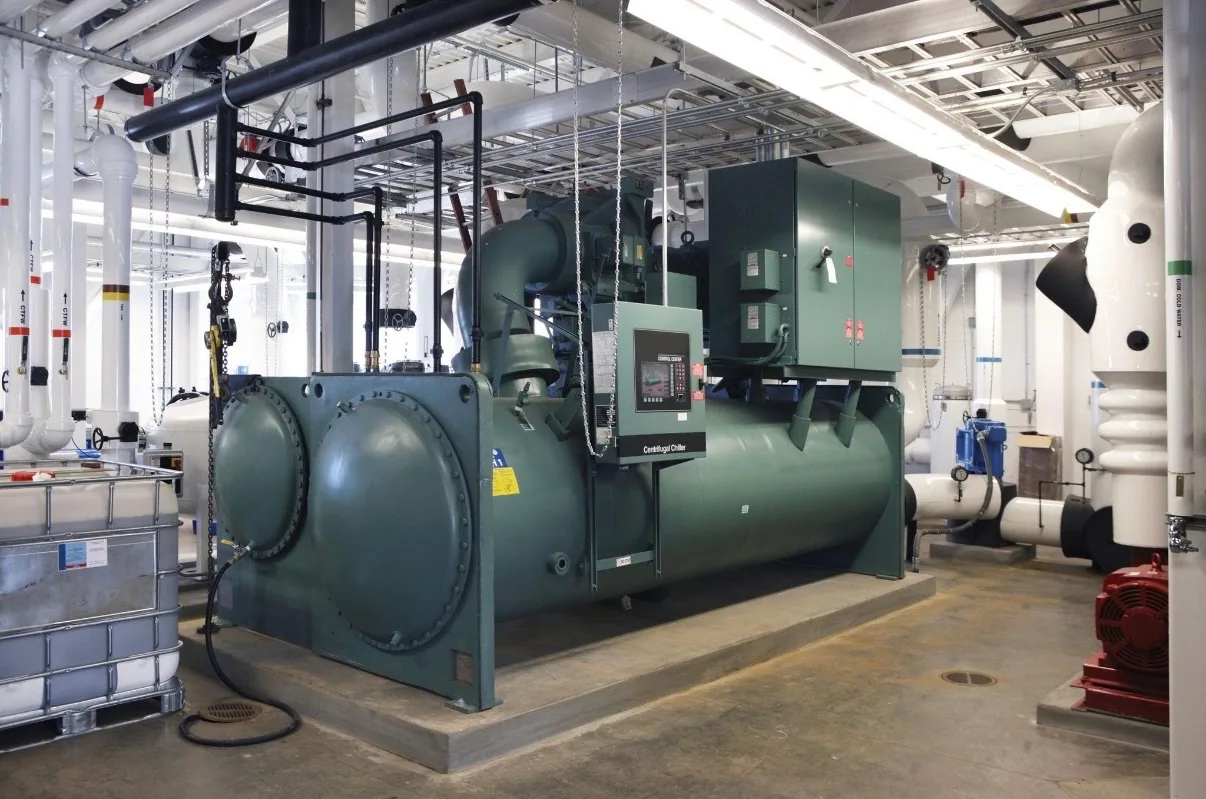

There is no need to restart a chiller to ask about selling a Trane chiller in Charleston, WV. We buy industrial and commercial chillers between 20 tons and 2,000-plus tons, including water-cooled and air-cooled equipment. We make cash offers and provide upfront payment, with no test required. Existing photos, identification and information about the site can help define the equipment and prepare for a practical removal discussion.
Identify the Trane chiller
For a Trane chiller, start with the exact identification plate rather than a description such as large building unit. Include the model, serial number and indicated capacity if they are legible. Pictures of the whole assembly, electrical cabinet and any detached parts show what is included in the sale and help distinguish one machine from another.
If a screen, controller or starter has been replaced, mention it and share the information you have. Original documentation is helpful but not required to begin a conversation. Do not energize an idle machine or run a demonstration for us; we buy equipment without operational testing and assess the details supplied by the seller.
Consider the needs of a warehouse or distribution facility
At a warehouse or distribution facility, coordinate around loading traffic, delivery appointments and any temperature-sensitive spaces that remain in operation. Identify the chiller rather than assuming that every piece of refrigeration equipment is included. Photos should show the unit and a safe view of the surrounding route. Let the site contact explain any required separation from ongoing vehicle or pedestrian activity.
Clarify equipment ownership
Before a sale is finalized, confirm who owns the chiller and who is authorized to transfer it. The building owner, tenant, property manager and maintenance contractor may have different roles. If the equipment is part of a larger replacement project, specify what is included and who controls access. Clear ownership and a named site contact prevent delays without requiring the machine to be tested.
Raised platforms and supports
A chiller on a platform or structural support may require a different approach from one sitting at ground level. Send an overall view and note the approximate elevation if known. Describe nearby stairs, railings or openings without loosening anything yourself. The appropriate rigging and crane plan depends on the actual installation, including its weight, support and available clearance.
Coordinating multiple chillers
A site with several chillers may want to retire them together or in stages. Identify each machine, its condition and the order in which it becomes available. Explain whether access to one unit is blocked by another and whether anything must remain in operation. Separate equipment information from schedule preferences so the sale and removal scope can be understood clearly.
Plan around a defined sale boundary
Before a removal crew arrives, agree on the particular chiller and any separate cabinets or detached parts included in the transaction. Note components connected to other equipment and anything the owner intends to keep. Photographs marked with simple labels can clarify that boundary. The actual sequence depends on site conditions, but a shared understanding of what is being purchased helps avoid unnecessary confusion.
A practical removal discussion
An offer discussion can include the equipment's current location and how a crew could reach it. We cover rigging, crane service when needed, disconnects, refrigerant recovery, loading and freight. Let us know about occupied spaces, gates, plant-room doors or roof access, as applicable. The actual plan will depend on the unit and site, not an assumed standard procedure.
Getting the sale started
Text (614) 715-3047 with your chiller photos and the information already available to you. Include the equipment location and say whether the machine is still connected. We purchase rather than sell chillers, make cash offers and provide upfront payment for a purchase. A machine may be reviewed without being run or operationally tested, so there is no need to restart it for us.
Be clear about the equipment history
If you know the chiller was modified, damaged or taken out of service, say so and provide the available records. Unknown is an acceptable answer when a prior owner or contractor handled the work. Avoid assuming that a recent repair applies to every component in a multi-unit plant. The buyer can review what is documented without asking for a new operating test.