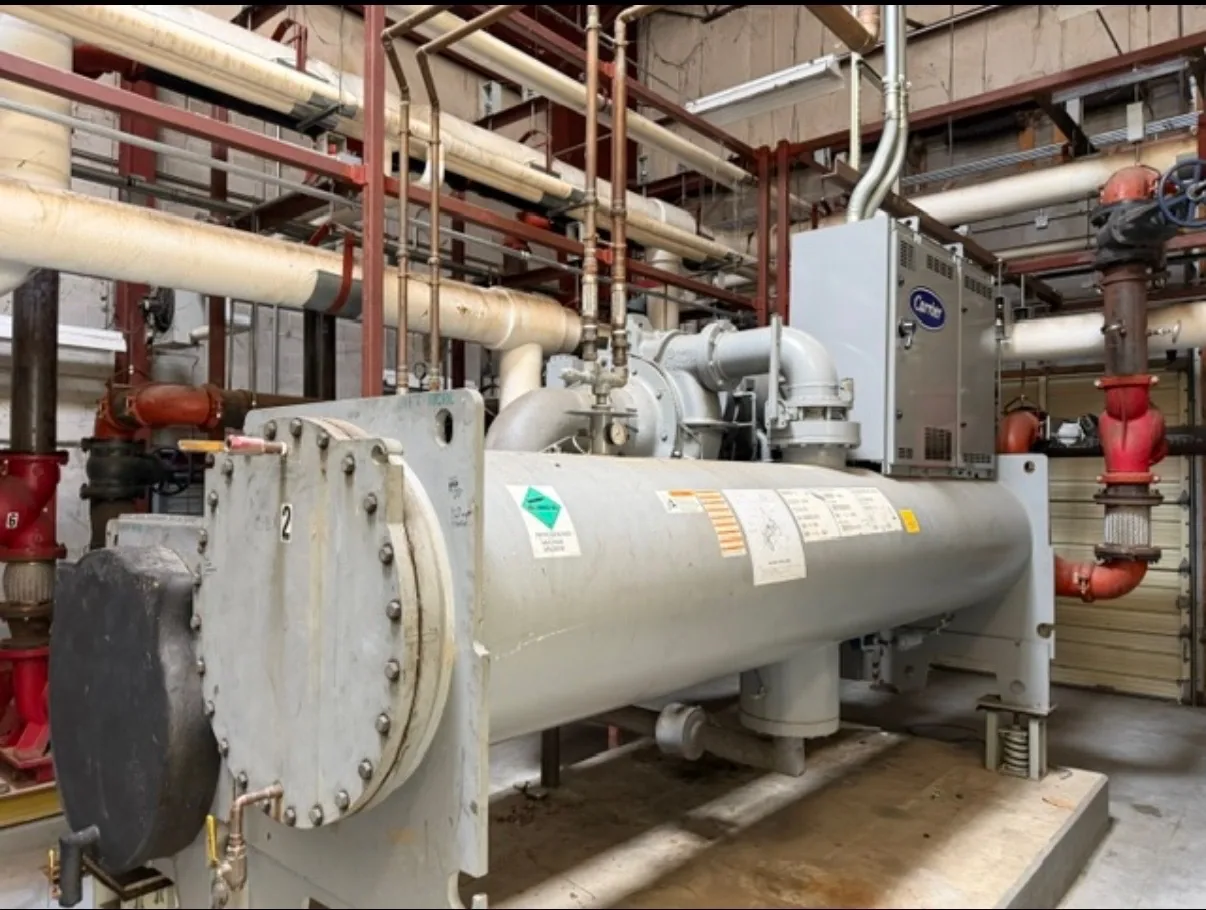

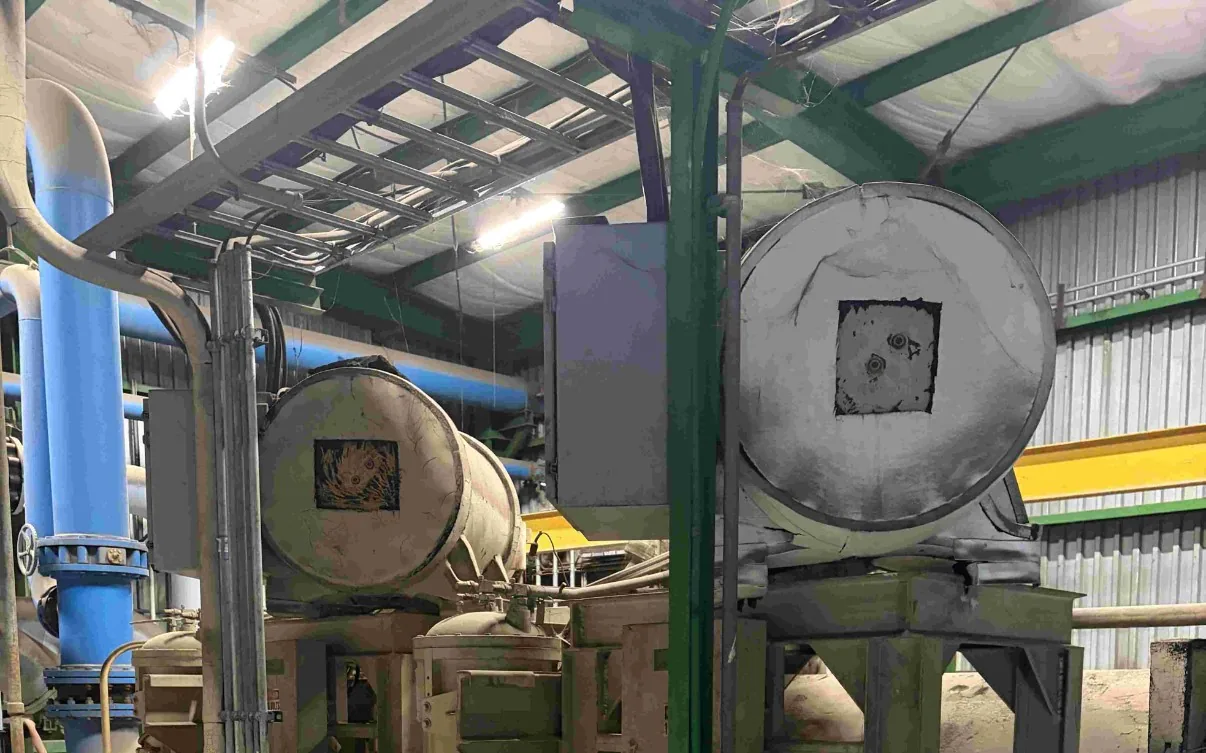
Owners of a Trane chiller in Huntington, WV can ask us about a sale whether the equipment is running or shut down. We buy air-cooled and water-cooled industrial chillers from 20 tons to 2,000-plus tons, with cash offers and upfront payment. No testing is required. Good photos, a clear description of what is included and a contact who understands the facility can make the next steps easier to coordinate.
Identify the Trane chiller
For a Trane chiller, start with the exact identification plate rather than a description such as large building unit. Include the model, serial number and indicated capacity if they are legible. Pictures of the whole assembly, electrical cabinet and any detached parts show what is included in the sale and help distinguish one machine from another.
If a screen, controller or starter has been replaced, mention it and share the information you have. Original documentation is helpful but not required to begin a conversation. Do not energize an idle machine or run a demonstration for us; we buy equipment without operational testing and assess the details supplied by the seller.
Consider the needs of a manufacturing facility
At a manufacturing site, a chiller may have served either the building or a production process. Tell us what it cooled if known, but do not assume that its prior duty establishes its current condition. A production calendar, restricted loading area or clearance around adjacent lines can shape the removal schedule. Mark any equipment that must stay in place and identify the person coordinating site access.
Identify each machine separately
For a multi-unit sale, give each chiller a simple number and use the same number on its plate, overall photo and condition notes. Tell us whether capacities are individual ratings or a combined figure. An existing inventory is helpful, but a short handwritten list can work too. Separate identification lets the discussion focus on the equipment actually being offered.
Checking the loading area
A truck-accessible loading area is useful information even when the chiller itself is indoors. Note dock height, gate width if known, vehicle restrictions and whether another tenant controls the approach. These are planning questions, not a request for the seller to arrange transport. We cover loading and freight and coordinate the practical route with the site contact after reviewing the equipment.
Selling from a property transition
During a building sale, lease change or closure, establish who owns the equipment and when access will be available. An inventory may identify the chiller, but current photographs show whether it still matches the paperwork. Let us know which contact can approve the transaction and which person can coordinate entry. A unit does not have to be running to be considered.
Tell us how the cooling was used
A chiller might have served a building's comfort cooling, a manufacturing process or another load. That history can help explain the installation, but it does not prove the machine's present capacity or condition. Share what is known and identify any equipment that still serves an active load. If the previous use is uncertain, say so; the actual chiller plate and photographs remain useful starting points.
Removal without arranging separate crews
Our purchase includes covered rigging, crane service when needed, disconnects, refrigerant recovery, loading and freight. A roof installation, a crowded mechanical room and a ground-level yard may each need a different sequence. Describe the actual setting and any known facility rules. The point is to coordinate the whole removal around the equipment rather than ask the seller to organize those services independently.
A straightforward seller conversation
Start by texting (614) 715-3047 with the manufacturer, model, capacity if known, location and a few photos. We buy industrial and commercial chillers and can make a cash offer with upfront payment. The machine does not have to be operating, and no operational test is required. We do not sell chillers; this service is for owners who want to sell theirs.
Use one inventory for multiple units
When selling several machines, keep an inventory with the same identifiers used in your photographs. Include each unit's location, model and capacity if known, plus the related loose parts. Mark units that are not for sale. This makes it easier to coordinate a staged pickup and avoids confusing a plant-wide capacity with the equipment included in one purchase.