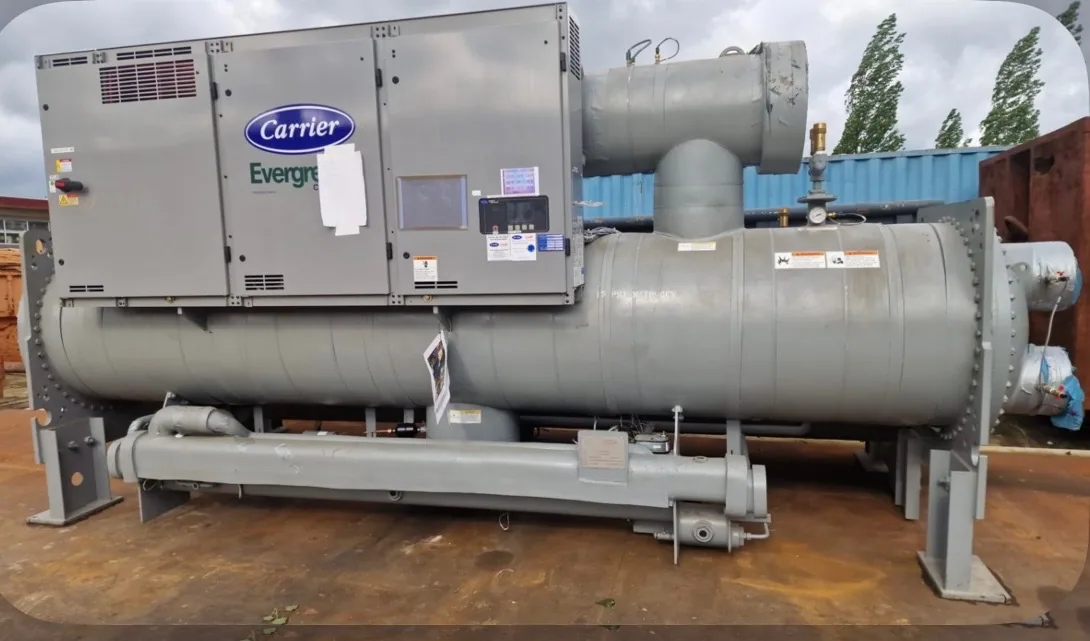
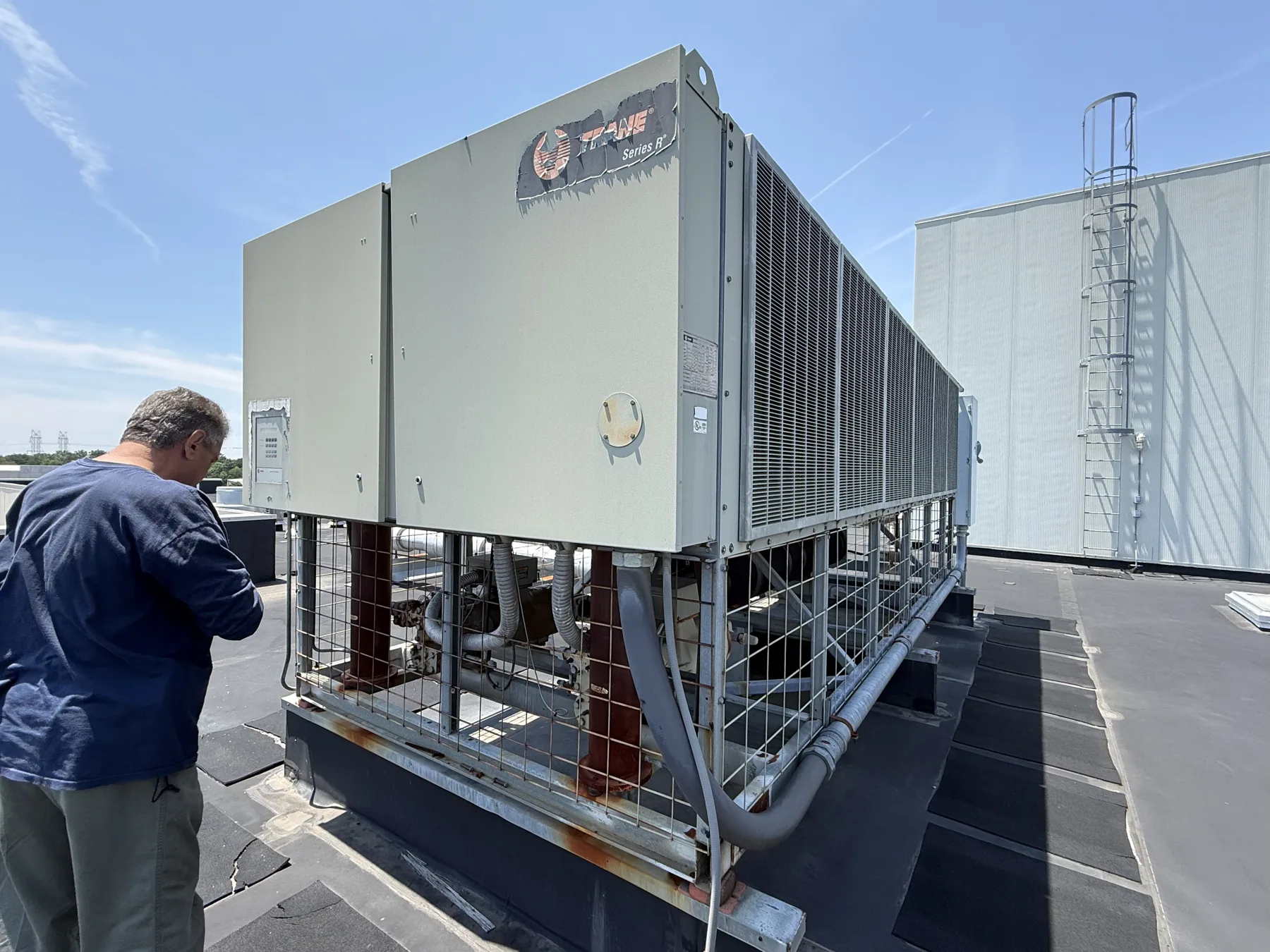

If you need to sell a Smardt chiller in West Virginia, start with the equipment you actually have, not an assumed market value or a test run. We buy commercial and industrial chillers from 20 tons to 2,000-plus tons, including air-cooled and water-cooled units. Our buying process includes cash offers and upfront payment, and a test is not required. The guidance below explains how to identify the machine and prepare for removal.
Identify the Smardt chiller
A Smardt chiller should be identified by the complete model and serial information on the equipment, with photographs showing the chiller and its controls. If a building has several modules or separate units, specify which pieces belong to the proposed sale. Include the stated capacity and refrigerant if they appear on a readable plate or in reliable records.
Controls, compressors and electrical components may have been changed over time. Share any known changes and the current condition rather than assuming a model name describes every component. We can review equipment that has been shut down and do not ask the seller to run a performance test before requesting a cash offer.
Consider the needs of a food-processing facility
A food-processing site may have hygiene, traffic or production restrictions that affect the removal route. Explain any site-specific requirements to the removal coordinator and identify whether the retired chiller served a process or a building loop, if known. Do not disturb nearby equipment for a photograph. List the machine and any components being sold separately from systems that must remain active.
Document a partially dismantled unit
If the chiller was partly dismantled before you contacted us, describe what remains and where the removed parts are located. Send current pictures of both the machine and any components included in the sale. You do not need to reassemble the equipment for review. The important point is to distinguish the actual available items from parts that are missing or staying at the property.
Planning a roof lift
If the chiller is on a roof, provide its location on the building, a safe overall photo and any known route from the street or yard. Mention parapets, overhead obstructions and areas that must remain open. The actual lift method depends on the machine and site; do not try to move a unit yourself. We cover the crane when needed as part of the coordinated removal.
If the chiller is already retired
A unit that has been off for months or years can still be submitted. Tell us when it was last known to operate if that information exists, but do not start it merely for a sale. Describe what is connected, what has been removed and whether the site is accessible. A practical account of the present condition matters more than an unsupported performance claim.
Compare the complete scope
When weighing what to do with a retired chiller, compare the whole scope rather than looking only at a headline offer. Ask who will arrange and cover disconnections, refrigerant recovery, lifting, loading and transportation, and how payment will be handled. Our purchase includes those covered services and upfront payment. A comparison based on the same equipment and work scope makes it easier to understand the practical differences between options.
Coordinating a safe handoff
Share any known restrictions around active equipment and access to the chiller. We cover disconnects, refrigerant recovery, rigging, crane service when needed, loading and freight for the purchased equipment. The people coordinating the work can use the information you provide to plan the appropriate sequence. You do not need to open cabinets, break connections or attempt a lift for an initial review.
Sell the chiller as it sits
Whether the machine is operating, shut down or partially dismantled, explain its actual state and text photos to (614) 715-3047. We are buyers, not equipment resellers offering units to this site's visitors. Our process starts with a cash offer and provides upfront payment for a purchase; operational testing is not required. Identify missing components so the offer discussion reflects what is available.
Use one inventory for multiple units
When selling several machines, keep an inventory with the same identifiers used in your photographs. Include each unit's location, model and capacity if known, plus the related loose parts. Mark units that are not for sale. This makes it easier to coordinate a staged pickup and avoids confusing a plant-wide capacity with the equipment included in one purchase.