Finding a buyer for a Smardt chiller in Morgantown, WV should not require restarting the machine just to demonstrate it. We buy industrial and commercial chillers from 20 tons to 2,000-plus tons, including air-cooled and water-cooled units. We make cash offers, provide upfront payment and do not require testing. A few current photographs and an honest description of the equipment and site are a useful place to begin.
Identify the Smardt chiller
A Smardt chiller should be identified by the complete model and serial information on the equipment, with photographs showing the chiller and its controls. If a building has several modules or separate units, specify which pieces belong to the proposed sale. Include the stated capacity and refrigerant if they appear on a readable plate or in reliable records.
Controls, compressors and electrical components may have been changed over time. Share any known changes and the current condition rather than assuming a model name describes every component. We can review equipment that has been shut down and do not ask the seller to run a performance test before requesting a cash offer.
Consider the needs of an office building
At an occupied office building, decide which chiller is included and whether an active tenant, parking area or loading dock affects access. The facilities team can flag building rules and the best contact for coordinating work. A photograph of the machine and its plate is more valuable than trying to estimate how much office space it once cooled. An operational demonstration is not needed.
Show the whole machine
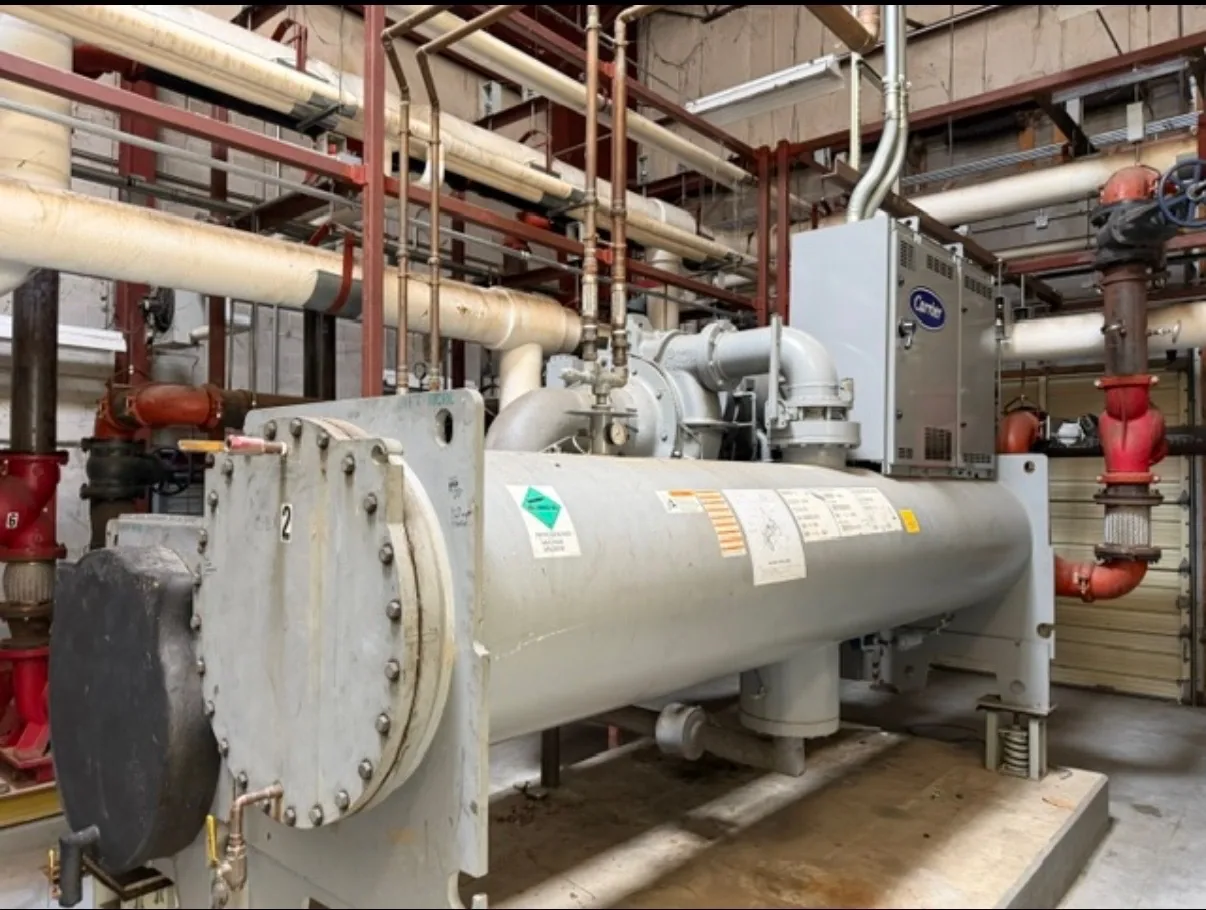
A useful photo set begins with a full view, then closer pictures of the manufacturer plate, controls and any visible damage. Add a picture of the surrounding area from a safe position. If a part has already been removed, photograph it separately and say whether it is included. Pictures do not have to be polished; they need to show what is actually available.
Access through a shared building
When an exit route passes through common space, identify who controls that space and whether there are access hours or tenant restrictions. Elevators, corridors and doors can be relevant, but their suitability cannot be determined without the actual dimensions and site review. Do not promise a route based on an old drawing alone. A current photo and the right building contact are a good beginning.
Coordinating with a facility manager
The person selling the equipment may not be the person with the keys or the site drawings. Introduce a facilities contact who can explain where the chiller is, which systems remain active and when the work can take place. Keep the initial photo set simple and avoid sharing sensitive access codes. Detailed site arrangements can be coordinated directly once the equipment is identified.
Compare the complete scope
When weighing what to do with a retired chiller, compare the whole scope rather than looking only at a headline offer. Ask who will arrange and cover disconnections, refrigerant recovery, lifting, loading and transportation, and how payment will be handled. Our purchase includes those covered services and upfront payment. A comparison based on the same equipment and work scope makes it easier to understand the practical differences between options.
What to tell the removal coordinator
Identify the chiller's location, the site contact and any restrictions on working hours or the route to a truck. We cover rigging, a crane when needed, disconnects, refrigerant recovery, loading and freight. Existing measurements or drawings are useful, but do not guess at the weight. The removal method is planned for the actual machine and verified site conditions.
Getting the sale started
Text (614) 715-3047 with your chiller photos and the information already available to you. Include the equipment location and say whether the machine is still connected. We purchase rather than sell chillers, make cash offers and provide upfront payment for a purchase. A machine may be reviewed without being run or operationally tested, so there is no need to restart it for us.
Bring existing information, not a test
A manufacturer plate, existing service record or clear photograph can answer many initial questions. You do not need to commission a report or start the chiller to establish an operating history. Send what you have, label estimates and explain missing information. Once the equipment and access are understood, the offer and covered removal can be coordinated with the appropriate owner and site contact.