
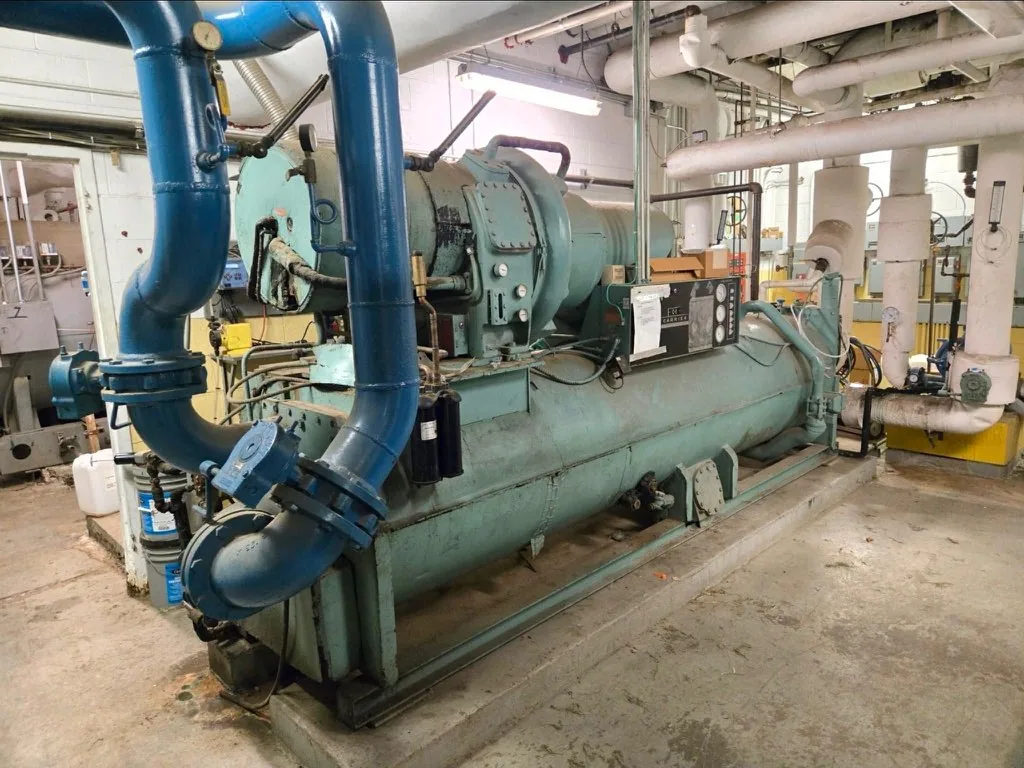
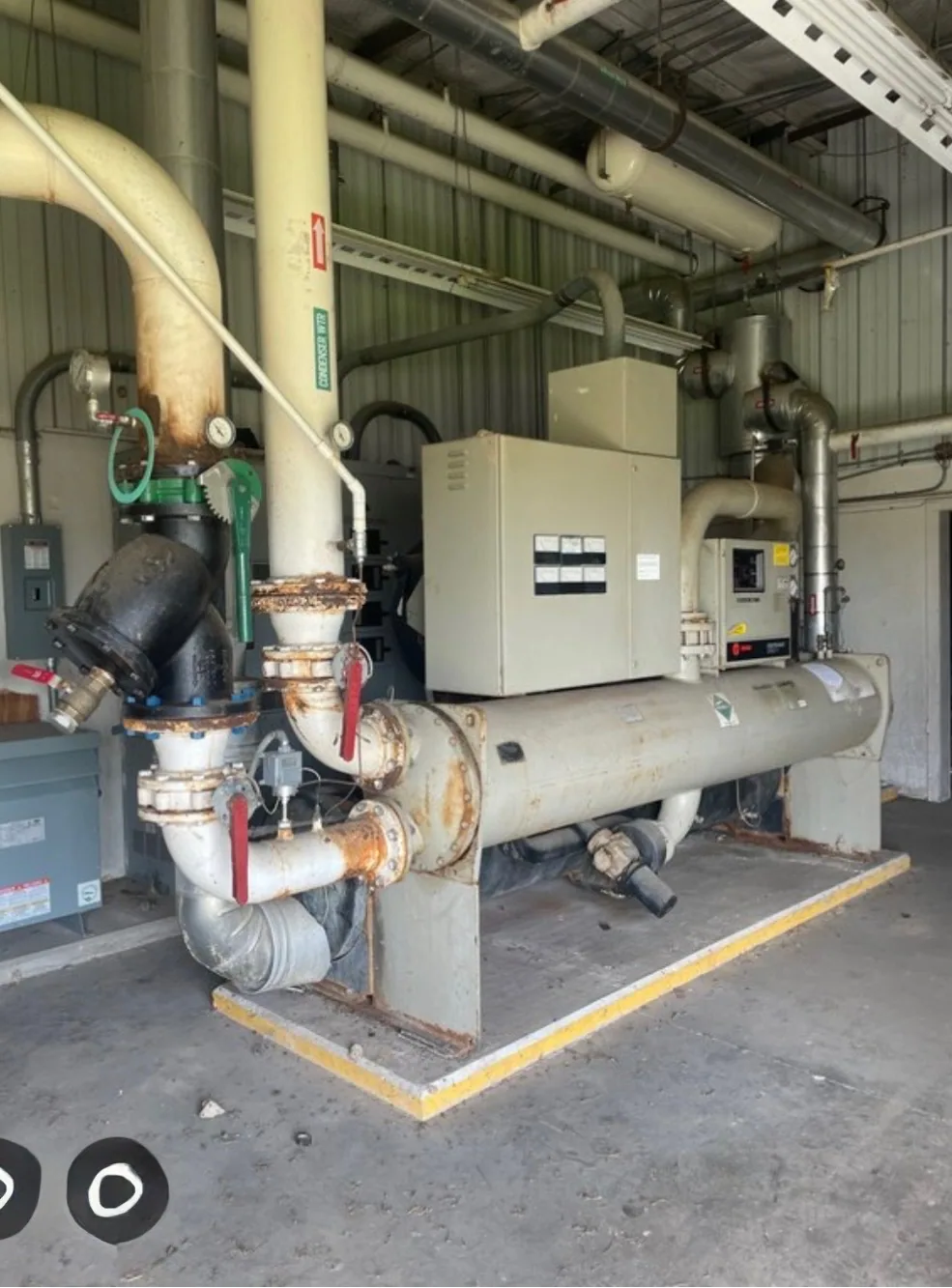
If you need to sell a Multistack chiller in Morgantown, WV, start with the equipment you actually have, not an assumed market value or a test run. We buy commercial and industrial chillers from 20 tons to 2,000-plus tons, including air-cooled and water-cooled units. Our buying process includes cash offers and upfront payment, and a test is not required. The guidance below explains how to identify the machine and prepare for removal.
Identify the Multistack chiller
For a Multistack chiller, show the entire group of modules as well as the identifying plate on each piece available for sale. Tell us how many modules are included and whether they are still connected to a common frame or piping. Do not assume a single nameplate describes the combined capacity of every module in the bank.
If modules have different histories or some have already been disconnected, label the photographs and explain the differences. A sketch or inventory can be useful when only part of an installation is being retired. We will review the described equipment without an operational test, using the details you have rather than requiring a perfect record set.
Consider the needs of a manufacturing facility
At a manufacturing site, a chiller may have served either the building or a production process. Tell us what it cooled if known, but do not assume that its prior duty establishes its current condition. A production calendar, restricted loading area or clearance around adjacent lines can shape the removal schedule. Mark any equipment that must stay in place and identify the person coordinating site access.
Record the present condition
Describe the equipment as it sits today: connected or disconnected, complete or partly removed, running or shut down. Note visible damage or missing pieces and distinguish what you know from what is uncertain. Photos and an honest account are more useful than promising a performance level. We can review nonrunning equipment and do not require operational testing.
Checking the loading area
A truck-accessible loading area is useful information even when the chiller itself is indoors. Note dock height, gate width if known, vehicle restrictions and whether another tenant controls the approach. These are planning questions, not a request for the seller to arrange transport. We cover loading and freight and coordinate the practical route with the site contact after reviewing the equipment.
Coordinating with a facility manager
The person selling the equipment may not be the person with the keys or the site drawings. Introduce a facilities contact who can explain where the chiller is, which systems remain active and when the work can take place. Keep the initial photo set simple and avoid sharing sensitive access codes. Detailed site arrangements can be coordinated directly once the equipment is identified.
Account for building operations
A building does not have to be empty to sell a chiller, but ongoing operations may affect the work window. Consider deliveries, employees, visitors and access to other mechanical equipment. Let the facility contact describe the actual restrictions instead of assuming the removal can happen at any hour. Keeping the sale decision separate from the site's access plan makes it easier to involve the right people at the right time.
A practical removal discussion
An offer discussion can include the equipment's current location and how a crew could reach it. We cover rigging, crane service when needed, disconnects, refrigerant recovery, loading and freight. Let us know about occupied spaces, gates, plant-room doors or roof access, as applicable. The actual plan will depend on the unit and site, not an assumed standard procedure.
From first photos to an offer
Show the equipment as it is and send the pictures to (614) 715-3047. Add the model, rated tons and refrigerant if known, plus a short note about access. We are a chiller buyer and make cash offers with upfront payment. We do not require operational testing and do not sell replacement chillers. An accurate description helps keep the transaction focused.
Check authorization before handoff
If the chiller belongs to a company, public body or property owner, make sure the person accepting the offer has the necessary authority. The facility may also have its own inventory or disposal process. Identify who will coordinate access and confirm which components are included. These practical steps help the purchase proceed without assuming that the maintenance contact owns the equipment.