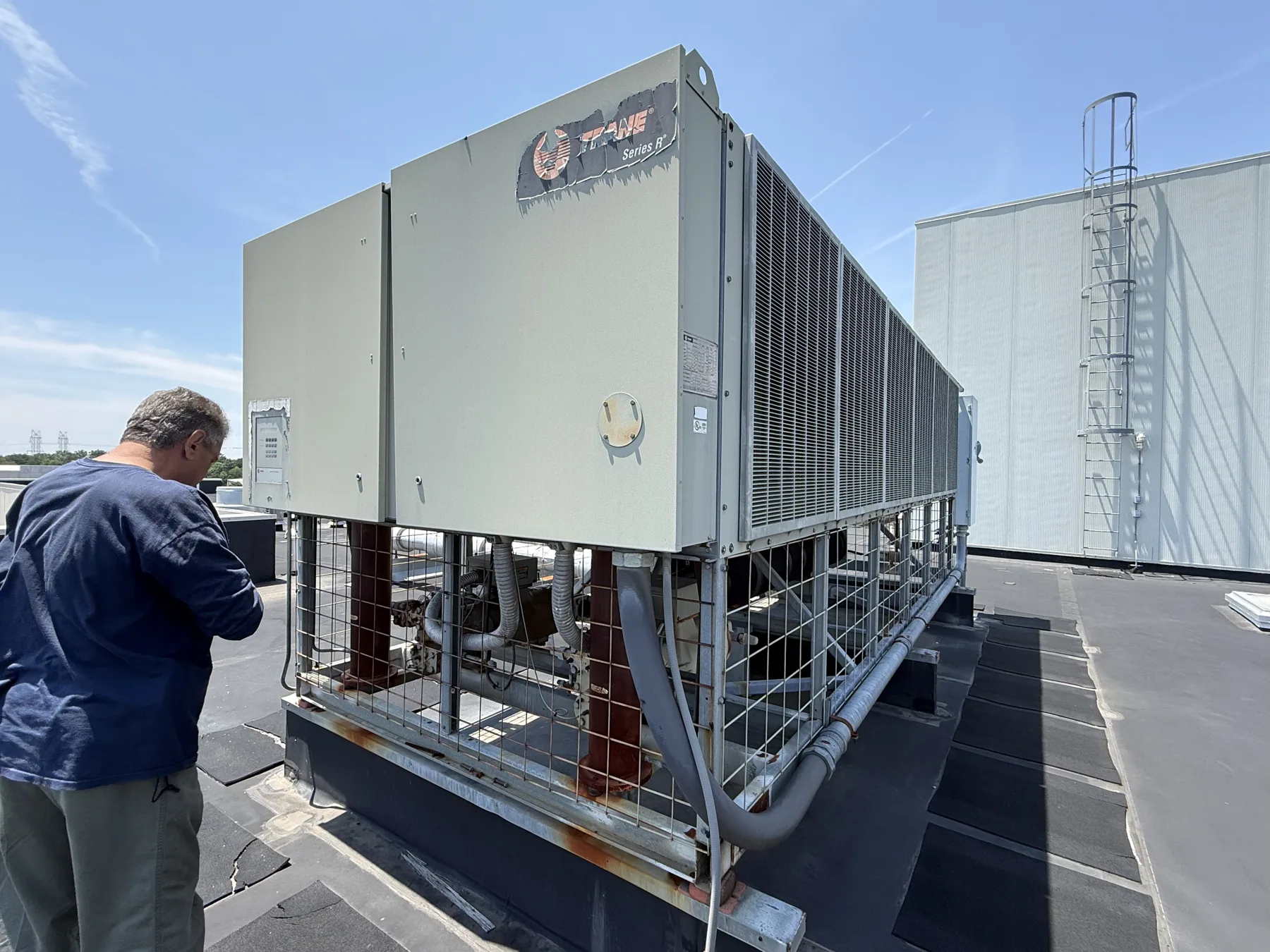

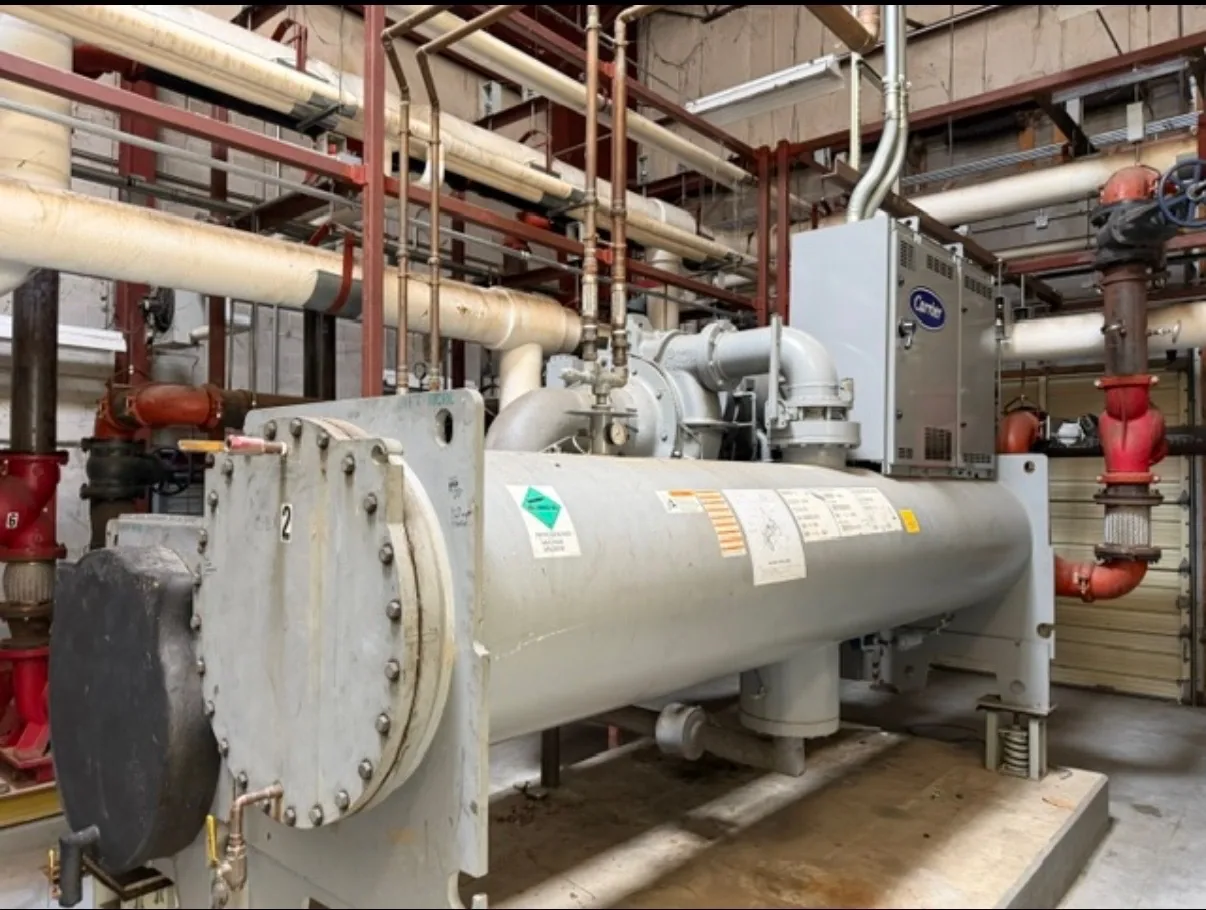
There is no need to restart a chiller to ask about selling a scroll chiller in Charleston, WV. We buy industrial and commercial chillers between 20 tons and 2,000-plus tons, including water-cooled and air-cooled equipment. We make cash offers and provide upfront payment, with no test required. Existing photos, identification and information about the site can help define the equipment and prepare for a practical removal discussion.
Describe your scroll chiller
Scroll chillers can have multiple compressors or circuits, so a count and clear photographs may help explain the equipment being offered. Capture the overall chiller and the model and serial plate. If the compressors are accessible for photography without opening unsafe equipment, their labels may add useful detail, but they do not replace the machine's main plate.
Tell us the chiller's stated capacity and whether it is a single assembly or part of a group. We buy industrial and commercial chillers from 20 tons to 2,000-plus tons, so an accurate capacity matters. An idle or nonrunning machine can be submitted without performing a test or restoring it to service.
Consider the needs of an office building
At an occupied office building, decide which chiller is included and whether an active tenant, parking area or loading dock affects access. The facilities team can flag building rules and the best contact for coordinating work. A photograph of the machine and its plate is more valuable than trying to estimate how much office space it once cooled. An operational demonstration is not needed.
Start with the nameplate
Photograph the equipment nameplate straight on if you can do so safely. Model, serial number, rated tons and electrical information may appear there, although labels vary. Include a wider picture so the plate can be matched to the right machine. If it is damaged or missing, say so and send whatever existing records or photographs are available instead of guessing at the numbers.
Access through a shared building
When an exit route passes through common space, identify who controls that space and whether there are access hours or tenant restrictions. Elevators, corridors and doors can be relevant, but their suitability cannot be determined without the actual dimensions and site review. Do not promise a route based on an old drawing alone. A current photo and the right building contact are a good beginning.
Coordinating multiple chillers
A site with several chillers may want to retire them together or in stages. Identify each machine, its condition and the order in which it becomes available. Explain whether access to one unit is blocked by another and whether anything must remain in operation. Separate equipment information from schedule preferences so the sale and removal scope can be understood clearly.
Allow for a staged facility transition
When a new cooling system is being installed, the old chiller may not become available on the same day as the purchase decision. Share the expected sequence and flag which dates are still tentative. The site contact can identify access needs and equipment that must remain active. We can begin discussing the chiller from current photos and records without requiring it to be tested or removed first.
A practical removal discussion
An offer discussion can include the equipment's current location and how a crew could reach it. We cover rigging, crane service when needed, disconnects, refrigerant recovery, loading and freight. Let us know about occupied spaces, gates, plant-room doors or roof access, as applicable. The actual plan will depend on the unit and site, not an assumed standard procedure.
A straightforward seller conversation
Start by texting (614) 715-3047 with the manufacturer, model, capacity if known, location and a few photos. We buy industrial and commercial chillers and can make a cash offer with upfront payment. The machine does not have to be operating, and no operational test is required. We do not sell chillers; this service is for owners who want to sell theirs.
Use one inventory for multiple units
When selling several machines, keep an inventory with the same identifiers used in your photographs. Include each unit's location, model and capacity if known, plus the related loose parts. Mark units that are not for sale. This makes it easier to coordinate a staged pickup and avoids confusing a plant-wide capacity with the equipment included in one purchase.