Facilities in Clarksburg, WV can contact us about selling a scroll chiller, even if the machine has already been retired. We buy air-cooled and water-cooled industrial chillers from 20 tons to 2,000-plus tons and provide cash offers and upfront payment. Testing is not required. Explain the machine's condition and what is included, then identify any access needs so the covered removal can be coordinated around the actual site.
Describe your scroll chiller
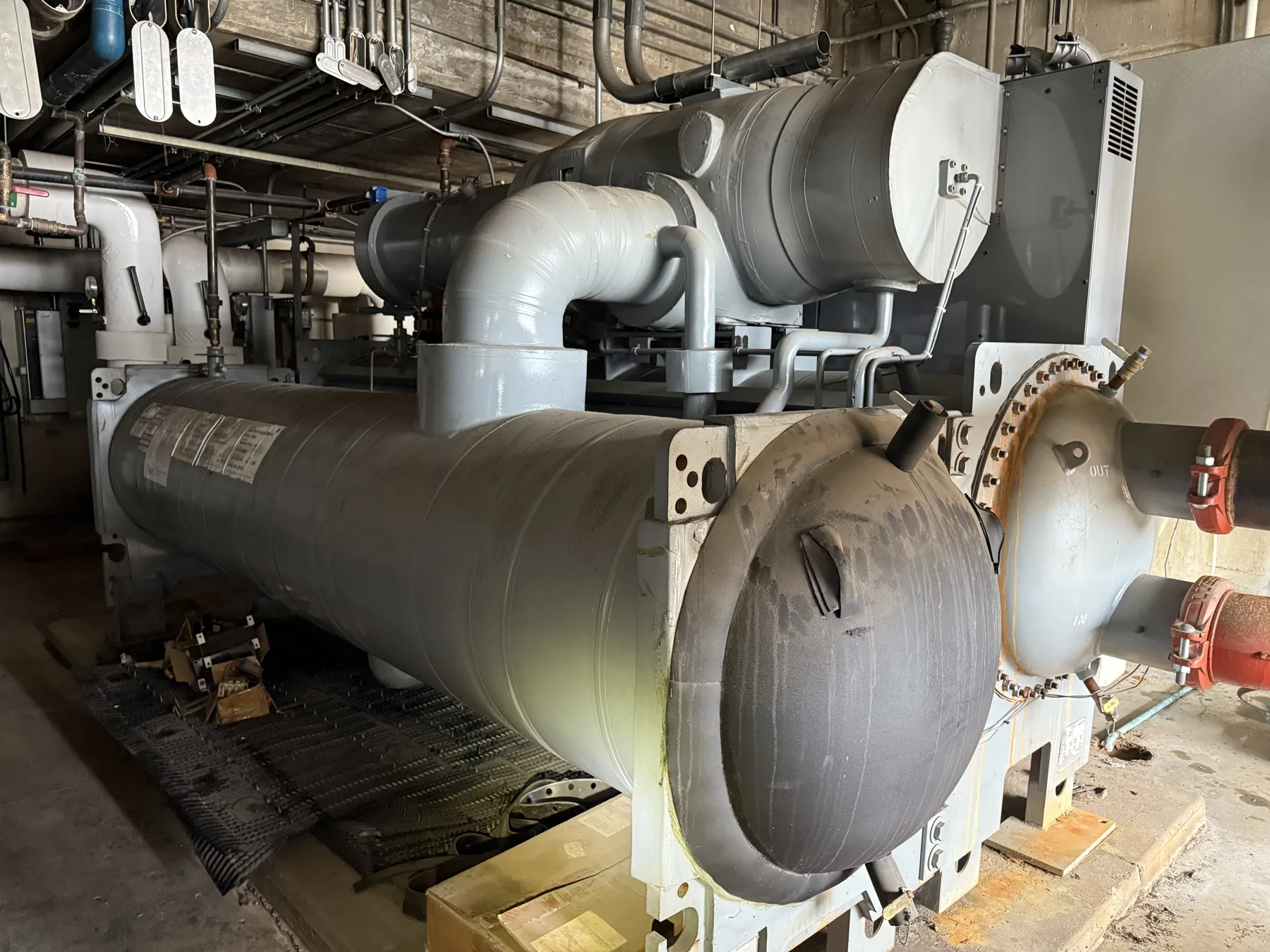
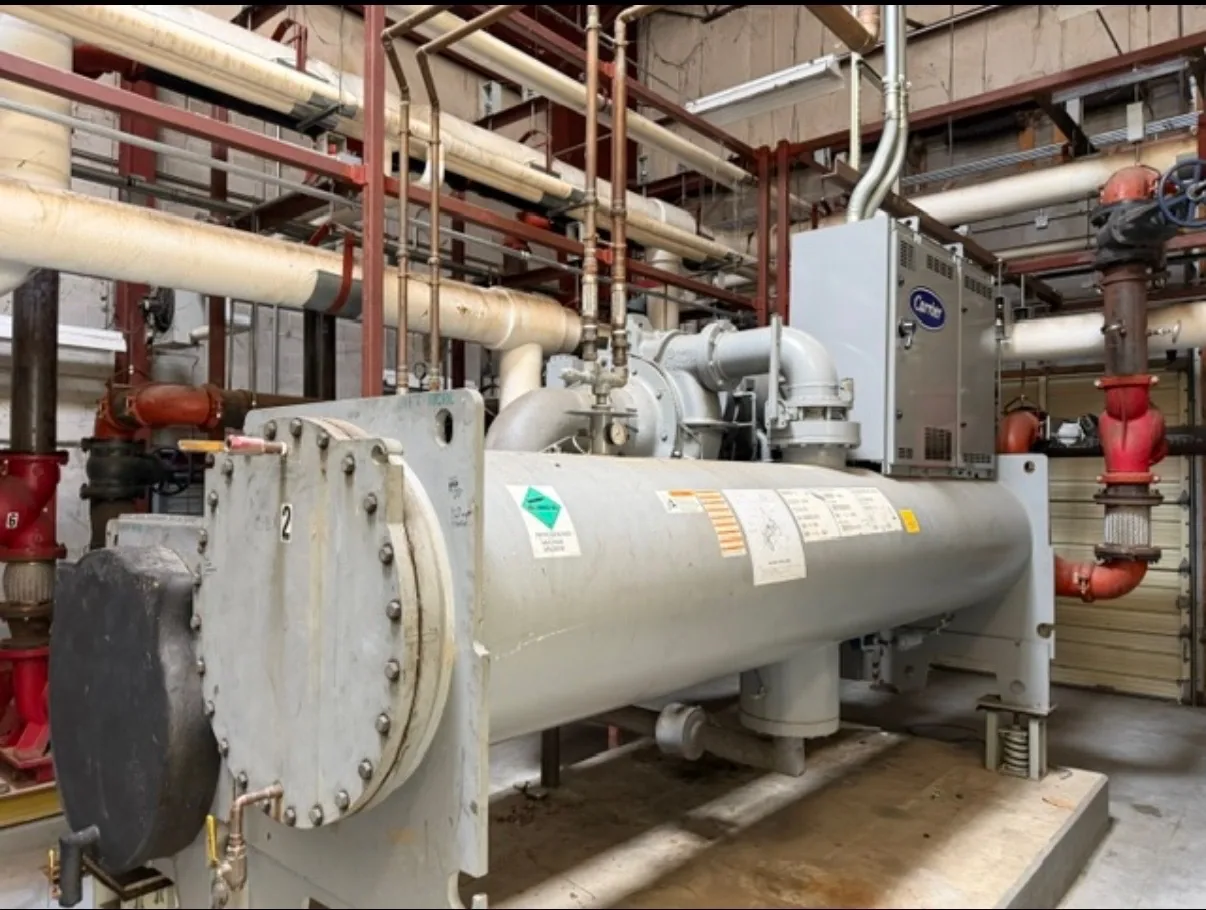
Scroll chillers can have multiple compressors or circuits, so a count and clear photographs may help explain the equipment being offered. Capture the overall chiller and the model and serial plate. If the compressors are accessible for photography without opening unsafe equipment, their labels may add useful detail, but they do not replace the machine's main plate.
Tell us the chiller's stated capacity and whether it is a single assembly or part of a group. We buy industrial and commercial chillers from 20 tons to 2,000-plus tons, so an accurate capacity matters. An idle or nonrunning machine can be submitted without performing a test or restoring it to service.
Consider the needs of a school or education facility
A school or education facility may need to coordinate work around classes, events or an unoccupied period. Identify the equipment owner and the person authorized to arrange the sale, then describe any site-entry and scheduling requirements. Note whether other chillers must remain available during the work. Those details help plan a removal without assuming that every campus has the same equipment or calendar.
Record the present condition
Describe the equipment as it sits today: connected or disconnected, complete or partly removed, running or shut down. Note visible damage or missing pieces and distinguish what you know from what is uncertain. Photos and an honest account are more useful than promising a performance level. We can review nonrunning equipment and do not require operational testing.
Planning a roof lift
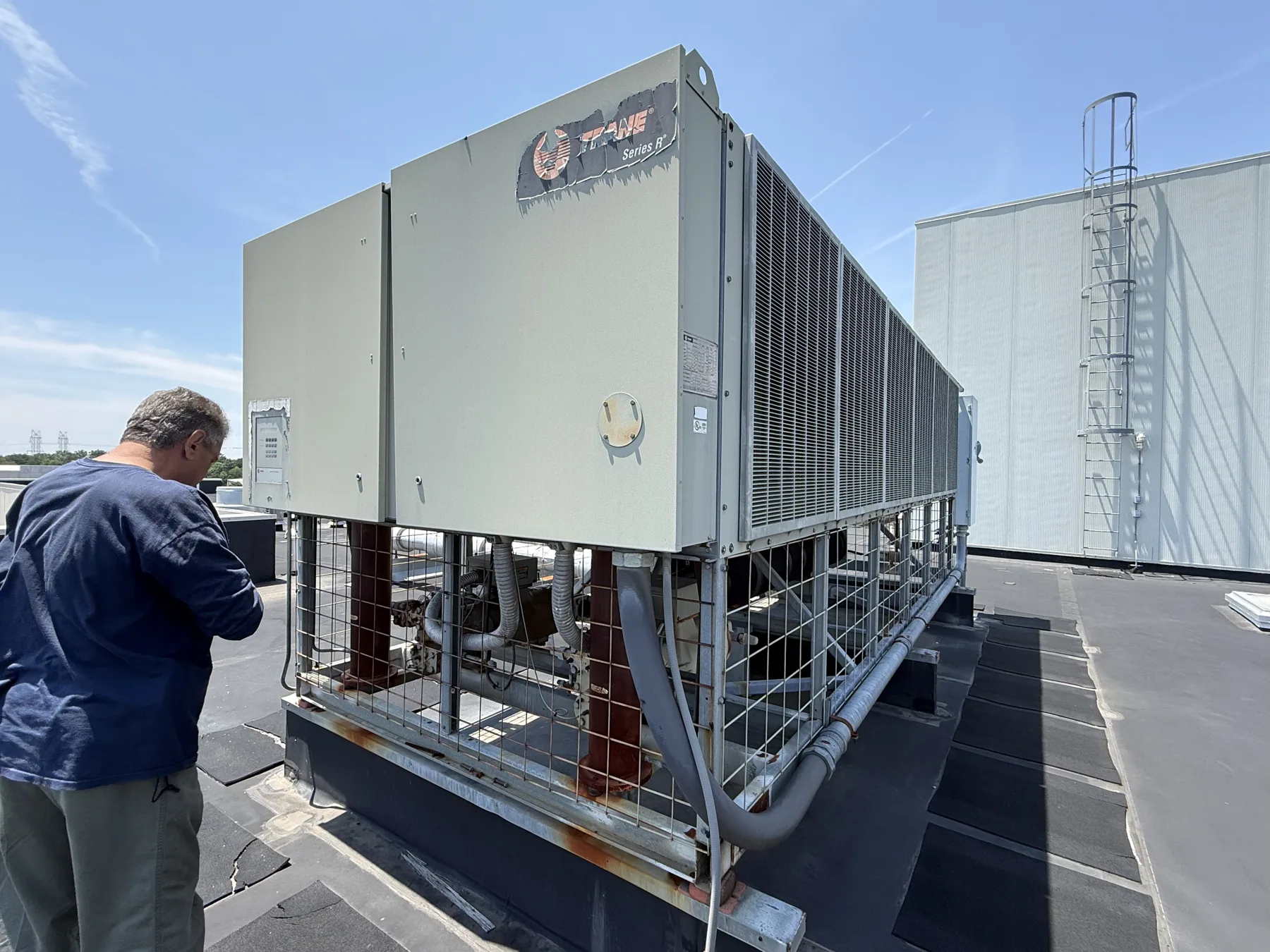
If the chiller is on a roof, provide its location on the building, a safe overall photo and any known route from the street or yard. Mention parapets, overhead obstructions and areas that must remain open. The actual lift method depends on the machine and site; do not try to move a unit yourself. We cover the crane when needed as part of the coordinated removal.
Working around an active plant
If the rest of the cooling plant must stay in service, identify the chiller to be removed and explain the boundaries around active equipment. The site team can flag operating constraints and preferred work windows. Do not disconnect shared piping or electrical equipment yourself to accelerate the sale. We cover disconnects and coordinate the removal scope for the unit being purchased.
Tell us how the cooling was used
A chiller might have served a building's comfort cooling, a manufacturing process or another load. That history can help explain the installation, but it does not prove the machine's present capacity or condition. Share what is known and identify any equipment that still serves an active load. If the previous use is uncertain, say so; the actual chiller plate and photographs remain useful starting points.
From connection points to freight
We cover the disconnects, refrigerant recovery, rigging, crane work when needed, loading and freight for the purchased chiller. If the machine is connected to a shared system, identify the equipment that stays and explain any operating restrictions. The crew can plan around the real installation; the seller does not need to take apart piping or electrical connections to request an offer.
Getting the sale started
Text (614) 715-3047 with your chiller photos and the information already available to you. Include the equipment location and say whether the machine is still connected. We purchase rather than sell chillers, make cash offers and provide upfront payment for a purchase. A machine may be reviewed without being run or operationally tested, so there is no need to restart it for us.
Review the site constraints
Before removal, share the site rules that apply to work hours, access, traffic and protection of nearby equipment. If the route crosses another tenant's space, identify who can approve it. The precise plan depends on the machine and the facility. Accurate information early in the discussion is more helpful than promising a clear route that has not been checked.