
If you need to sell a scroll chiller in Huntington, WV, start with the equipment you actually have, not an assumed market value or a test run. We buy commercial and industrial chillers from 20 tons to 2,000-plus tons, including air-cooled and water-cooled units. Our buying process includes cash offers and upfront payment, and a test is not required. The guidance below explains how to identify the machine and prepare for removal.
Describe your scroll chiller
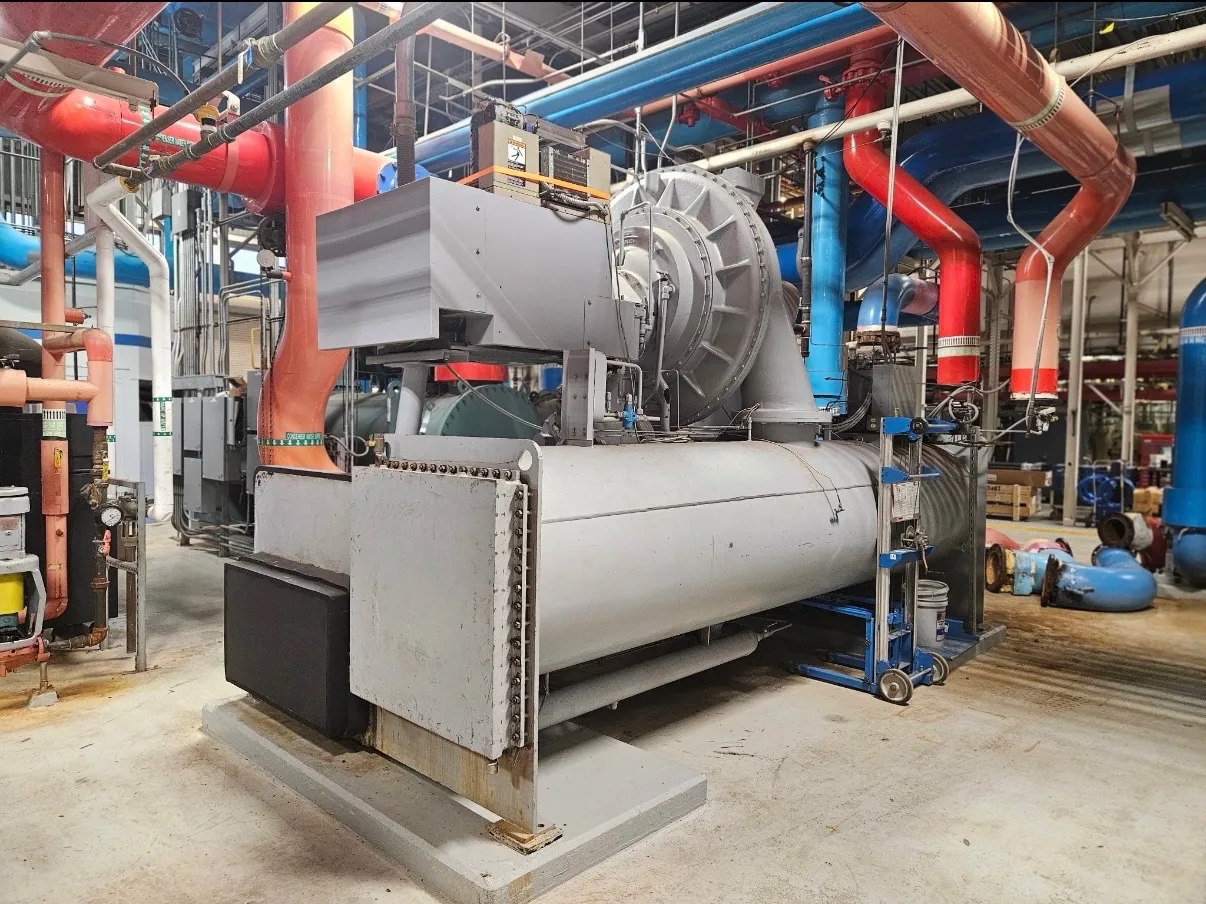
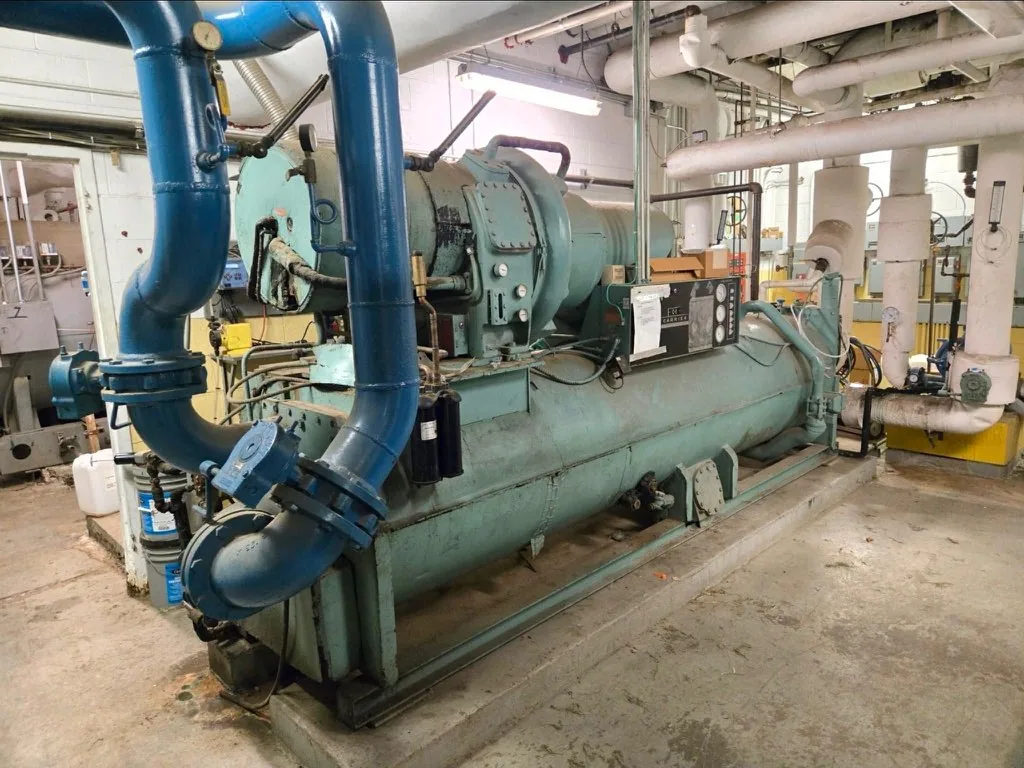
Scroll chillers can have multiple compressors or circuits, so a count and clear photographs may help explain the equipment being offered. Capture the overall chiller and the model and serial plate. If the compressors are accessible for photography without opening unsafe equipment, their labels may add useful detail, but they do not replace the machine's main plate.
Tell us the chiller's stated capacity and whether it is a single assembly or part of a group. We buy industrial and commercial chillers from 20 tons to 2,000-plus tons, so an accurate capacity matters. An idle or nonrunning machine can be submitted without performing a test or restoring it to service.
Consider the needs of a food-processing facility
A food-processing site may have hygiene, traffic or production restrictions that affect the removal route. Explain any site-specific requirements to the removal coordinator and identify whether the retired chiller served a process or a building loop, if known. Do not disturb nearby equipment for a photograph. List the machine and any components being sold separately from systems that must remain active.
Identify each machine separately
For a multi-unit sale, give each chiller a simple number and use the same number on its plate, overall photo and condition notes. Tell us whether capacities are individual ratings or a combined figure. An existing inventory is helpful, but a short handwritten list can work too. Separate identification lets the discussion focus on the equipment actually being offered.
Overhead clearance and obstacles
For equipment near low ceilings, utility lines or overhead structures, mention the constraints you can see and share existing measurements if available. Avoid approaching an electrical hazard or climbing for a better angle. The crew can plan the actual rigging around the verified conditions. A description of obstacles is useful whether the machine is inside a plant room or outside in an equipment area.
If several departments are involved
A disposal decision may involve facilities, accounting and the property owner. Agree on the equipment being sold and appoint one contact to collect the model details and photographs. A second contact can coordinate site access if necessary. That division keeps the equipment description separate from the logistics and helps prevent a removed component from being mistaken for something still needed.
Tell us how the cooling was used
A chiller might have served a building's comfort cooling, a manufacturing process or another load. That history can help explain the installation, but it does not prove the machine's present capacity or condition. Share what is known and identify any equipment that still serves an active load. If the previous use is uncertain, say so; the actual chiller plate and photographs remain useful starting points.
A practical removal discussion
An offer discussion can include the equipment's current location and how a crew could reach it. We cover rigging, crane service when needed, disconnects, refrigerant recovery, loading and freight. Let us know about occupied spaces, gates, plant-room doors or roof access, as applicable. The actual plan will depend on the unit and site, not an assumed standard procedure.
Getting the sale started
Text (614) 715-3047 with your chiller photos and the information already available to you. Include the equipment location and say whether the machine is still connected. We purchase rather than sell chillers, make cash offers and provide upfront payment for a purchase. A machine may be reviewed without being run or operationally tested, so there is no need to restart it for us.
Keep photos tied to the unit
A photograph of a label is useful only if it can be matched to the machine for sale. Include the whole chiller in a separate view and number the images when several units are present. Note whether a separate starter or control cabinet belongs to that machine. A small amount of organization helps both the offer discussion and the later removal handoff.