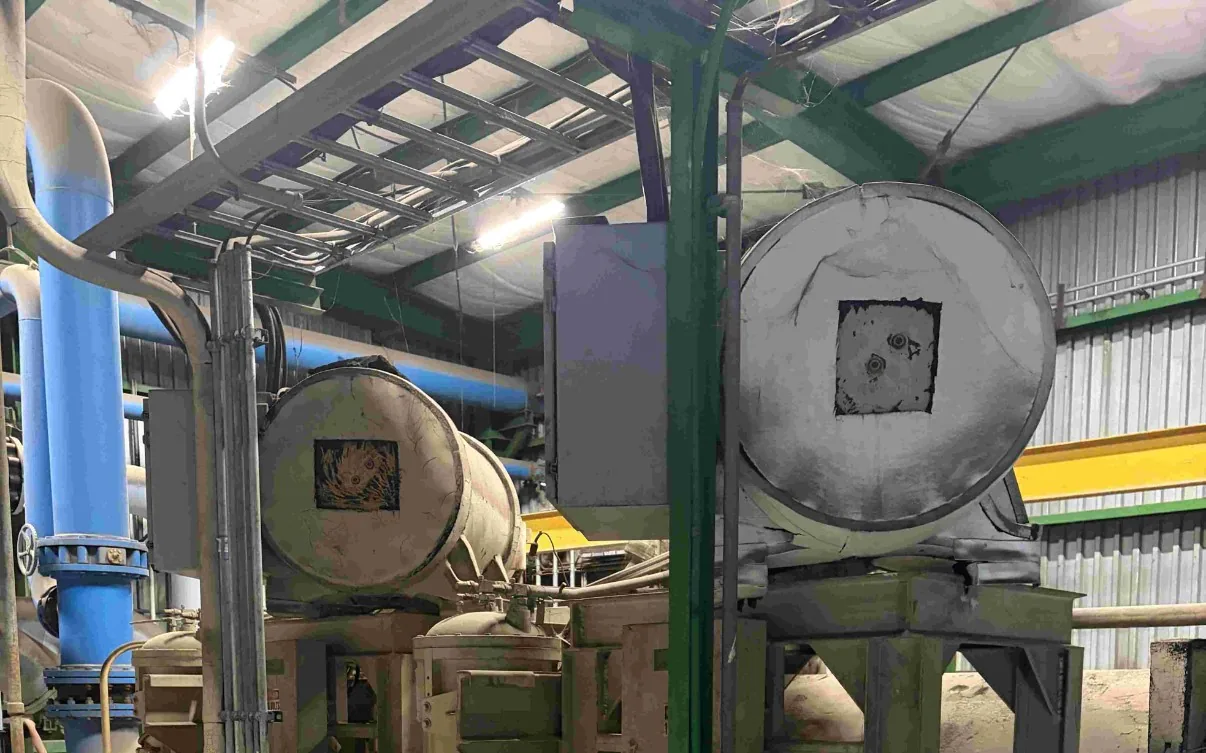

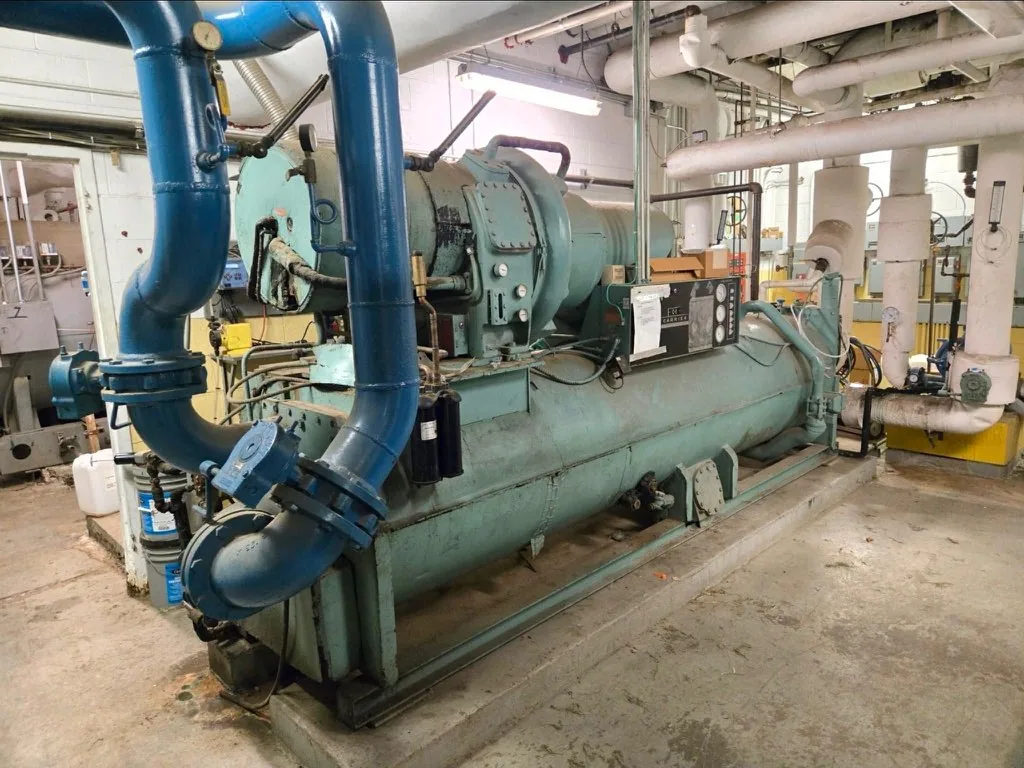
Facilities in Charleston, WV can contact us about selling a centrifugal chiller, even if the machine has already been retired. We buy air-cooled and water-cooled industrial chillers from 20 tons to 2,000-plus tons and provide cash offers and upfront payment. Testing is not required. Explain the machine's condition and what is included, then identify any access needs so the covered removal can be coordinated around the actual site.
Describe your centrifugal chiller
A centrifugal chiller uses a centrifugal compressor, but individual machines differ in size, controls, refrigerant and physical arrangement. Photograph the full assembly and its identification plates. If the starter or control cabinet is separate, tell us whether it is included and show where it sits in relation to the chiller.
Large components and restricted plant-room doors can make the exit route an important early question. Share any equipment dimensions or removal drawings you already have, and describe obstacles without attempting a lift or dismantling. A nonrunning centrifugal machine can still be submitted for review; no operational testing is required.
Consider the needs of a hotel
For a hotel or other occupied lodging property, flag guest areas, delivery hours and any access routes that must remain open. A roof or mechanical-room location can affect how the unit leaves, so include a safe photograph of the surroundings. The previous cooling load does not need to be calculated to start a sale. Existing equipment identification and a practical access contact are more useful.
Show the whole machine
A useful photo set begins with a full view, then closer pictures of the manufacturer plate, controls and any visible damage. Add a picture of the surrounding area from a safe position. If a part has already been removed, photograph it separately and say whether it is included. Pictures do not have to be polished; they need to show what is actually available.
Planning from a closed facility
A closed or temporarily inaccessible facility can still be discussed using existing photographs and records. Tell us when someone with keys or authorization can provide access, and mention any known site restrictions. Do not enter an unsafe or secured area for a new picture. The removal schedule can be coordinated around actual access once the machine and sale authority are clear.
Preparing without extra work
There is no need to clean, repair or restart a chiller just to begin a conversation. Gather existing pictures and the information you can safely read, then describe the location and condition. Tell us about known deadlines and the person responsible for access. We can review the machine without operational testing and coordinate the covered removal services as part of the transaction.
Decide which supporting equipment stays
A chiller may be near pumps, a cooling tower, piping or controls that support the rest of a facility. Their proximity does not automatically make them part of the sale. Mark the chiller and any separate items being offered, and tell the site coordinator what must remain. Existing drawings can help, but a current photo is important if the installation has changed since the drawings were produced.
What to tell the removal coordinator
Identify the chiller's location, the site contact and any restrictions on working hours or the route to a truck. We cover rigging, a crane when needed, disconnects, refrigerant recovery, loading and freight. Existing measurements or drawings are useful, but do not guess at the weight. The removal method is planned for the actual machine and verified site conditions.
Request an offer from photos
Send the nameplate, a whole-unit photo and a short description to (614) 715-3047. Include the West Virginia location, condition and the best contact for access. We buy rather than sell chillers and can make a cash offer with upfront payment. You do not need to run a test, repair the chiller or obtain a new performance report before reaching out.
Bring existing information, not a test
A manufacturer plate, existing service record or clear photograph can answer many initial questions. You do not need to commission a report or start the chiller to establish an operating history. Send what you have, label estimates and explain missing information. Once the equipment and access are understood, the offer and covered removal can be coordinated with the appropriate owner and site contact.