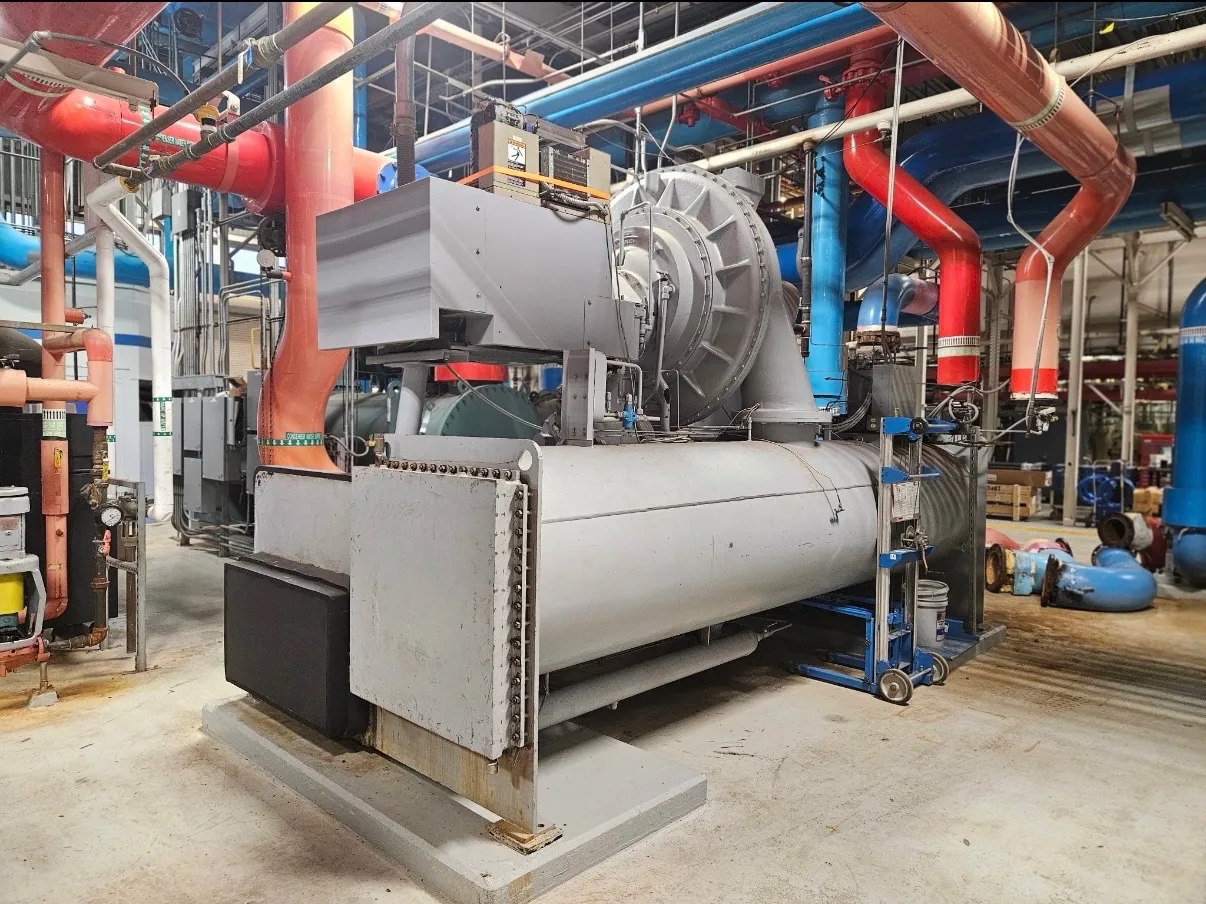
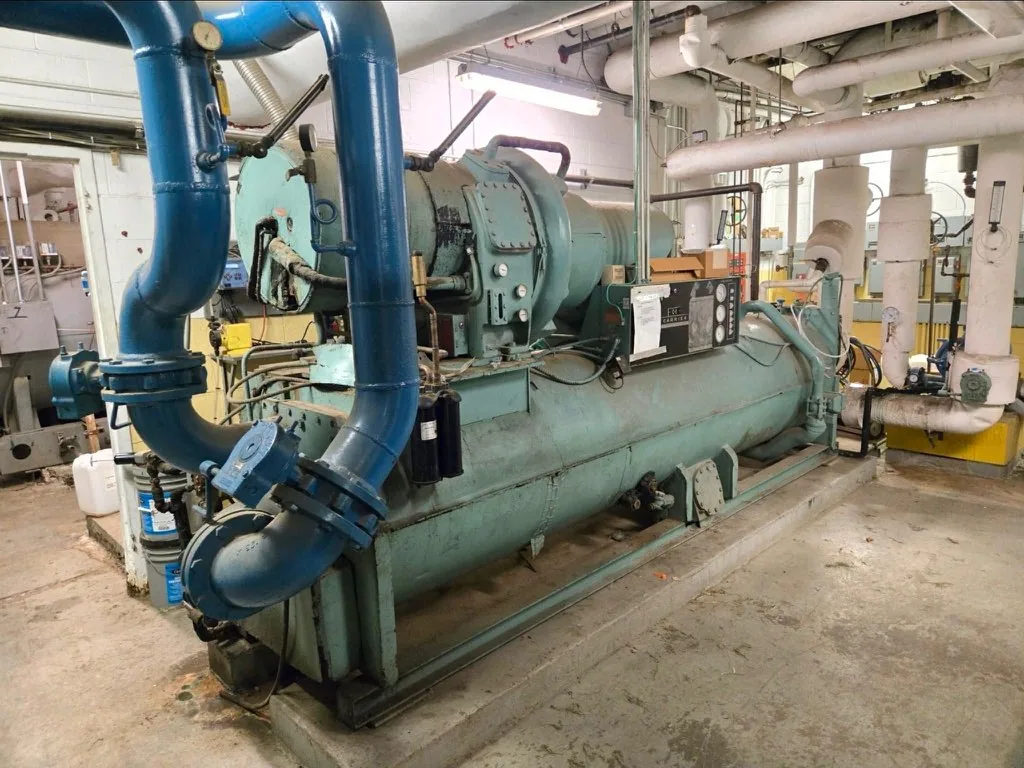
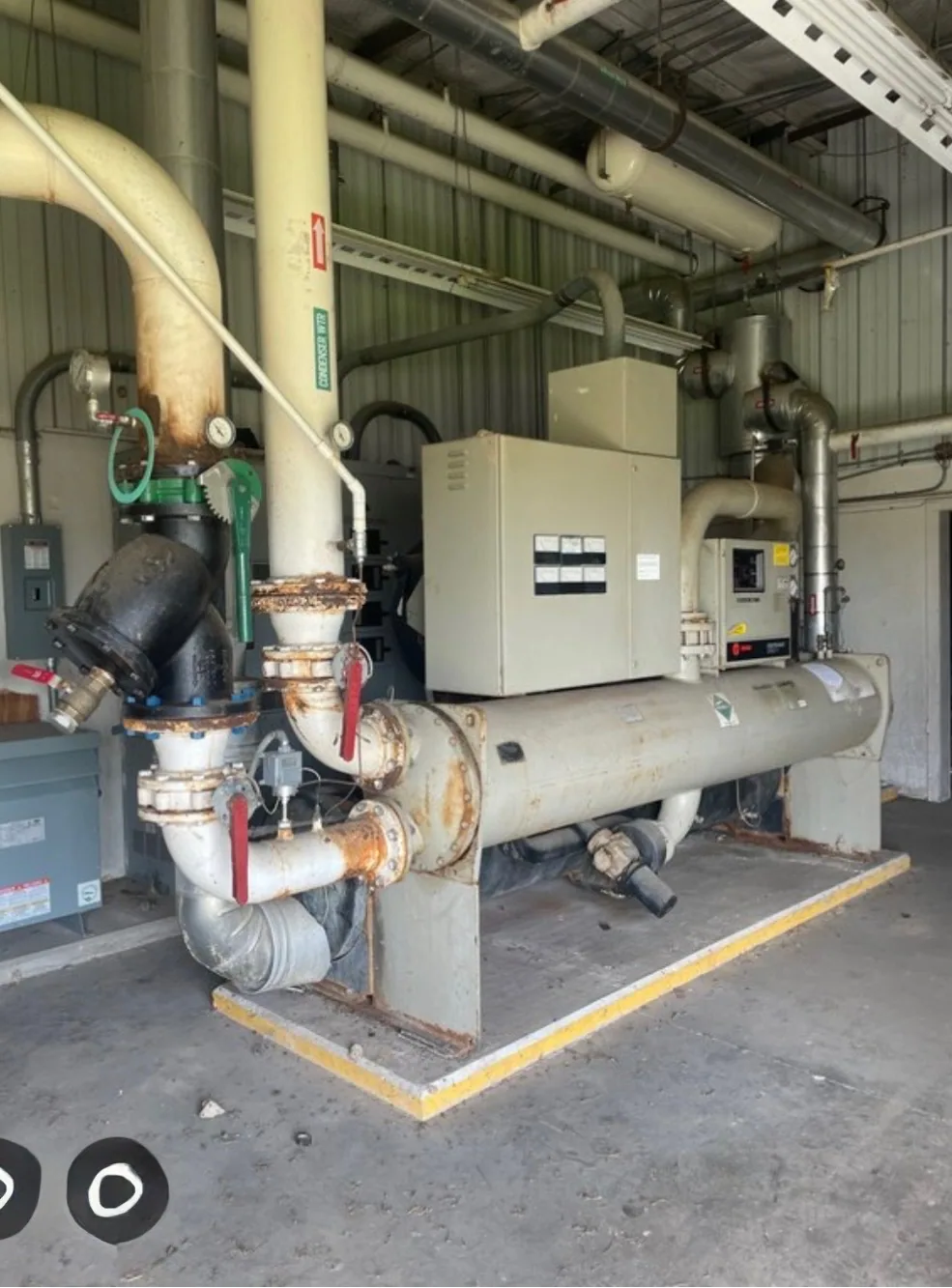
Owners of a Multistack chiller in Fairmont, WV can ask us about a sale whether the equipment is running or shut down. We buy air-cooled and water-cooled industrial chillers from 20 tons to 2,000-plus tons, with cash offers and upfront payment. No testing is required. Good photos, a clear description of what is included and a contact who understands the facility can make the next steps easier to coordinate.
Identify the Multistack chiller
For a Multistack chiller, show the entire group of modules as well as the identifying plate on each piece available for sale. Tell us how many modules are included and whether they are still connected to a common frame or piping. Do not assume a single nameplate describes the combined capacity of every module in the bank.
If modules have different histories or some have already been disconnected, label the photographs and explain the differences. A sketch or inventory can be useful when only part of an installation is being retired. We will review the described equipment without an operational test, using the details you have rather than requiring a perfect record set.
Consider the needs of a mixed-use property
In a mixed-use building, the chiller owner and the parties affected by a removal are not always the same. Clarify who can approve the sale and who can coordinate access to shared areas. Point out tenant, parking or loading constraints without assuming they prevent a transaction. The seller can request an offer with existing photos and records; restarting the machine is not necessary.
Clarify equipment ownership
Before a sale is finalized, confirm who owns the chiller and who is authorized to transfer it. The building owner, tenant, property manager and maintenance contractor may have different roles. If the equipment is part of a larger replacement project, specify what is included and who controls access. Clear ownership and a named site contact prevent delays without requiring the machine to be tested.
Considering a tight equipment yard
An outdoor equipment yard may contain fences, piping, curbs or other units that limit access. Take a wide picture from a safe position and note any gates or sections that cannot be disturbed. Show where the chiller ends and neighboring equipment begins. A clear boundary helps the removal discussion without assuming the machine can simply be rolled onto a truck.
Coordinating multiple chillers
A site with several chillers may want to retire them together or in stages. Identify each machine, its condition and the order in which it becomes available. Explain whether access to one unit is blocked by another and whether anything must remain in operation. Separate equipment information from schedule preferences so the sale and removal scope can be understood clearly.
Know the difference between idle and disconnected
A chiller can be shut down while still connected to electrical power, piping or other building systems. Conversely, an equipment tag saying disconnected does not describe which components remain with the machine. Tell us what is known and share existing work records if available. Do not open a cabinet or disconnect anything to investigate; the removal coordinator can plan the work around the actual starting condition.
What to tell the removal coordinator
Identify the chiller's location, the site contact and any restrictions on working hours or the route to a truck. We cover rigging, a crane when needed, disconnects, refrigerant recovery, loading and freight. Existing measurements or drawings are useful, but do not guess at the weight. The removal method is planned for the actual machine and verified site conditions.
How the cash offer works
Text current photos and the machine's basic details to (614) 715-3047. We buy chillers; we do not sell replacement equipment. We review the information and can make a cash offer, with upfront payment for a purchase. No operational testing is required. If the model, capacity or condition is uncertain, tell us rather than delaying the conversation or guessing.
Protect the active operation
If other equipment must remain in service, show which chiller is being sold and tell the site coordinator what cannot be interrupted. Do not make assumptions about shared connections from appearance alone. Facility staff can provide existing drawings and explain operational boundaries. The removal plan should address the actual installation rather than treating every machine in a plant as independent.