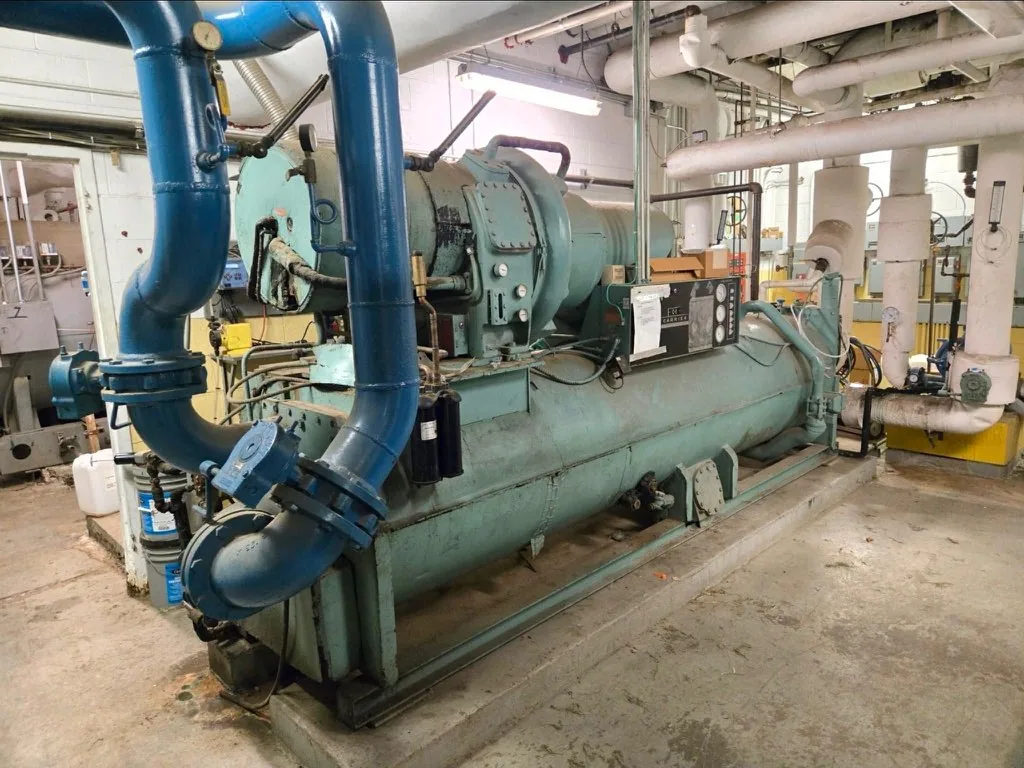
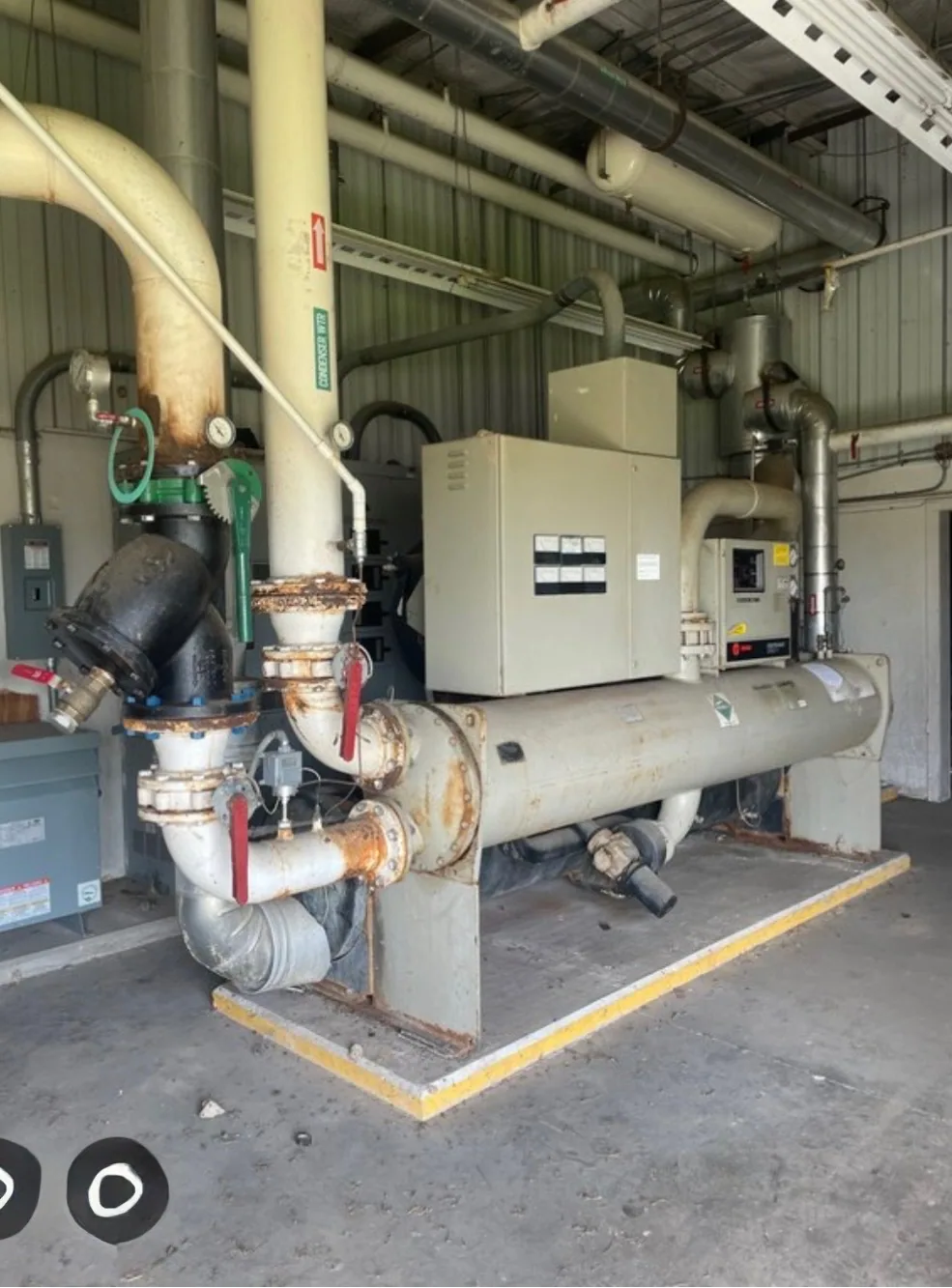
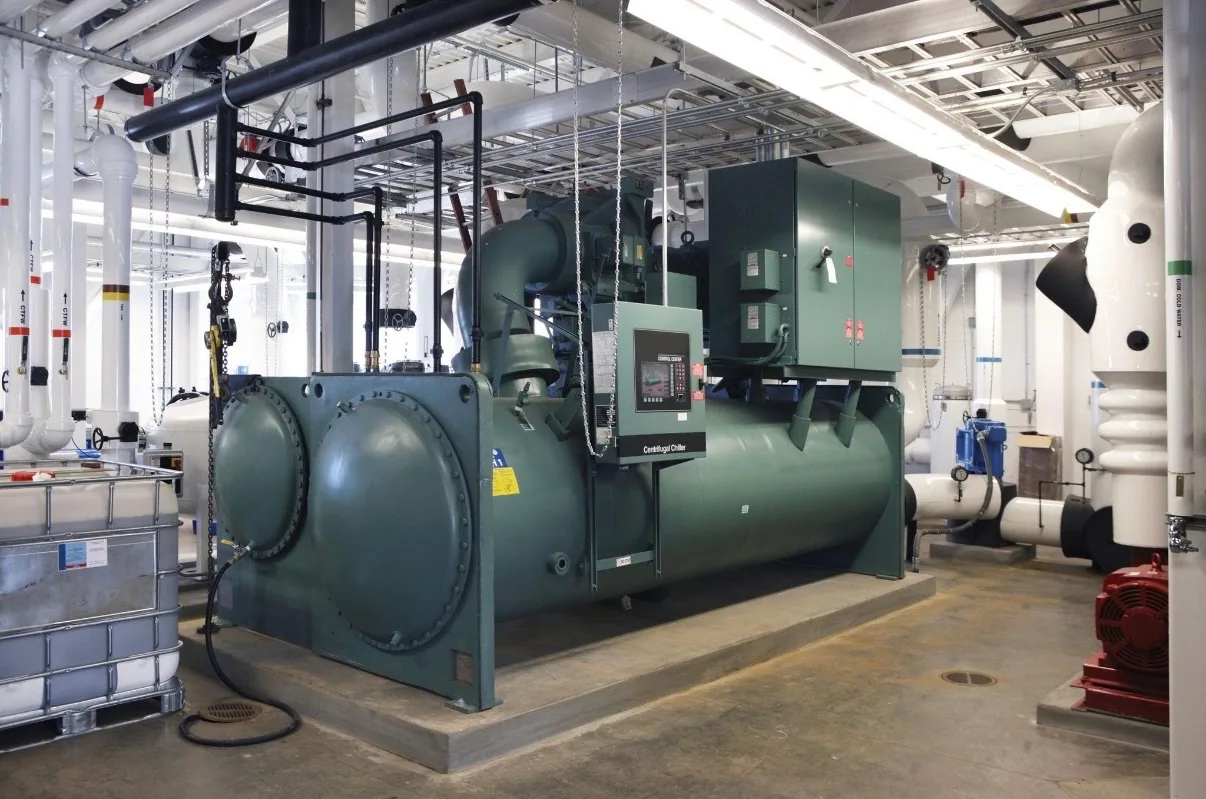
Facilities in West Virginia can contact us about selling a 100–249-ton chiller, even if the machine has already been retired. We buy air-cooled and water-cooled industrial chillers from 20 tons to 2,000-plus tons and provide cash offers and upfront payment. Testing is not required. Explain the machine's condition and what is included, then identify any access needs so the covered removal can be coordinated around the actual site.
Identify your 100–249-ton chiller
For a 100–249 ton chiller, start with its individual rated capacity and identifying plate. If the rating is missing or the only figure available is a plant total, explain that distinction. Photos of the complete assembly and any separate control or starter cabinet make it easier to define the equipment included in the sale.
Ask the site contact about the route between the chiller and a truck-accessible area. Doors, turns, curbs and occupied spaces may matter more than the capacity number alone. We consider both operating and nonrunning chillers and do not require the seller to run an operational test before requesting an offer.
Consider the needs of a school or education facility
A school or education facility may need to coordinate work around classes, events or an unoccupied period. Identify the equipment owner and the person authorized to arrange the sale, then describe any site-entry and scheduling requirements. Note whether other chillers must remain available during the work. Those details help plan a removal without assuming that every campus has the same equipment or calendar.
List separate components
Some chillers have a starter, controls or other components in a separate cabinet. Tell us what belongs to the machine and what is included in the proposed sale. Label loose items and note components already removed. A photograph showing the relationship between the main unit and separate cabinets can be especially helpful when the facility has more than one chiller.
When several units share a plant
If other chillers share the room, mark the one being sold in a wide photograph and show the access path without disturbing active equipment. Explain which surrounding machines, pipes or controls need to remain in place. The layout of the particular plant determines the work sequence. A simple marked-up photo can prevent misunderstandings about the boundaries of the removal.
Describing previous disconnection
If another contractor has already disconnected part of the chiller, explain exactly what has been done and what remains attached. Do not assume all connections were handled simply because a machine is shut down. Current photos and any available work records can help the removal team understand the starting point. We cover the required disconnects and coordinate the remaining removal work.
Know the difference between idle and disconnected
A chiller can be shut down while still connected to electrical power, piping or other building systems. Conversely, an equipment tag saying disconnected does not describe which components remain with the machine. Tell us what is known and share existing work records if available. Do not open a cabinet or disconnect anything to investigate; the removal coordinator can plan the work around the actual starting condition.
What our removal scope covers
We cover rigging, crane service when needed, disconnects, refrigerant recovery, loading and freight for the chiller we buy. That scope is intended to avoid leaving the seller to arrange the major steps separately. The method and sequence depend on the actual unit and site. Tell us about known access restrictions, nearby active equipment and any relevant facility requirements at the outset.
A straightforward seller conversation
Start by texting (614) 715-3047 with the manufacturer, model, capacity if known, location and a few photos. We buy industrial and commercial chillers and can make a cash offer with upfront payment. The machine does not have to be operating, and no operational test is required. We do not sell chillers; this service is for owners who want to sell theirs.
Agree on the timing
Tell us about an intended shutdown, a property handover or a date when access changes. If the timetable is tentative, describe it as tentative. A site contact can then coordinate the removal around the actual decision and operating schedule. Before work begins, make sure the equipment included and any nearby systems that remain in place are understood by the relevant parties.