

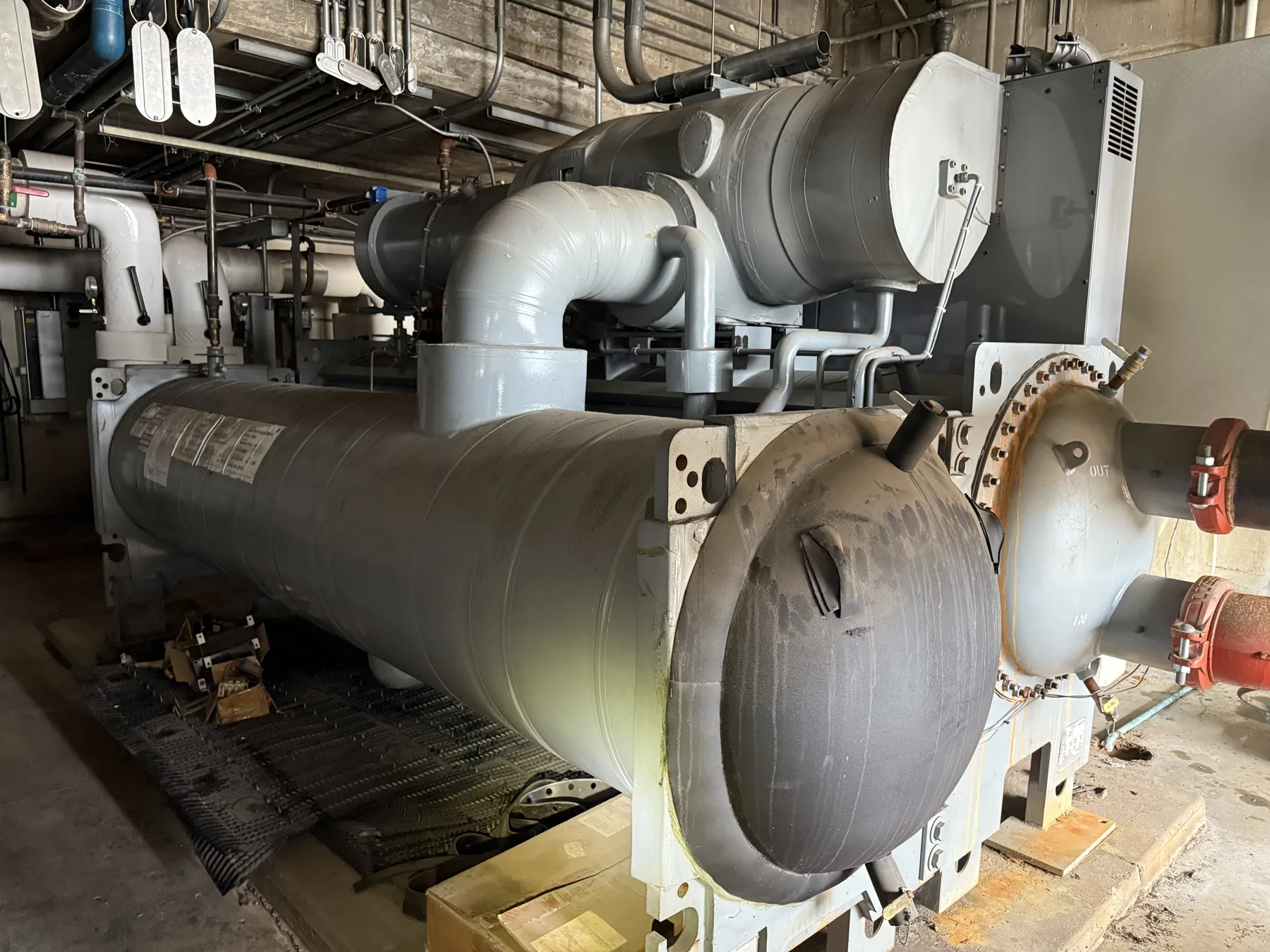
If an AAON chiller is scheduled for replacement or already shut down in Wheeling, WV, a sale can start with current photos and the information you have. We buy commercial and industrial air-cooled and water-cooled chillers from 20 tons to 2,000-plus tons. Our process offers upfront payment and a cash offer without requiring testing. This page covers equipment identification, facility access and the removal work we handle.
Identify the AAON chiller
Identify an AAON chiller by its full model and serial plate and photograph the complete equipment, not just the logo. Some facilities have several kinds of packaged mechanical equipment, so describe the unit's actual function and send any available capacity or refrigerant information. This helps establish whether the equipment being discussed is the chiller you intend to sell.
Show the access side, controls and any visible condenser section as well as the whole unit. If the machine is outside or elevated, a picture from a safe vantage point can also explain the removal path. You do not need to run a retired chiller for us; tell us honestly what is known and what is not.
Consider the needs of a municipal building
For publicly owned or other institutionally controlled property, establish who is authorized to dispose of the chiller before arranging a sale. Existing approval or inventory procedures may affect the schedule. Identify the specific machine, its location and the contact who can explain access requirements. We can discuss equipment details while the owner handles its own internal authorization process.
List separate components
Some chillers have a starter, controls or other components in a separate cabinet. Tell us what belongs to the machine and what is included in the proposed sale. Label loose items and note components already removed. A photograph showing the relationship between the main unit and separate cabinets can be especially helpful when the facility has more than one chiller.
Access through a shared building
When an exit route passes through common space, identify who controls that space and whether there are access hours or tenant restrictions. Elevators, corridors and doors can be relevant, but their suitability cannot be determined without the actual dimensions and site review. Do not promise a route based on an old drawing alone. A current photo and the right building contact are a good beginning.
Preparing without extra work
There is no need to clean, repair or restart a chiller just to begin a conversation. Gather existing pictures and the information you can safely read, then describe the location and condition. Tell us about known deadlines and the person responsible for access. We can review the machine without operational testing and coordinate the covered removal services as part of the transaction.
Use records as evidence, not assumptions
Maintenance logs, invoices and drawings can explain a chiller's history, but they may be outdated or refer to a neighboring unit. Match the serial number when possible and show any known changes in current photos. If there is a difference between a plate and a later record, send both and note the discrepancy. You do not need to settle every technical question before contacting the buyer.
What our removal scope covers
We cover rigging, crane service when needed, disconnects, refrigerant recovery, loading and freight for the chiller we buy. That scope is intended to avoid leaving the seller to arrange the major steps separately. The method and sequence depend on the actual unit and site. Tell us about known access restrictions, nearby active equipment and any relevant facility requirements at the outset.
Request an offer from photos
Send the nameplate, a whole-unit photo and a short description to (614) 715-3047. Include the West Virginia location, condition and the best contact for access. We buy rather than sell chillers and can make a cash offer with upfront payment. You do not need to run a test, repair the chiller or obtain a new performance report before reaching out.
Decide what is included
Before accepting an offer, make sure both parties are discussing the same chiller and any separate controls or loose components. Identify items that stay with the property or serve another unit. If the equipment is part of a larger project, use the model, serial number and photos to mark the sale boundary. Clear scope protects the seller from confusion when the removal team arrives.