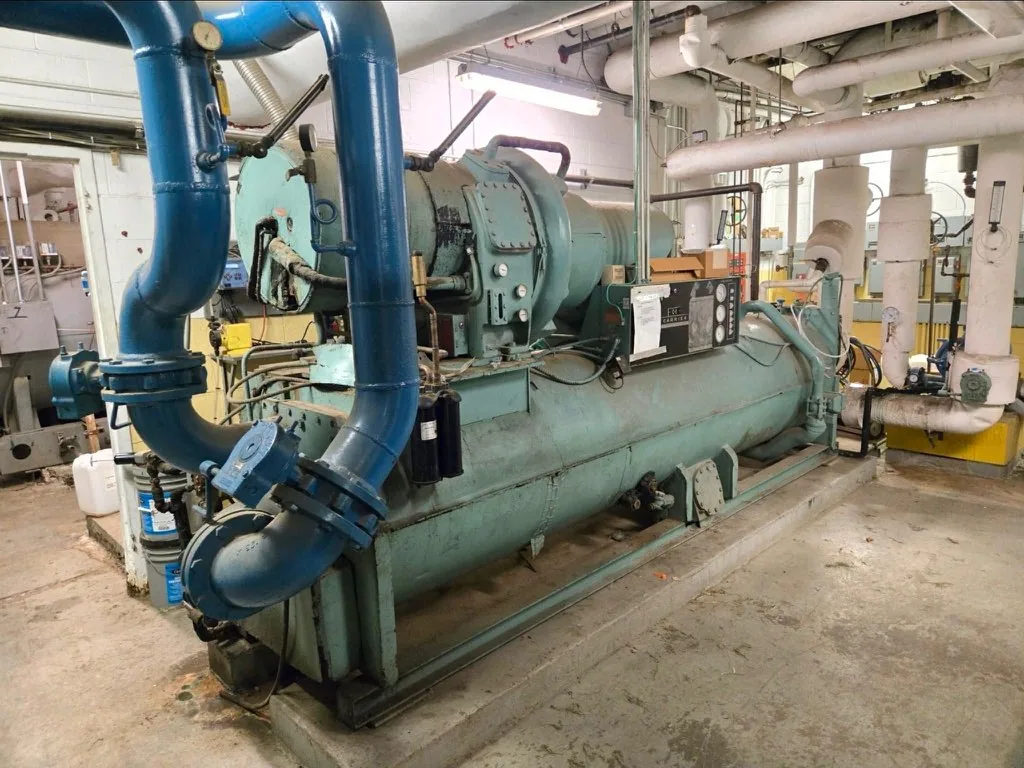


If an AAON chiller is scheduled for replacement or already shut down in West Virginia, a sale can start with current photos and the information you have. We buy commercial and industrial air-cooled and water-cooled chillers from 20 tons to 2,000-plus tons. Our process offers upfront payment and a cash offer without requiring testing. This page covers equipment identification, facility access and the removal work we handle.
Identify the AAON chiller
Identify an AAON chiller by its full model and serial plate and photograph the complete equipment, not just the logo. Some facilities have several kinds of packaged mechanical equipment, so describe the unit's actual function and send any available capacity or refrigerant information. This helps establish whether the equipment being discussed is the chiller you intend to sell.
Show the access side, controls and any visible condenser section as well as the whole unit. If the machine is outside or elevated, a picture from a safe vantage point can also explain the removal path. You do not need to run a retired chiller for us; tell us honestly what is known and what is not.
Consider the needs of a food-processing facility
A food-processing site may have hygiene, traffic or production restrictions that affect the removal route. Explain any site-specific requirements to the removal coordinator and identify whether the retired chiller served a process or a building loop, if known. Do not disturb nearby equipment for a photograph. List the machine and any components being sold separately from systems that must remain active.
Start with the nameplate
Photograph the equipment nameplate straight on if you can do so safely. Model, serial number, rated tons and electrical information may appear there, although labels vary. Include a wider picture so the plate can be matched to the right machine. If it is damaged or missing, say so and send whatever existing records or photographs are available instead of guessing at the numbers.
Raised platforms and supports
A chiller on a platform or structural support may require a different approach from one sitting at ground level. Send an overall view and note the approximate elevation if known. Describe nearby stairs, railings or openings without loosening anything yourself. The appropriate rigging and crane plan depends on the actual installation, including its weight, support and available clearance.
Describing previous disconnection
If another contractor has already disconnected part of the chiller, explain exactly what has been done and what remains attached. Do not assume all connections were handled simply because a machine is shut down. Current photos and any available work records can help the removal team understand the starting point. We cover the required disconnects and coordinate the remaining removal work.
Understand what the nameplate can tell you
The equipment plate may identify the manufacturer, model, serial number and rated capacity, although the exact fields differ by machine. It is a starting point, not proof that all original components remain in place or that the unit will run. Combine its information with current photographs and a candid condition description. If the label cannot be read safely, send whatever existing documentation is available.
Coordinating a safe handoff
Share any known restrictions around active equipment and access to the chiller. We cover disconnects, refrigerant recovery, rigging, crane service when needed, loading and freight for the purchased equipment. The people coordinating the work can use the information you provide to plan the appropriate sequence. You do not need to open cabinets, break connections or attempt a lift for an initial review.
Getting the sale started
Text (614) 715-3047 with your chiller photos and the information already available to you. Include the equipment location and say whether the machine is still connected. We purchase rather than sell chillers, make cash offers and provide upfront payment for a purchase. A machine may be reviewed without being run or operationally tested, so there is no need to restart it for us.
Keep photos tied to the unit
A photograph of a label is useful only if it can be matched to the machine for sale. Include the whole chiller in a separate view and number the images when several units are present. Note whether a separate starter or control cabinet belongs to that machine. A small amount of organization helps both the offer discussion and the later removal handoff.