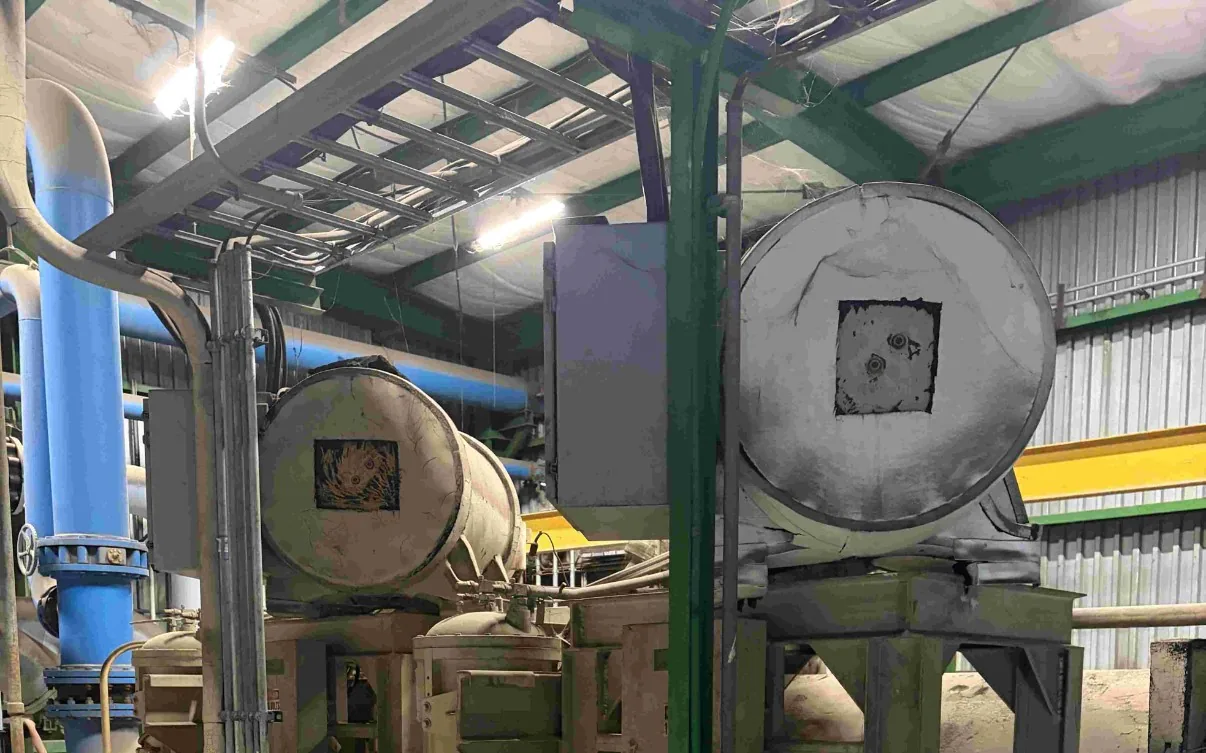

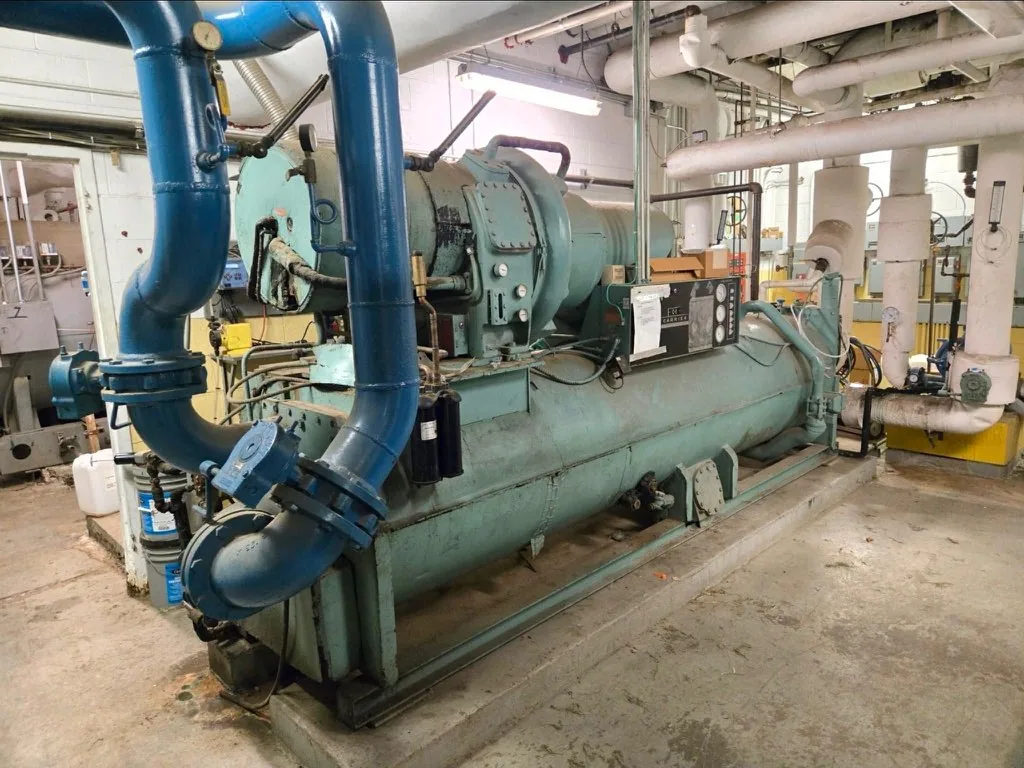
There is no need to restart a chiller to ask about selling a Carrier chiller in Wheeling, WV. We buy industrial and commercial chillers between 20 tons and 2,000-plus tons, including water-cooled and air-cooled equipment. We make cash offers and provide upfront payment, with no test required. Existing photos, identification and information about the site can help define the equipment and prepare for a practical removal discussion.
Identify the Carrier chiller
A Carrier name on the casing is a helpful starting point, but it does not identify the complete machine. Photograph the full model and serial plate, then include a wide view showing the frame, coils or shell, and control cabinet. A separate compressor plate may help when the main label is difficult to read. Tell us if components are missing instead of trying to make the unit look complete.
Older records may use an abbreviated model or refer to a group of machines. Match any available service paperwork to the actual serial number before sending it. We can review a retired or nonrunning unit without an operational test; model details and current photographs are much more useful than an unsupported estimate of condition.
Consider the needs of a municipal building
For publicly owned or other institutionally controlled property, establish who is authorized to dispose of the chiller before arranging a sale. Existing approval or inventory procedures may affect the schedule. Identify the specific machine, its location and the contact who can explain access requirements. We can discuss equipment details while the owner handles its own internal authorization process.
Document a partially dismantled unit
If the chiller was partly dismantled before you contacted us, describe what remains and where the removed parts are located. Send current pictures of both the machine and any components included in the sale. You do not need to reassemble the equipment for review. The important point is to distinguish the actual available items from parts that are missing or staying at the property.
Working from a mechanical room
An interior plant room calls for a look at more than the equipment footprint. Describe doors, corridor turns and changes in floor level between the chiller and the outside, if known. Indicate whether nearby equipment must stay in service. Existing drawings and a few safe photographs can help the removal team plan; you do not need to cut a path or dismantle the machine before asking for an offer.
Coordinating with a facility manager
The person selling the equipment may not be the person with the keys or the site drawings. Introduce a facilities contact who can explain where the chiller is, which systems remain active and when the work can take place. Keep the initial photo set simple and avoid sharing sensitive access codes. Detailed site arrangements can be coordinated directly once the equipment is identified.
Compare the complete scope
When weighing what to do with a retired chiller, compare the whole scope rather than looking only at a headline offer. Ask who will arrange and cover disconnections, refrigerant recovery, lifting, loading and transportation, and how payment will be handled. Our purchase includes those covered services and upfront payment. A comparison based on the same equipment and work scope makes it easier to understand the practical differences between options.
From connection points to freight
We cover the disconnects, refrigerant recovery, rigging, crane work when needed, loading and freight for the purchased chiller. If the machine is connected to a shared system, identify the equipment that stays and explain any operating restrictions. The crew can plan around the real installation; the seller does not need to take apart piping or electrical connections to request an offer.
How the cash offer works
Text current photos and the machine's basic details to (614) 715-3047. We buy chillers; we do not sell replacement equipment. We review the information and can make a cash offer, with upfront payment for a purchase. No operational testing is required. If the model, capacity or condition is uncertain, tell us rather than delaying the conversation or guessing.
Protect the active operation
If other equipment must remain in service, show which chiller is being sold and tell the site coordinator what cannot be interrupted. Do not make assumptions about shared connections from appearance alone. Facility staff can provide existing drawings and explain operational boundaries. The removal plan should address the actual installation rather than treating every machine in a plant as independent.