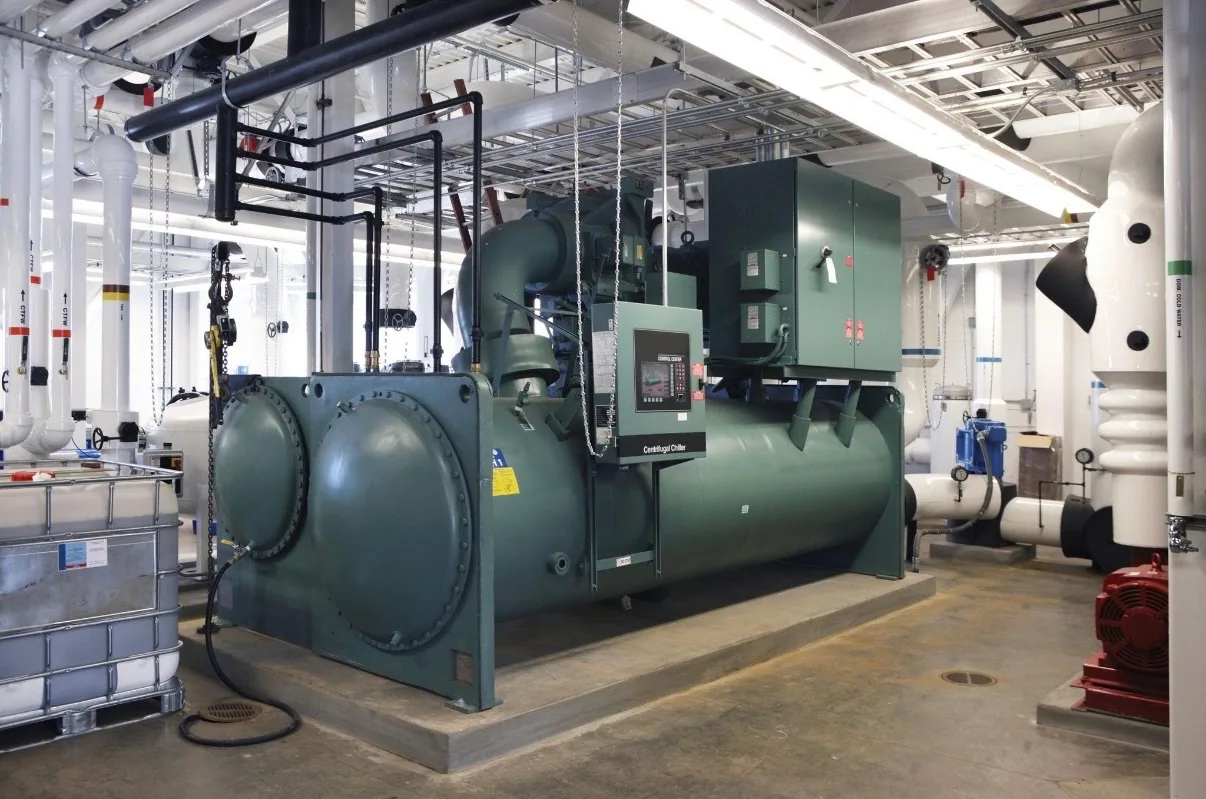
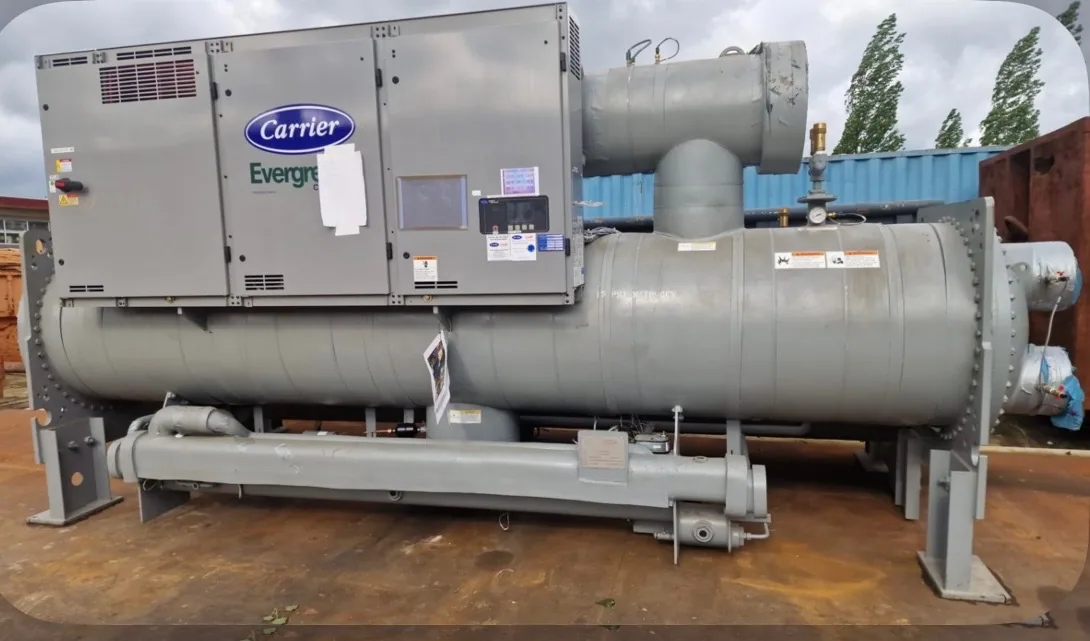
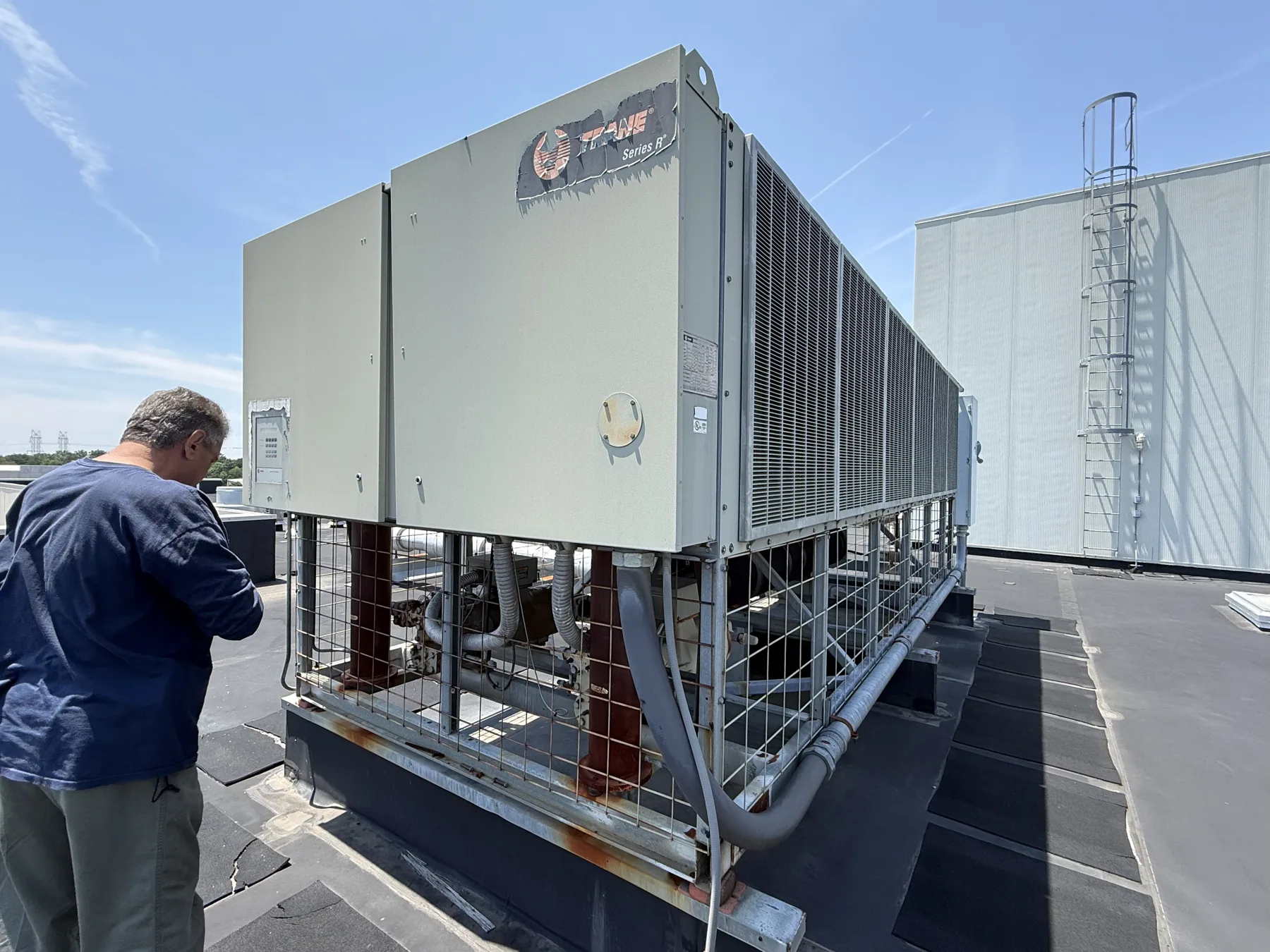
A chiller sale in Huntington, WV starts with a clear picture of the equipment. If you own a 20–49-ton chiller, tell us its location, rated capacity if known and present condition. We buy commercial and industrial air-cooled and water-cooled chillers from 20 tons to 2,000-plus tons. Cash offers and upfront payment are part of our process, and we do not require testing. The following details help the owner and site team prepare.
Identify your 20–49-ton chiller
At the smaller end of our buying range, the equipment may fit through openings that would stop a larger assembly, but measurements still matter. Share the nameplate capacity, overall dimensions if known and the location of the chiller. Indicate whether the stated tonnage describes one unit or a combined group; a 20-ton machine is within our stated range.
Photographs of the complete unit and its plates are more useful than estimating capacity from its size. If several machines are being retired, list them separately so the quantity and total scope are clear. Tell us whether each is connected or already isolated. We can consider the equipment without an operational test.
Consider the needs of a mixed-use property
In a mixed-use building, the chiller owner and the parties affected by a removal are not always the same. Clarify who can approve the sale and who can coordinate access to shared areas. Point out tenant, parking or loading constraints without assuming they prevent a transaction. The seller can request an offer with existing photos and records; restarting the machine is not necessary.
Record the present condition
Describe the equipment as it sits today: connected or disconnected, complete or partly removed, running or shut down. Note visible damage or missing pieces and distinguish what you know from what is uncertain. Photos and an honest account are more useful than promising a performance level. We can review nonrunning equipment and do not require operational testing.
Considering a tight equipment yard
An outdoor equipment yard may contain fences, piping, curbs or other units that limit access. Take a wide picture from a safe position and note any gates or sections that cannot be disturbed. Show where the chiller ends and neighboring equipment begins. A clear boundary helps the removal discussion without assuming the machine can simply be rolled onto a truck.
Selling from a property transition
During a building sale, lease change or closure, establish who owns the equipment and when access will be available. An inventory may identify the chiller, but current photographs show whether it still matches the paperwork. Let us know which contact can approve the transaction and which person can coordinate entry. A unit does not have to be running to be considered.
Read capacity and electrical information separately
Tons describe cooling capacity, while a motor or electrical rating describes a different characteristic. Do not convert an electrical number into a chiller capacity by assumption. If the plate lists several values and you are unsure which applies, send a clear photo rather than choosing one. For a plant with multiple machines, distinguish the individual unit's rating from any aggregate capacity shown on a building schedule.
Removal without arranging separate crews
Our purchase includes covered rigging, crane service when needed, disconnects, refrigerant recovery, loading and freight. A roof installation, a crowded mechanical room and a ground-level yard may each need a different sequence. Describe the actual setting and any known facility rules. The point is to coordinate the whole removal around the equipment rather than ask the seller to organize those services independently.
Sell the chiller as it sits
Whether the machine is operating, shut down or partially dismantled, explain its actual state and text photos to (614) 715-3047. We are buyers, not equipment resellers offering units to this site's visitors. Our process starts with a cash offer and provides upfront payment for a purchase; operational testing is not required. Identify missing components so the offer discussion reflects what is available.
Keep photos tied to the unit
A photograph of a label is useful only if it can be matched to the machine for sale. Include the whole chiller in a separate view and number the images when several units are present. Note whether a separate starter or control cabinet belongs to that machine. A small amount of organization helps both the offer discussion and the later removal handoff.