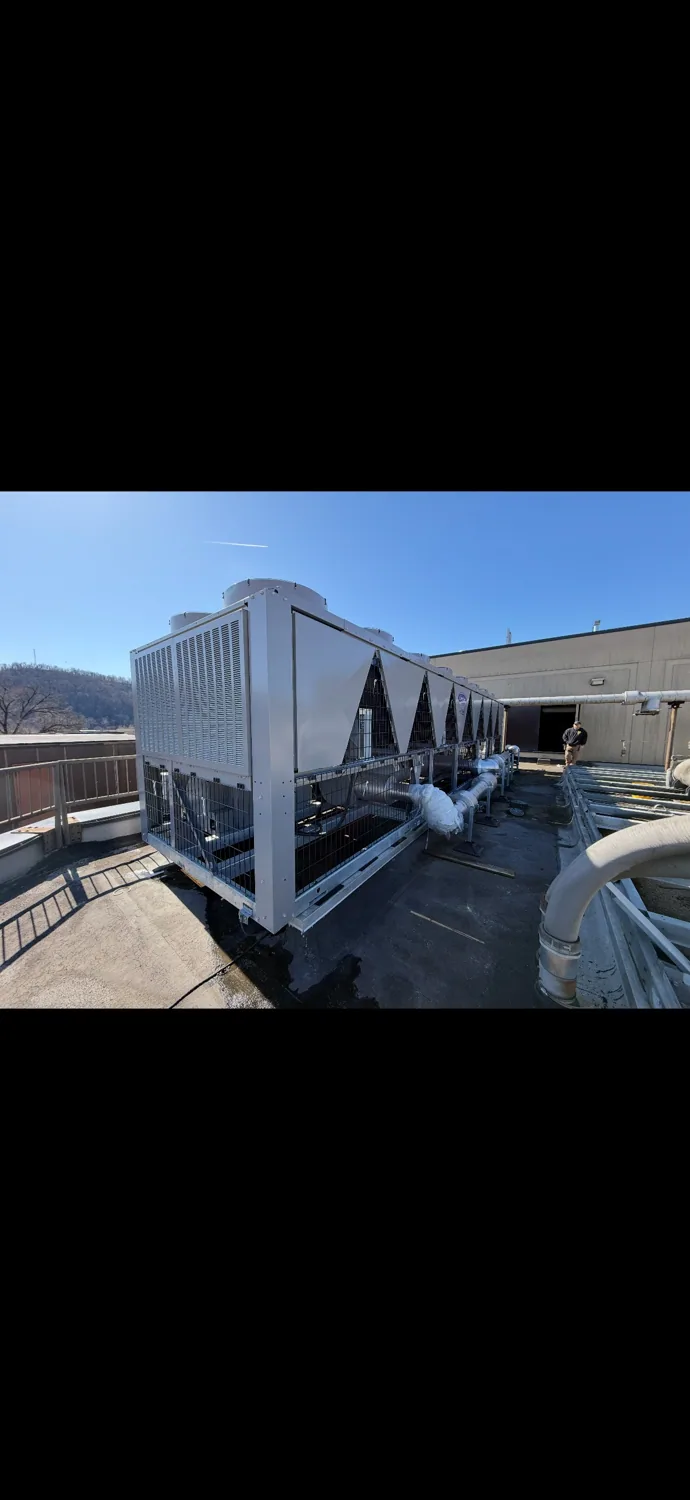
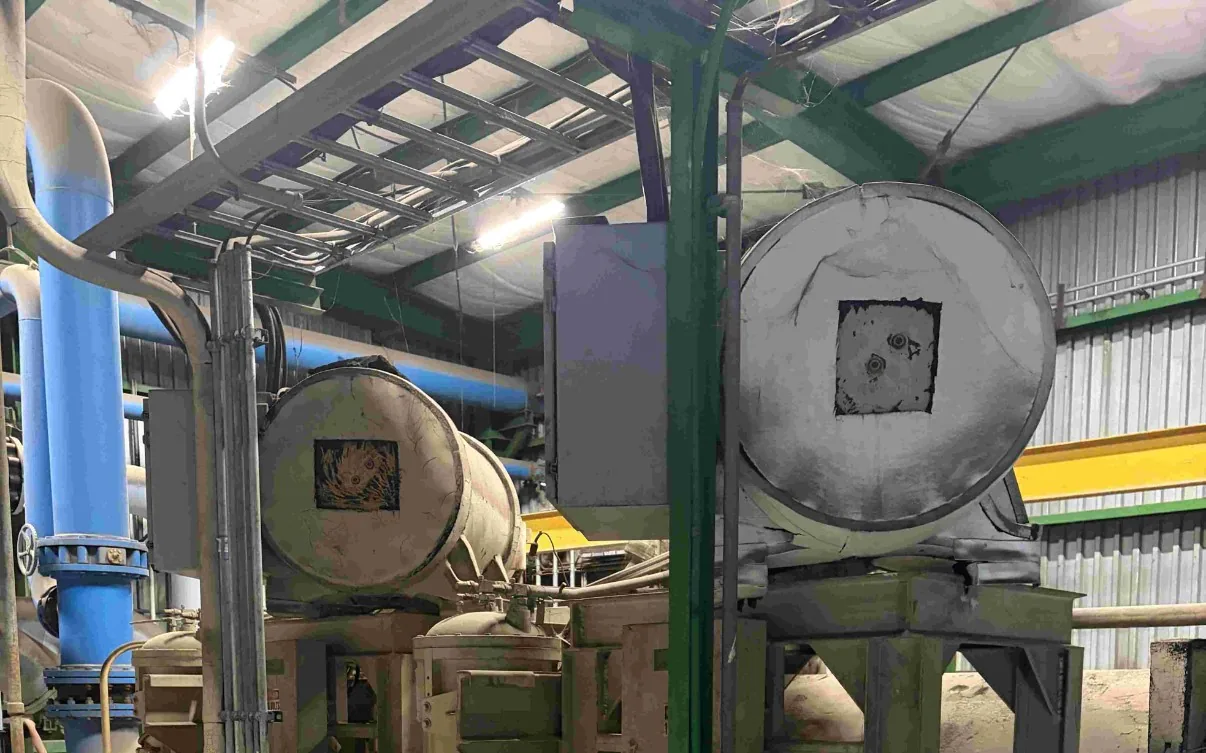
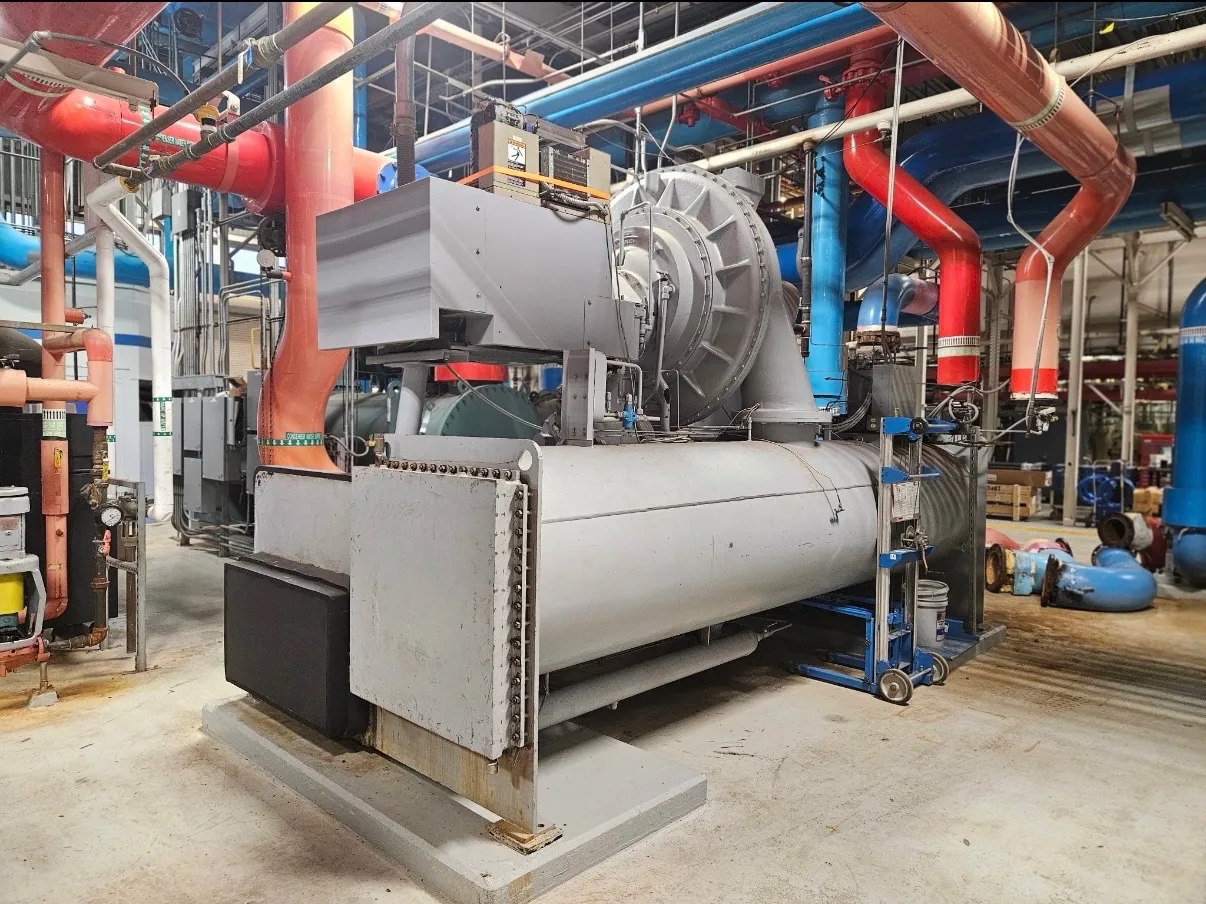
Owners of a 20–49-ton chiller in Fairmont, WV can ask us about a sale whether the equipment is running or shut down. We buy air-cooled and water-cooled industrial chillers from 20 tons to 2,000-plus tons, with cash offers and upfront payment. No testing is required. Good photos, a clear description of what is included and a contact who understands the facility can make the next steps easier to coordinate.
Identify your 20–49-ton chiller
At the smaller end of our buying range, the equipment may fit through openings that would stop a larger assembly, but measurements still matter. Share the nameplate capacity, overall dimensions if known and the location of the chiller. Indicate whether the stated tonnage describes one unit or a combined group; a 20-ton machine is within our stated range.
Photographs of the complete unit and its plates are more useful than estimating capacity from its size. If several machines are being retired, list them separately so the quantity and total scope are clear. Tell us whether each is connected or already isolated. We can consider the equipment without an operational test.
Consider the needs of a manufacturing facility
At a manufacturing site, a chiller may have served either the building or a production process. Tell us what it cooled if known, but do not assume that its prior duty establishes its current condition. A production calendar, restricted loading area or clearance around adjacent lines can shape the removal schedule. Mark any equipment that must stay in place and identify the person coordinating site access.
When the plate is hard to read
A faded or inaccessible plate should not lead you to make up a model or capacity. Provide a safe photo of what is visible, plus any drawing, invoice or maintenance record you already have. Tell us which details are estimates. Another person familiar with the plant may be able to identify the machine, but no one should enter a hazardous area merely to gather information.
Considering a tight equipment yard
An outdoor equipment yard may contain fences, piping, curbs or other units that limit access. Take a wide picture from a safe position and note any gates or sections that cannot be disturbed. Show where the chiller ends and neighboring equipment begins. A clear boundary helps the removal discussion without assuming the machine can simply be rolled onto a truck.
If several departments are involved
A disposal decision may involve facilities, accounting and the property owner. Agree on the equipment being sold and appoint one contact to collect the model details and photographs. A second contact can coordinate site access if necessary. That division keeps the equipment description separate from the logistics and helps prevent a removed component from being mistaken for something still needed.
Plan around a defined sale boundary
Before a removal crew arrives, agree on the particular chiller and any separate cabinets or detached parts included in the transaction. Note components connected to other equipment and anything the owner intends to keep. Photographs marked with simple labels can clarify that boundary. The actual sequence depends on site conditions, but a shared understanding of what is being purchased helps avoid unnecessary confusion.
A practical removal discussion
An offer discussion can include the equipment's current location and how a crew could reach it. We cover rigging, crane service when needed, disconnects, refrigerant recovery, loading and freight. Let us know about occupied spaces, gates, plant-room doors or roof access, as applicable. The actual plan will depend on the unit and site, not an assumed standard procedure.
Getting the sale started
Text (614) 715-3047 with your chiller photos and the information already available to you. Include the equipment location and say whether the machine is still connected. We purchase rather than sell chillers, make cash offers and provide upfront payment for a purchase. A machine may be reviewed without being run or operationally tested, so there is no need to restart it for us.
Use one inventory for multiple units
When selling several machines, keep an inventory with the same identifiers used in your photographs. Include each unit's location, model and capacity if known, plus the related loose parts. Mark units that are not for sale. This makes it easier to coordinate a staged pickup and avoids confusing a plant-wide capacity with the equipment included in one purchase.