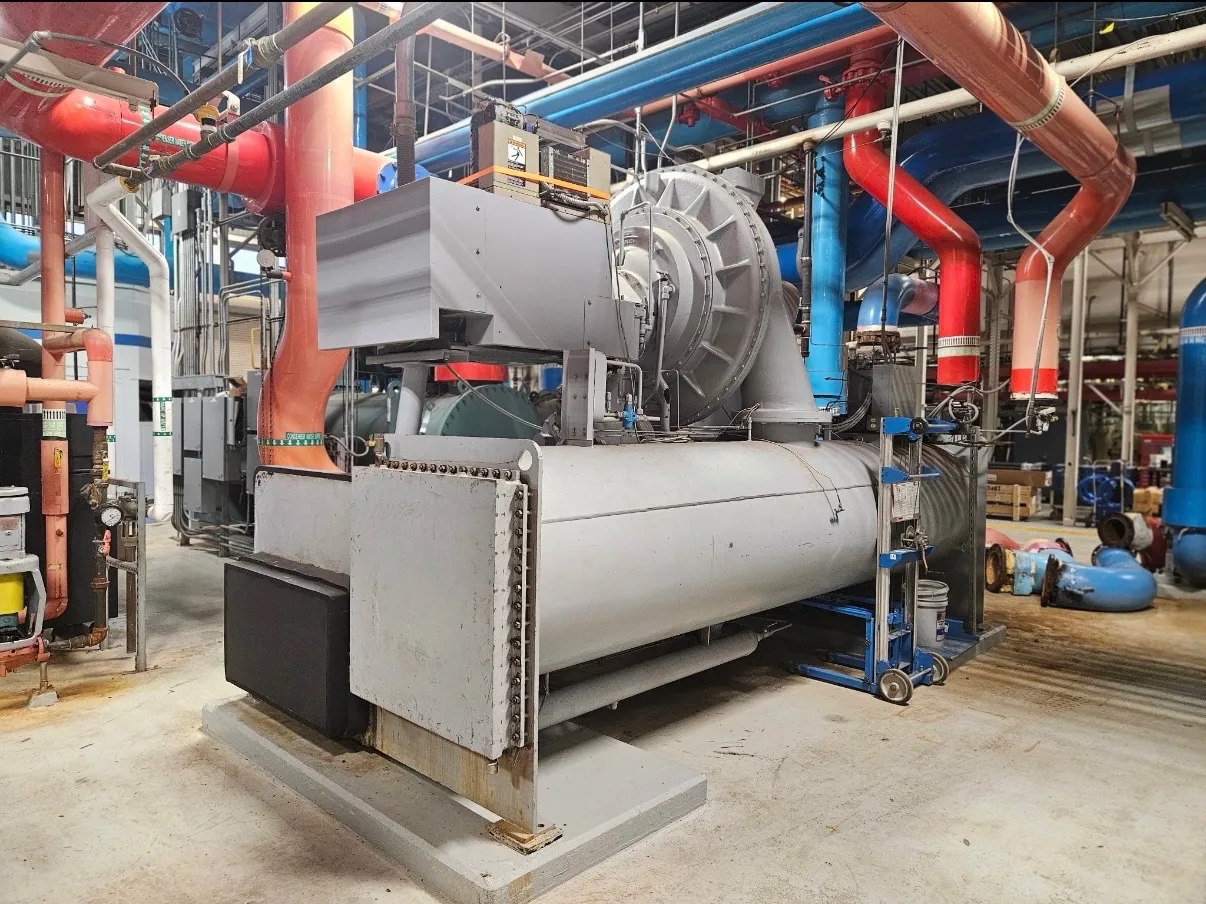
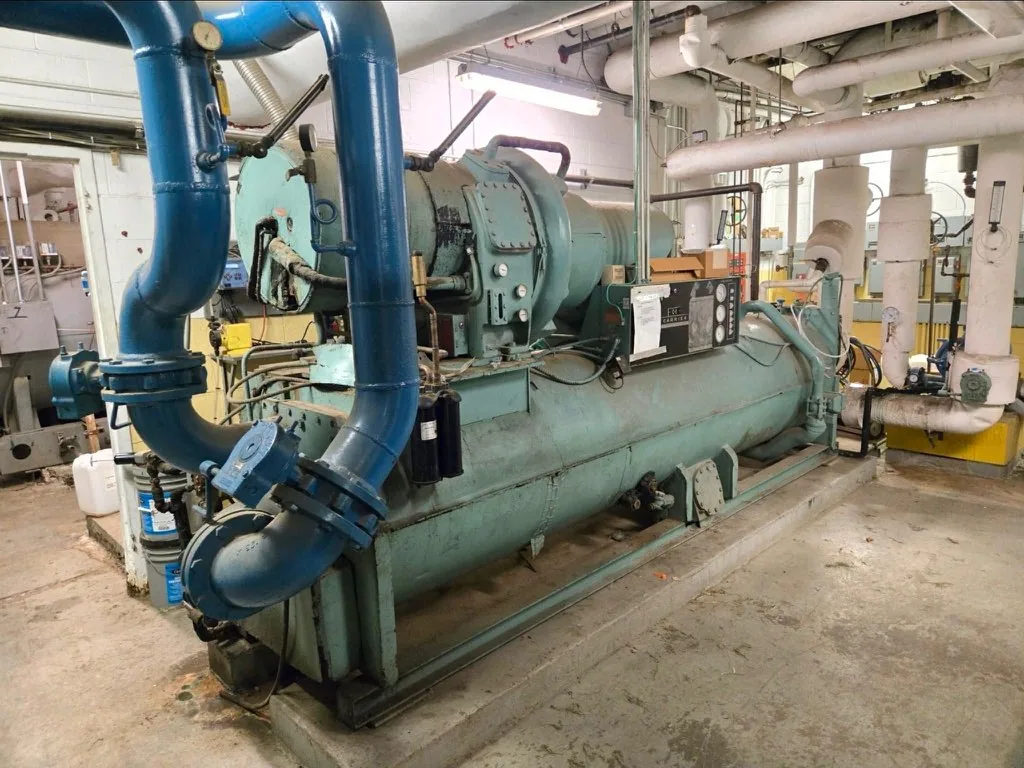

A chiller sale in Weirton, WV starts with a clear picture of the equipment. If you own a York chiller, tell us its location, rated capacity if known and present condition. We buy commercial and industrial air-cooled and water-cooled chillers from 20 tons to 2,000-plus tons. Cash offers and upfront payment are part of our process, and we do not require testing. The following details help the owner and site team prepare.
Identify the York chiller
A York label alone does not establish capacity, refrigerant or compressor design. A clear image of the actual nameplate is the best place to begin. Include a full-length photo and note whether the chiller is intact, partially dismantled or still connected to the building. If there are multiple units, identify the one offered in each photograph.
Describe the starter, controls and other components you intend to include, especially if any are in a separate cabinet or have already been removed. A useful offer discussion depends on the complete scope, not just the name on the front. There is no need to make the machine run or prove its performance for our review.
Consider the needs of an office building
At an occupied office building, decide which chiller is included and whether an active tenant, parking area or loading dock affects access. The facilities team can flag building rules and the best contact for coordinating work. A photograph of the machine and its plate is more valuable than trying to estimate how much office space it once cooled. An operational demonstration is not needed.
Record the present condition
Describe the equipment as it sits today: connected or disconnected, complete or partly removed, running or shut down. Note visible damage or missing pieces and distinguish what you know from what is uncertain. Photos and an honest account are more useful than promising a performance level. We can review nonrunning equipment and do not require operational testing.
Considering a tight equipment yard
An outdoor equipment yard may contain fences, piping, curbs or other units that limit access. Take a wide picture from a safe position and note any gates or sections that cannot be disturbed. Show where the chiller ends and neighboring equipment begins. A clear boundary helps the removal discussion without assuming the machine can simply be rolled onto a truck.
If the chiller is already retired
A unit that has been off for months or years can still be submitted. Tell us when it was last known to operate if that information exists, but do not start it merely for a sale. Describe what is connected, what has been removed and whether the site is accessible. A practical account of the present condition matters more than an unsupported performance claim.
Account for building operations
A building does not have to be empty to sell a chiller, but ongoing operations may affect the work window. Consider deliveries, employees, visitors and access to other mechanical equipment. Let the facility contact describe the actual restrictions instead of assuming the removal can happen at any hour. Keeping the sale decision separate from the site's access plan makes it easier to involve the right people at the right time.
Planning the work as a package
The service we cover spans rigging, crane work when needed, disconnects, refrigerant recovery, loading and freight. If the chiller has separate controls or loose pieces, identify whether they are included so the collection plan reflects the actual sale. Explain any building access or scheduling requirements early. Different machines need different handling; a tonnage figure alone is not a lift plan.
From first photos to an offer
Show the equipment as it is and send the pictures to (614) 715-3047. Add the model, rated tons and refrigerant if known, plus a short note about access. We are a chiller buyer and make cash offers with upfront payment. We do not require operational testing and do not sell replacement chillers. An accurate description helps keep the transaction focused.
Decide what is included
Before accepting an offer, make sure both parties are discussing the same chiller and any separate controls or loose components. Identify items that stay with the property or serve another unit. If the equipment is part of a larger project, use the model, serial number and photos to mark the sale boundary. Clear scope protects the seller from confusion when the removal team arrives.