
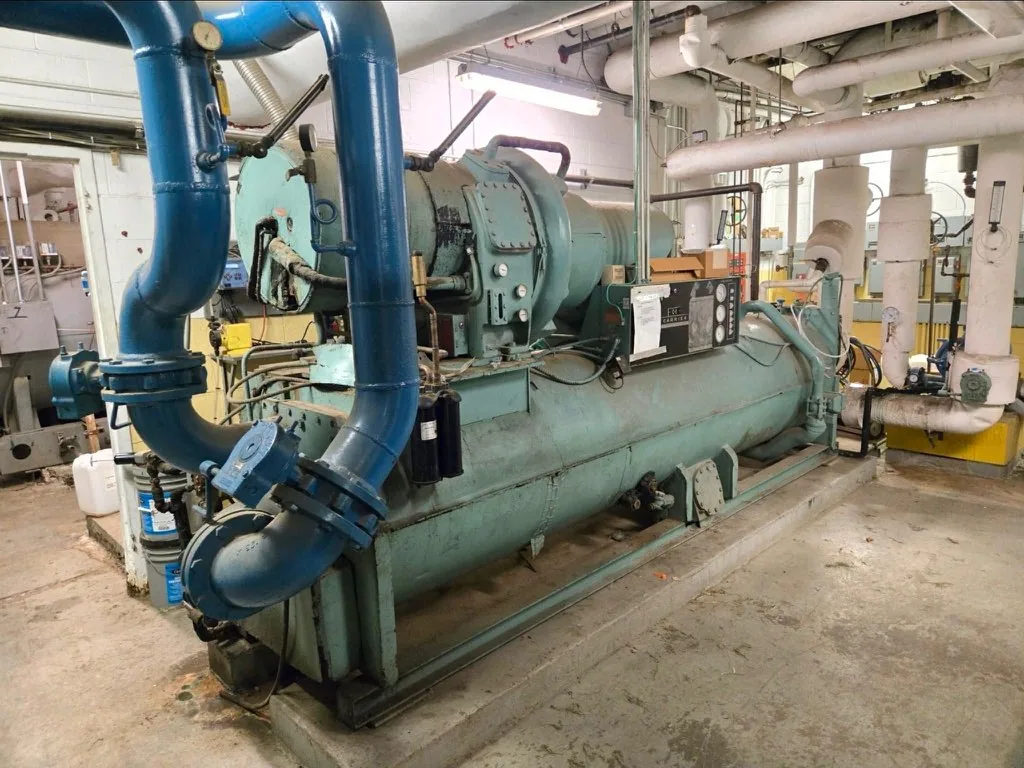
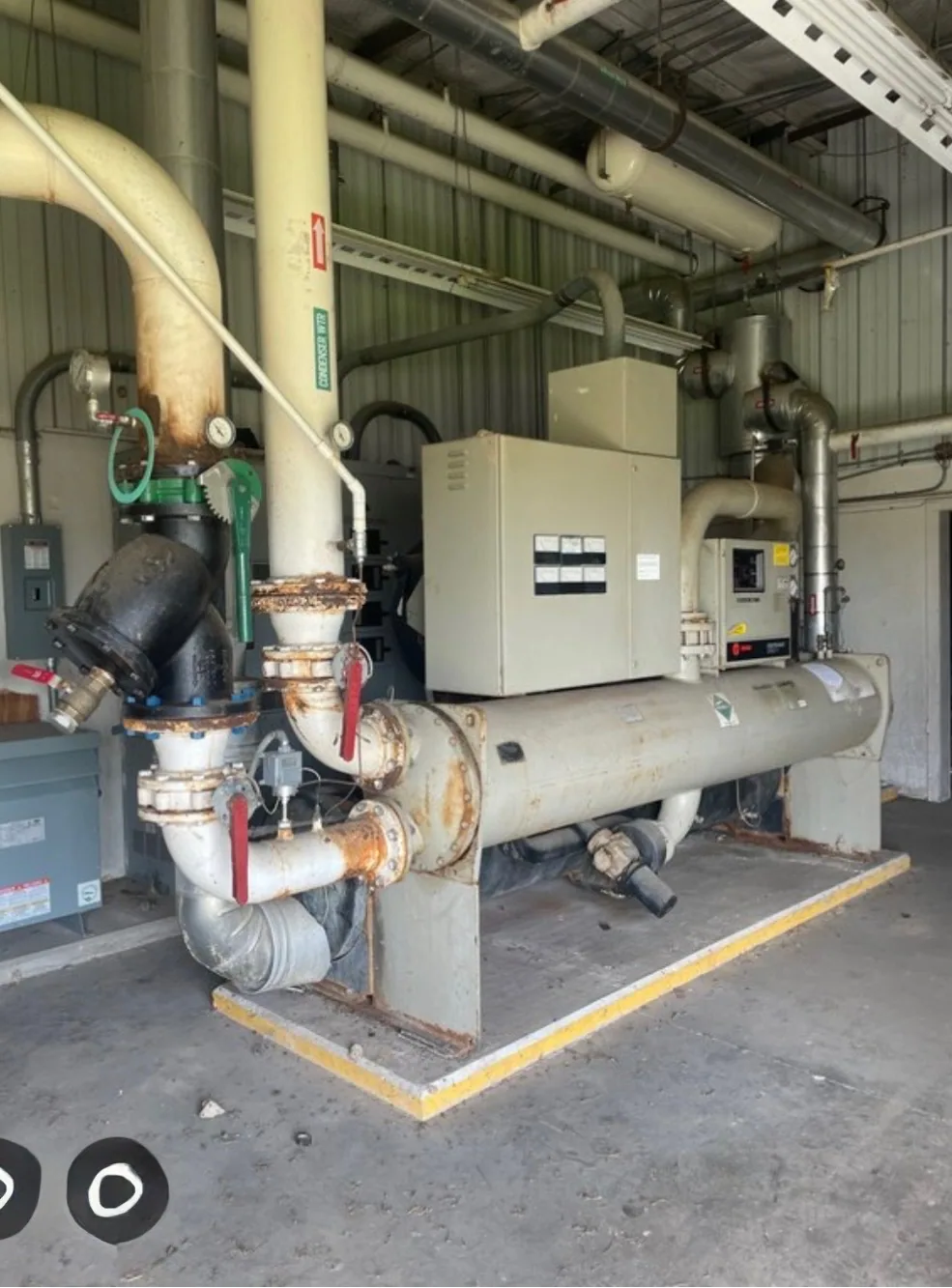
Facilities in Wayne County, WV can contact us about selling a water-cooled chiller, even if the machine has already been retired. We buy air-cooled and water-cooled industrial chillers from 20 tons to 2,000-plus tons and provide cash offers and upfront payment. Testing is not required. Explain the machine's condition and what is included, then identify any access needs so the covered removal can be coordinated around the actual site.
Describe your water-cooled chiller
A water-cooled chiller typically connects to a separate condenser-water system as well as the chilled-water circuit. For the sale, identify the chiller itself and explain which associated items, if any, are included. A wide photo of the machine and its connections is more helpful than assuming that every pump, tower or pipe in the plant is part of the transaction.
Record the plate information if it is accessible, and note whether the unit is still connected or has already been isolated. The location of the equipment room, the opening out of the building and the space around the machine all influence the removal plan. There is no requirement to operate the unit for an offer.
Consider the needs of a data center
In a data center or other critical-load building, the equipment being sold should be clearly distinguished from cooling that remains in use. Provide the site contact's access rules, relevant work windows and any boundaries around active equipment. Avoid sending confidential security information with an initial photo set; a basic description of the chiller and a safe route to it can begin the conversation.
List separate components
Some chillers have a starter, controls or other components in a separate cabinet. Tell us what belongs to the machine and what is included in the proposed sale. Label loose items and note components already removed. A photograph showing the relationship between the main unit and separate cabinets can be especially helpful when the facility has more than one chiller.
Planning a roof lift
If the chiller is on a roof, provide its location on the building, a safe overall photo and any known route from the street or yard. Mention parapets, overhead obstructions and areas that must remain open. The actual lift method depends on the machine and site; do not try to move a unit yourself. We cover the crane when needed as part of the coordinated removal.
If the chiller is already retired
A unit that has been off for months or years can still be submitted. Tell us when it was last known to operate if that information exists, but do not start it merely for a sale. Describe what is connected, what has been removed and whether the site is accessible. A practical account of the present condition matters more than an unsupported performance claim.
Account for building operations
A building does not have to be empty to sell a chiller, but ongoing operations may affect the work window. Consider deliveries, employees, visitors and access to other mechanical equipment. Let the facility contact describe the actual restrictions instead of assuming the removal can happen at any hour. Keeping the sale decision separate from the site's access plan makes it easier to involve the right people at the right time.
Planning the work as a package
The service we cover spans rigging, crane work when needed, disconnects, refrigerant recovery, loading and freight. If the chiller has separate controls or loose pieces, identify whether they are included so the collection plan reflects the actual sale. Explain any building access or scheduling requirements early. Different machines need different handling; a tonnage figure alone is not a lift plan.
From first photos to an offer
Show the equipment as it is and send the pictures to (614) 715-3047. Add the model, rated tons and refrigerant if known, plus a short note about access. We are a chiller buyer and make cash offers with upfront payment. We do not require operational testing and do not sell replacement chillers. An accurate description helps keep the transaction focused.
Use one inventory for multiple units
When selling several machines, keep an inventory with the same identifiers used in your photographs. Include each unit's location, model and capacity if known, plus the related loose parts. Mark units that are not for sale. This makes it easier to coordinate a staged pickup and avoids confusing a plant-wide capacity with the equipment included in one purchase.