

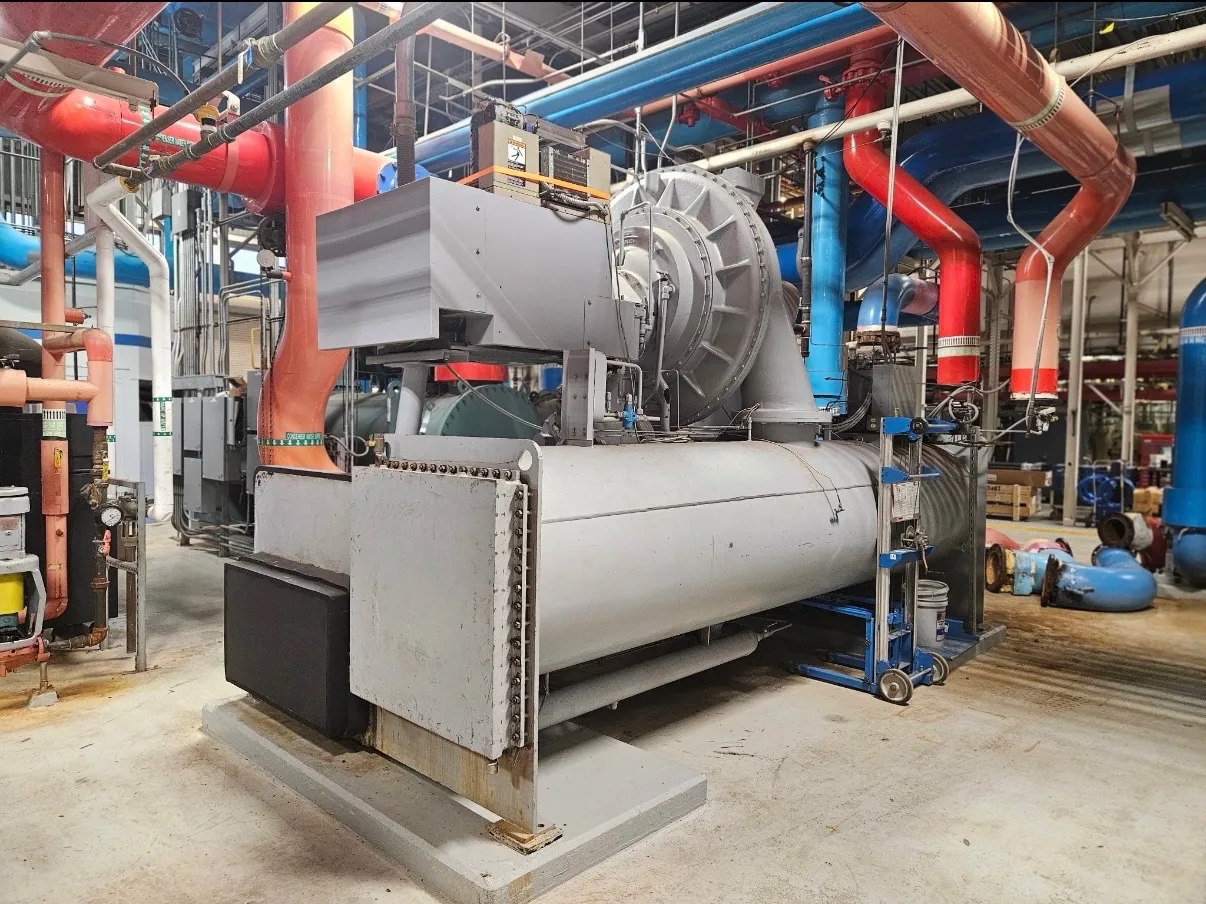
A chiller sale in Nicholas County, WV starts with a clear picture of the equipment. If you own a water-cooled chiller, tell us its location, rated capacity if known and present condition. We buy commercial and industrial air-cooled and water-cooled chillers from 20 tons to 2,000-plus tons. Cash offers and upfront payment are part of our process, and we do not require testing. The following details help the owner and site team prepare.
Describe your water-cooled chiller
A water-cooled chiller typically connects to a separate condenser-water system as well as the chilled-water circuit. For the sale, identify the chiller itself and explain which associated items, if any, are included. A wide photo of the machine and its connections is more helpful than assuming that every pump, tower or pipe in the plant is part of the transaction.
Record the plate information if it is accessible, and note whether the unit is still connected or has already been isolated. The location of the equipment room, the opening out of the building and the space around the machine all influence the removal plan. There is no requirement to operate the unit for an offer.
Consider the needs of a food-processing facility
A food-processing site may have hygiene, traffic or production restrictions that affect the removal route. Explain any site-specific requirements to the removal coordinator and identify whether the retired chiller served a process or a building loop, if known. Do not disturb nearby equipment for a photograph. List the machine and any components being sold separately from systems that must remain active.
When the plate is hard to read
A faded or inaccessible plate should not lead you to make up a model or capacity. Provide a safe photo of what is visible, plus any drawing, invoice or maintenance record you already have. Tell us which details are estimates. Another person familiar with the plant may be able to identify the machine, but no one should enter a hazardous area merely to gather information.
Planning a roof lift
If the chiller is on a roof, provide its location on the building, a safe overall photo and any known route from the street or yard. Mention parapets, overhead obstructions and areas that must remain open. The actual lift method depends on the machine and site; do not try to move a unit yourself. We cover the crane when needed as part of the coordinated removal.
If several departments are involved
A disposal decision may involve facilities, accounting and the property owner. Agree on the equipment being sold and appoint one contact to collect the model details and photographs. A second contact can coordinate site access if necessary. That division keeps the equipment description separate from the logistics and helps prevent a removed component from being mistaken for something still needed.
Selling one unit from a larger group
When only one chiller in a group is being retired, identify it by model and serial number and mark it on a wide photograph. Explain whether other units continue to serve the building and whether the access route passes close to them. Give the removal contact an opportunity to coordinate with facility staff. The equipment sold and the equipment that remains should be clearly distinguished before work begins.
What to tell the removal coordinator
Identify the chiller's location, the site contact and any restrictions on working hours or the route to a truck. We cover rigging, a crane when needed, disconnects, refrigerant recovery, loading and freight. Existing measurements or drawings are useful, but do not guess at the weight. The removal method is planned for the actual machine and verified site conditions.
A straightforward seller conversation
Start by texting (614) 715-3047 with the manufacturer, model, capacity if known, location and a few photos. We buy industrial and commercial chillers and can make a cash offer with upfront payment. The machine does not have to be operating, and no operational test is required. We do not sell chillers; this service is for owners who want to sell theirs.
Check authorization before handoff
If the chiller belongs to a company, public body or property owner, make sure the person accepting the offer has the necessary authority. The facility may also have its own inventory or disposal process. Identify who will coordinate access and confirm which components are included. These practical steps help the purchase proceed without assuming that the maintenance contact owns the equipment.