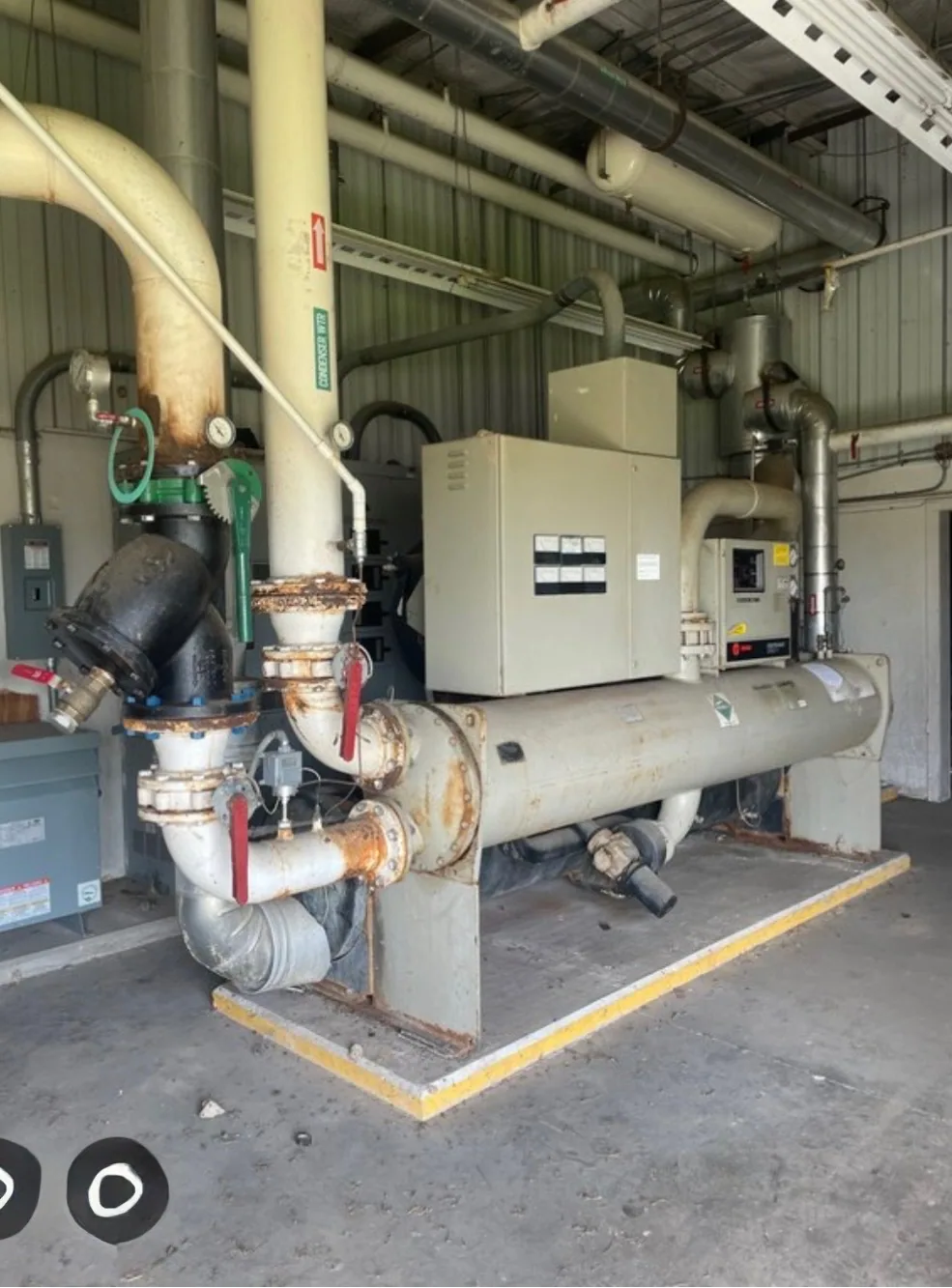
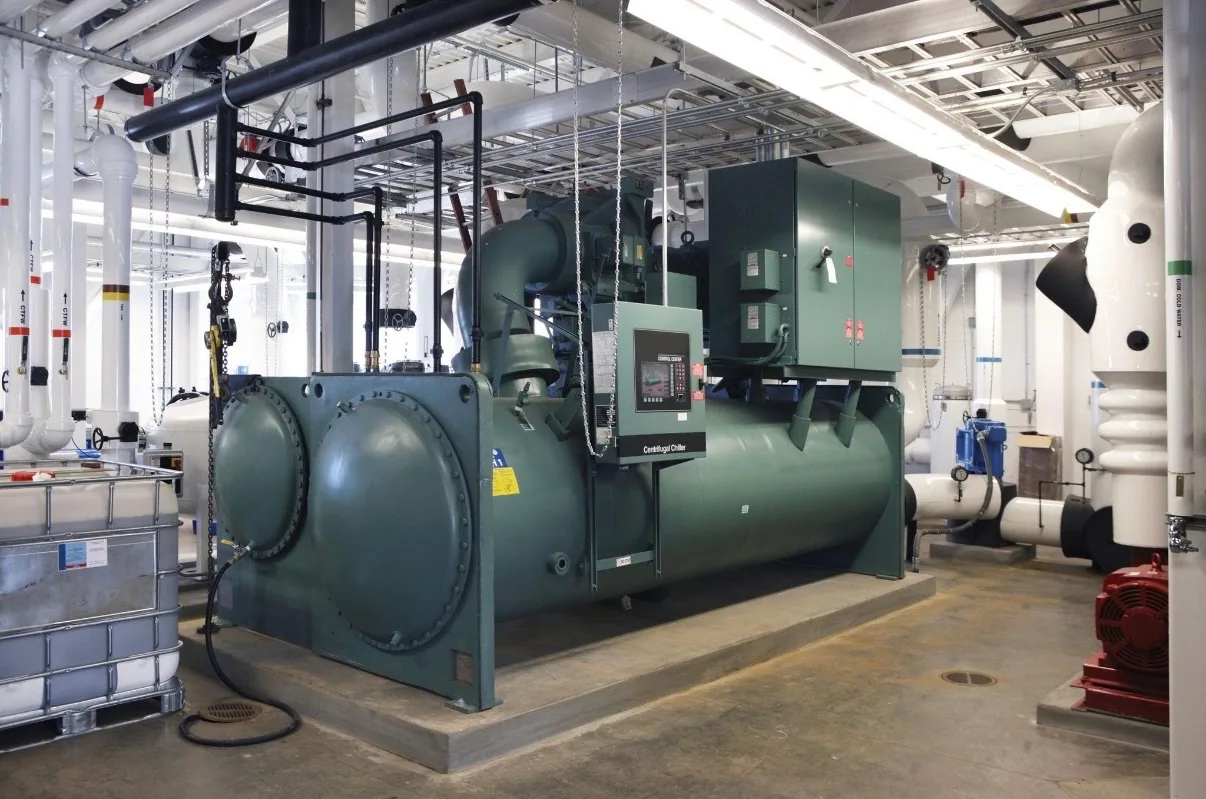
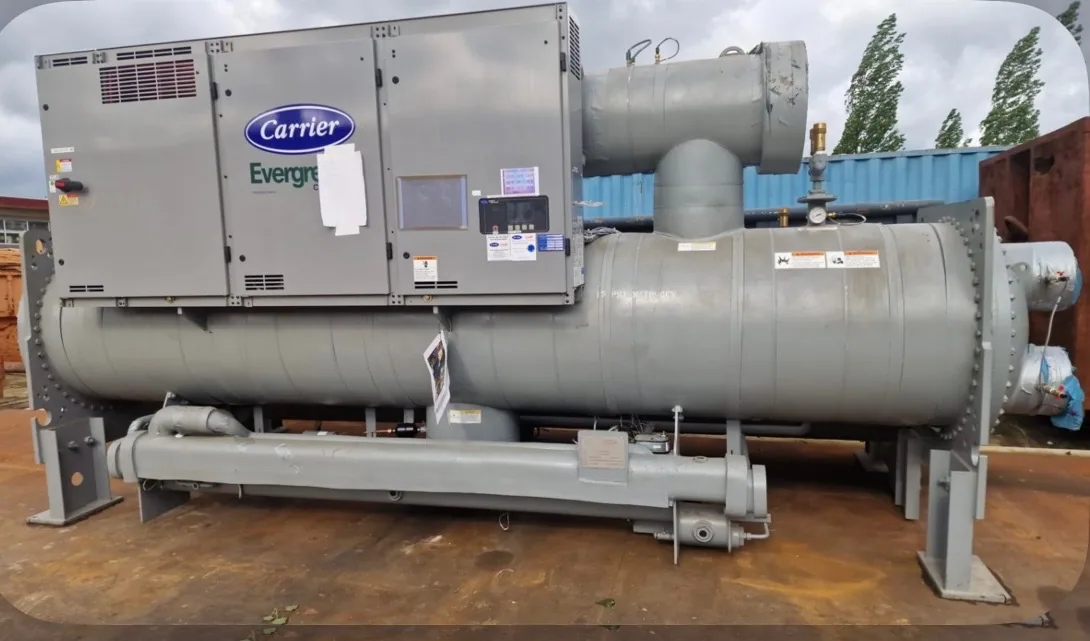
If a water-cooled chiller is scheduled for replacement or already shut down in Monongalia County, WV, a sale can start with current photos and the information you have. We buy commercial and industrial air-cooled and water-cooled chillers from 20 tons to 2,000-plus tons. Our process offers upfront payment and a cash offer without requiring testing. This page covers equipment identification, facility access and the removal work we handle.
Describe your water-cooled chiller
A water-cooled chiller typically connects to a separate condenser-water system as well as the chilled-water circuit. For the sale, identify the chiller itself and explain which associated items, if any, are included. A wide photo of the machine and its connections is more helpful than assuming that every pump, tower or pipe in the plant is part of the transaction.
Record the plate information if it is accessible, and note whether the unit is still connected or has already been isolated. The location of the equipment room, the opening out of the building and the space around the machine all influence the removal plan. There is no requirement to operate the unit for an offer.
Consider the needs of a school or education facility
A school or education facility may need to coordinate work around classes, events or an unoccupied period. Identify the equipment owner and the person authorized to arrange the sale, then describe any site-entry and scheduling requirements. Note whether other chillers must remain available during the work. Those details help plan a removal without assuming that every campus has the same equipment or calendar.
Separate capacity from plant totals
Capacity is useful only when its scope is clear. A building schedule may show the combined capacity of several chillers, while the sale may include just one. Send the individual machine rating if available and identify any uncertainty. If there are several units, number them and photograph each plate. This avoids mistaking a plant total for the size of a single chiller.
Checking the loading area
A truck-accessible loading area is useful information even when the chiller itself is indoors. Note dock height, gate width if known, vehicle restrictions and whether another tenant controls the approach. These are planning questions, not a request for the seller to arrange transport. We cover loading and freight and coordinate the practical route with the site contact after reviewing the equipment.
Coordinating multiple chillers
A site with several chillers may want to retire them together or in stages. Identify each machine, its condition and the order in which it becomes available. Explain whether access to one unit is blocked by another and whether anything must remain in operation. Separate equipment information from schedule preferences so the sale and removal scope can be understood clearly.
Use records as evidence, not assumptions
Maintenance logs, invoices and drawings can explain a chiller's history, but they may be outdated or refer to a neighboring unit. Match the serial number when possible and show any known changes in current photos. If there is a difference between a plate and a later record, send both and note the discrepancy. You do not need to settle every technical question before contacting the buyer.
From connection points to freight
We cover the disconnects, refrigerant recovery, rigging, crane work when needed, loading and freight for the purchased chiller. If the machine is connected to a shared system, identify the equipment that stays and explain any operating restrictions. The crew can plan around the real installation; the seller does not need to take apart piping or electrical connections to request an offer.
Contact the buyer directly
For a cash offer, text photos and a description of your chiller to (614) 715-3047. We buy industrial chillers from 20 tons to 2,000-plus tons and provide upfront payment for a purchase. We do not ask for an operational test and do not sell chillers. Mention the equipment's location, condition and any known removal constraints in your first message.
Agree on the timing
Tell us about an intended shutdown, a property handover or a date when access changes. If the timetable is tentative, describe it as tentative. A site contact can then coordinate the removal around the actual decision and operating schedule. Before work begins, make sure the equipment included and any nearby systems that remain in place are understood by the relevant parties.