

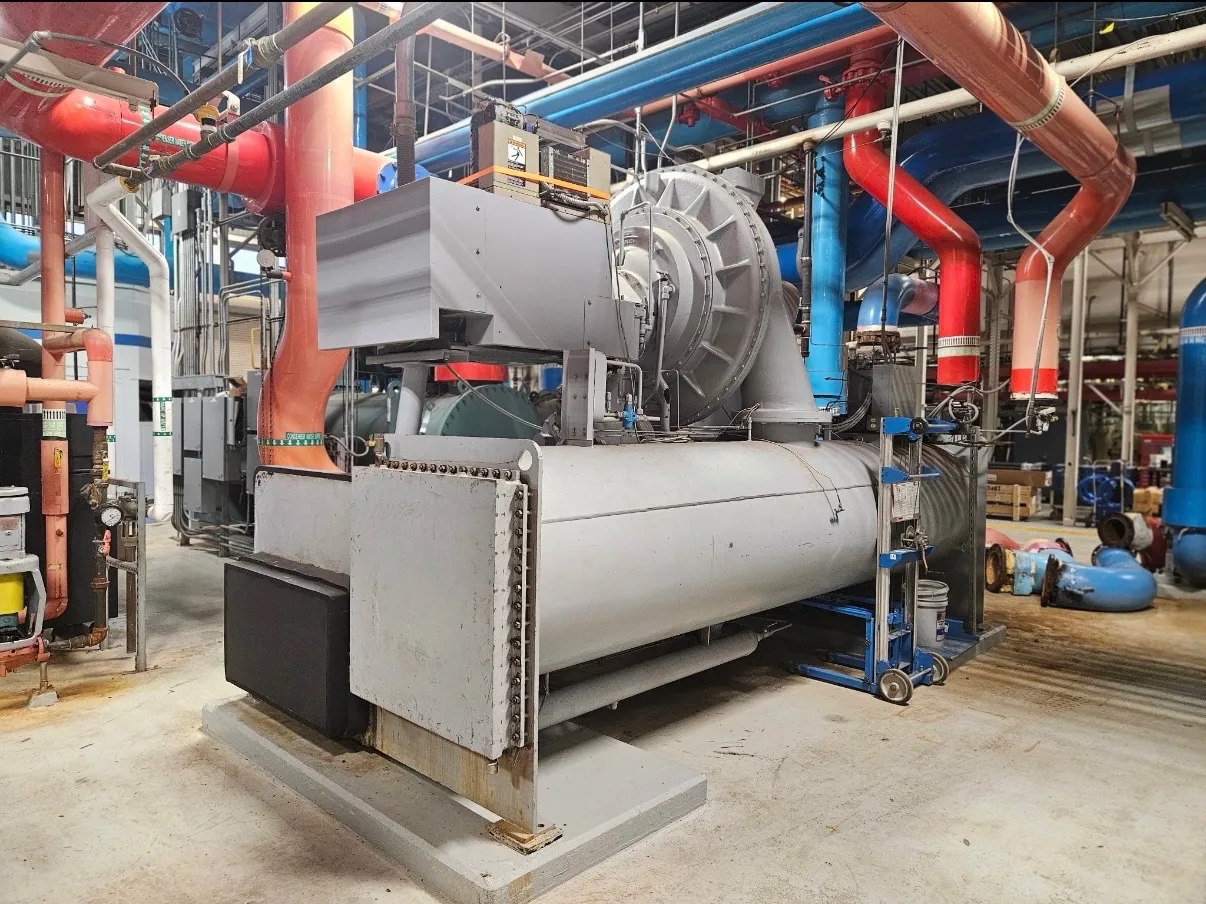
If you need to sell a chiller from a data center in Clarksburg, WV, start with the equipment you actually have, not an assumed market value or a test run. We buy commercial and industrial chillers from 20 tons to 2,000-plus tons, including air-cooled and water-cooled units. Our buying process includes cash offers and upfront payment, and a test is not required. The guidance below explains how to identify the machine and prepare for removal.
Identify the chiller at a data center
At a data center, begin by identifying the specific chiller the owner wants to sell. A cooling plant may contain several machines along with pumps, controls and other equipment that are not part of the transaction. Photograph the unit, its model and serial plate, and any separate components included. Mark other systems that need to stay in place.
Share the chiller's rated capacity and whether it is air-cooled or water-cooled if known. We buy industrial and commercial chillers from 20 tons to 2,000-plus tons. An idle machine can be reviewed in its current condition; you do not need to run an operational test or produce a new performance report to start a sale conversation.
Consider the needs of a data center
In a data center or other critical-load building, the equipment being sold should be clearly distinguished from cooling that remains in use. Provide the site contact's access rules, relevant work windows and any boundaries around active equipment. Avoid sending confidential security information with an initial photo set; a basic description of the chiller and a safe route to it can begin the conversation.
Separate capacity from plant totals
Capacity is useful only when its scope is clear. A building schedule may show the combined capacity of several chillers, while the sale may include just one. Send the individual machine rating if available and identify any uncertainty. If there are several units, number them and photograph each plate. This avoids mistaking a plant total for the size of a single chiller.
Considering a tight equipment yard
An outdoor equipment yard may contain fences, piping, curbs or other units that limit access. Take a wide picture from a safe position and note any gates or sections that cannot be disturbed. Show where the chiller ends and neighboring equipment begins. A clear boundary helps the removal discussion without assuming the machine can simply be rolled onto a truck.
When the schedule is uncertain
You can begin with equipment details even if the exact pickup date is not yet known. Explain the decision milestones, any proposed shutdown window and who must approve access. An early discussion helps define what information is missing without forcing the site to rush a removal. The final plan should reflect the actual unit, the facility's operating needs and an agreed schedule.
Compare the complete scope
When weighing what to do with a retired chiller, compare the whole scope rather than looking only at a headline offer. Ask who will arrange and cover disconnections, refrigerant recovery, lifting, loading and transportation, and how payment will be handled. Our purchase includes those covered services and upfront payment. A comparison based on the same equipment and work scope makes it easier to understand the practical differences between options.
Coordinating a safe handoff
Share any known restrictions around active equipment and access to the chiller. We cover disconnects, refrigerant recovery, rigging, crane service when needed, loading and freight for the purchased equipment. The people coordinating the work can use the information you provide to plan the appropriate sequence. You do not need to open cabinets, break connections or attempt a lift for an initial review.
How the cash offer works
Text current photos and the machine's basic details to (614) 715-3047. We buy chillers; we do not sell replacement equipment. We review the information and can make a cash offer, with upfront payment for a purchase. No operational testing is required. If the model, capacity or condition is uncertain, tell us rather than delaying the conversation or guessing.
Bring existing information, not a test
A manufacturer plate, existing service record or clear photograph can answer many initial questions. You do not need to commission a report or start the chiller to establish an operating history. Send what you have, label estimates and explain missing information. Once the equipment and access are understood, the offer and covered removal can be coordinated with the appropriate owner and site contact.