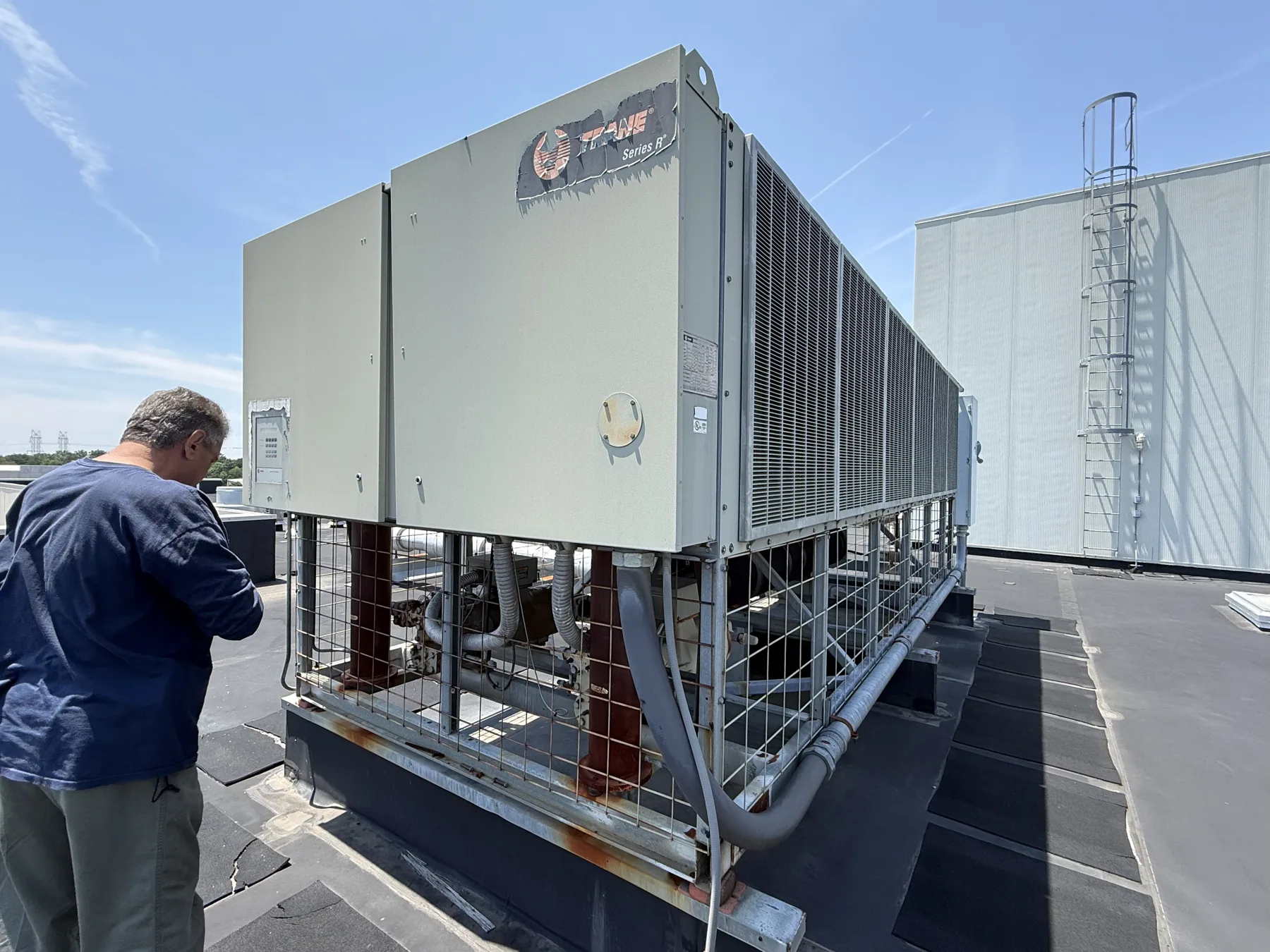

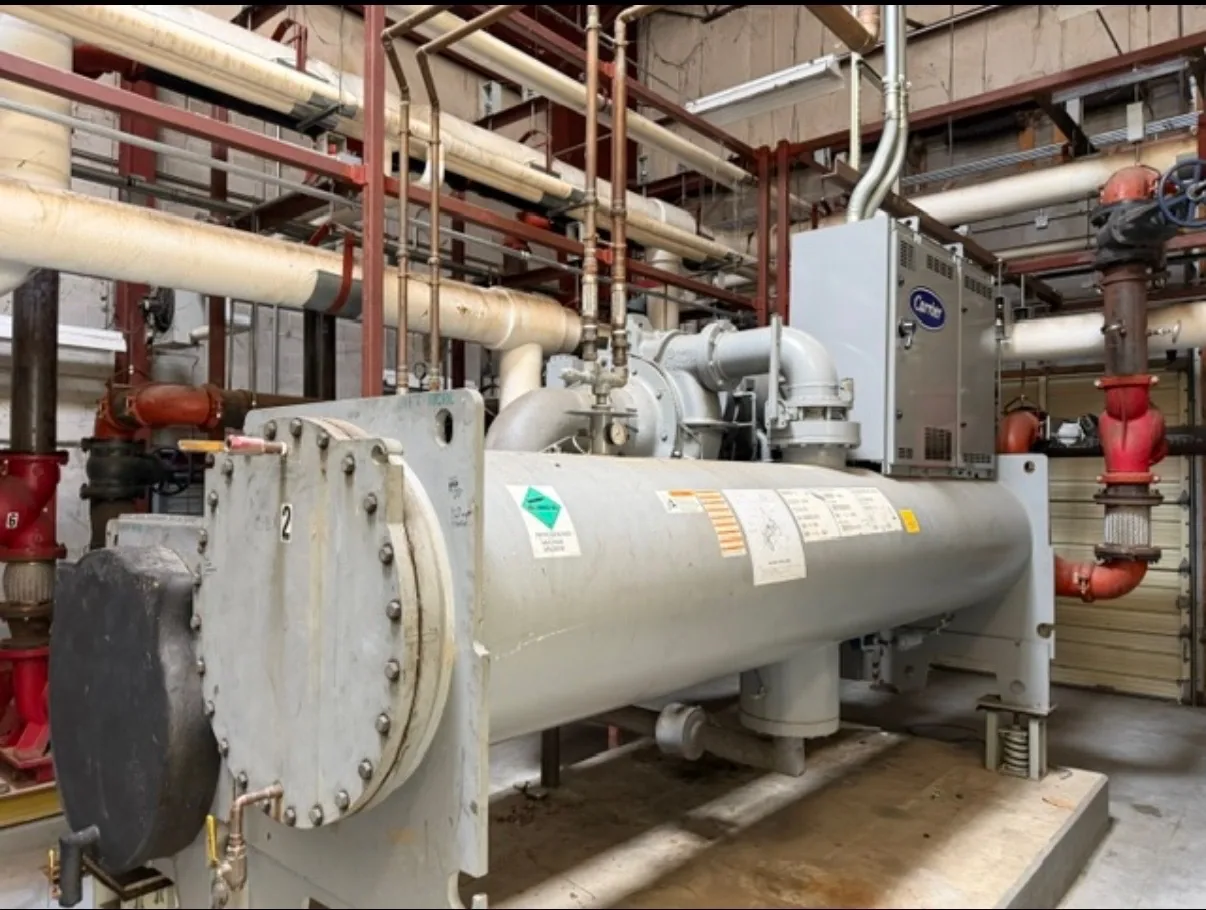
There is no need to restart a chiller to ask about selling a Daikin chiller in West Virginia. We buy industrial and commercial chillers between 20 tons and 2,000-plus tons, including water-cooled and air-cooled equipment. We make cash offers and provide upfront payment, with no test required. Existing photos, identification and information about the site can help define the equipment and prepare for a practical removal discussion.
Identify the Daikin chiller
When identifying a Daikin chiller, capture the manufacturer plate and enough surrounding equipment to show how the assembly is arranged. Report the model and serial numbers as written, even if the building inventory uses a different shorthand. If a replacement component carries another label, photograph that plate separately rather than assuming it identifies the entire chiller.
Tell us whether the equipment is air-cooled or water-cooled if you know, along with the approximate capacity and whether the controls are present. A machine may have been modified during its working life, so mention relevant changes and use the existing records as clues, not guarantees. We do not require an operational test.
Consider the needs of a school or education facility
A school or education facility may need to coordinate work around classes, events or an unoccupied period. Identify the equipment owner and the person authorized to arrange the sale, then describe any site-entry and scheduling requirements. Note whether other chillers must remain available during the work. Those details help plan a removal without assuming that every campus has the same equipment or calendar.
Start with the nameplate
Photograph the equipment nameplate straight on if you can do so safely. Model, serial number, rated tons and electrical information may appear there, although labels vary. Include a wider picture so the plate can be matched to the right machine. If it is damaged or missing, say so and send whatever existing records or photographs are available instead of guessing at the numbers.
Access around occupied operations
An occupied property may have delivery vehicles, staff movement or customer areas near the proposed route. Indicate the times or places that need special coordination and identify the person who can approve access. Photographs taken from a safe location can show the general setting. The goal is to plan the chiller removal around the real site, not assume that every facility has a clear path.
When the schedule is uncertain
You can begin with equipment details even if the exact pickup date is not yet known. Explain the decision milestones, any proposed shutdown window and who must approve access. An early discussion helps define what information is missing without forcing the site to rush a removal. The final plan should reflect the actual unit, the facility's operating needs and an agreed schedule.
Read capacity and electrical information separately
Tons describe cooling capacity, while a motor or electrical rating describes a different characteristic. Do not convert an electrical number into a chiller capacity by assumption. If the plate lists several values and you are unsure which applies, send a clear photo rather than choosing one. For a plant with multiple machines, distinguish the individual unit's rating from any aggregate capacity shown on a building schedule.
Coordinating a safe handoff
Share any known restrictions around active equipment and access to the chiller. We cover disconnects, refrigerant recovery, rigging, crane service when needed, loading and freight for the purchased equipment. The people coordinating the work can use the information you provide to plan the appropriate sequence. You do not need to open cabinets, break connections or attempt a lift for an initial review.
Contact the buyer directly
For a cash offer, text photos and a description of your chiller to (614) 715-3047. We buy industrial chillers from 20 tons to 2,000-plus tons and provide upfront payment for a purchase. We do not ask for an operational test and do not sell chillers. Mention the equipment's location, condition and any known removal constraints in your first message.
Check authorization before handoff
If the chiller belongs to a company, public body or property owner, make sure the person accepting the offer has the necessary authority. The facility may also have its own inventory or disposal process. Identify who will coordinate access and confirm which components are included. These practical steps help the purchase proceed without assuming that the maintenance contact owns the equipment.