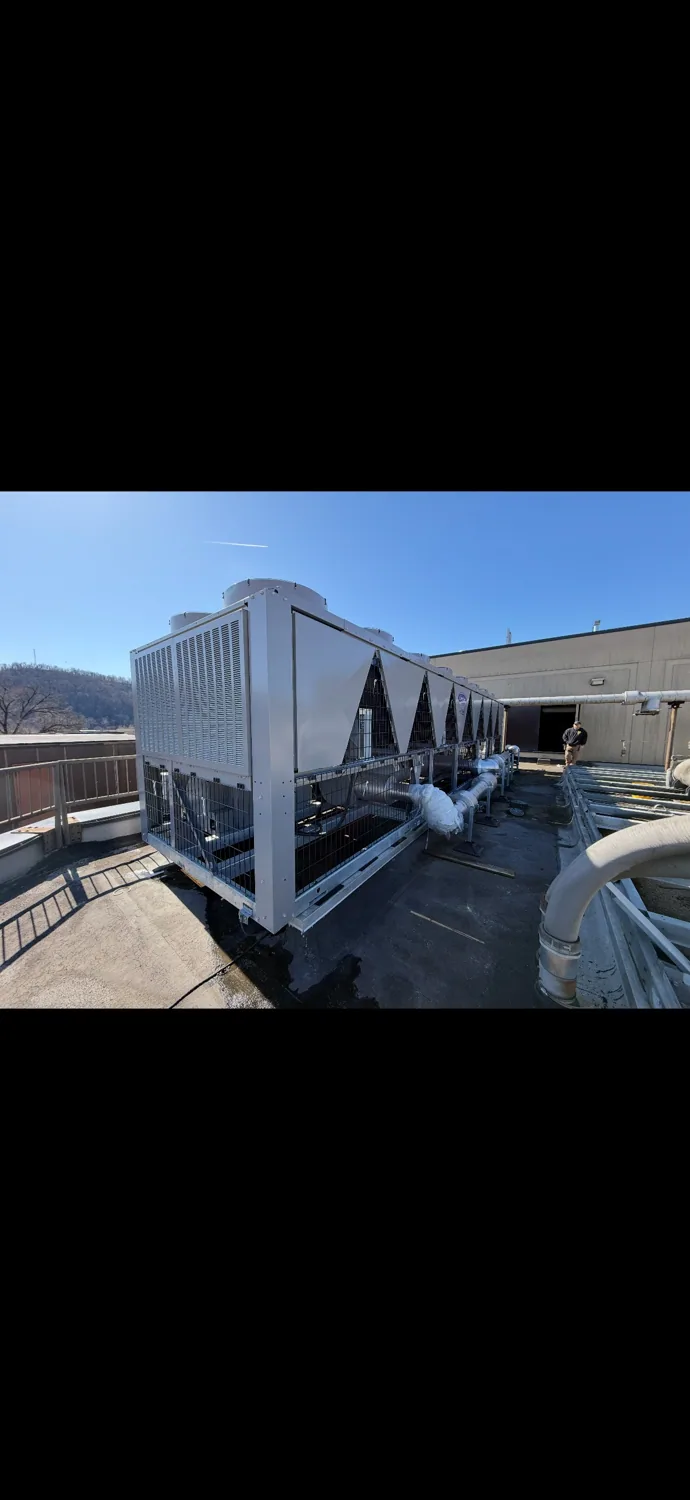
If you need to sell a centrifugal chiller in West Virginia, start with the equipment you actually have, not an assumed market value or a test run. We buy commercial and industrial chillers from 20 tons to 2,000-plus tons, including air-cooled and water-cooled units. Our buying process includes cash offers and upfront payment, and a test is not required. The guidance below explains how to identify the machine and prepare for removal.
Describe your centrifugal chiller
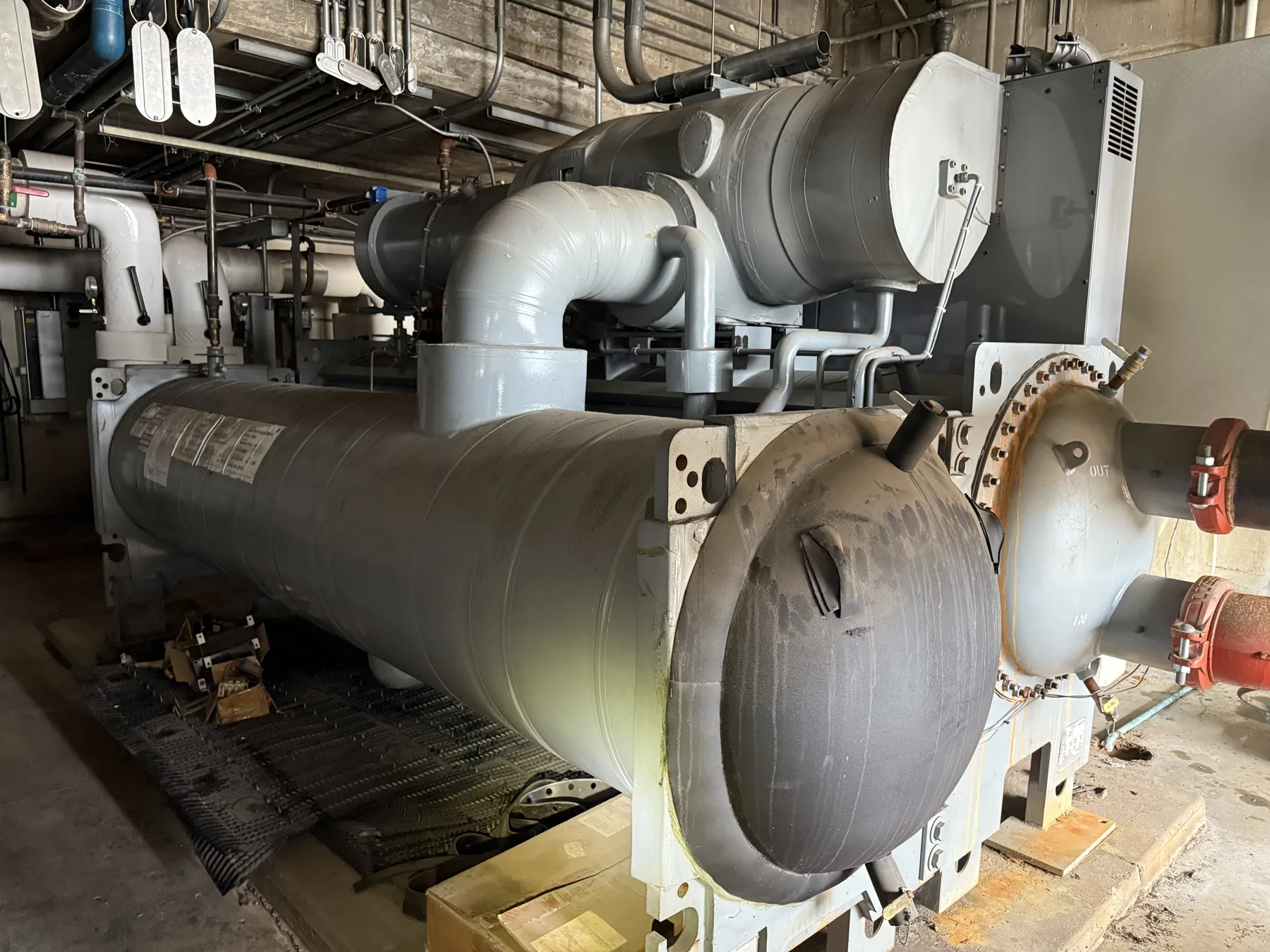
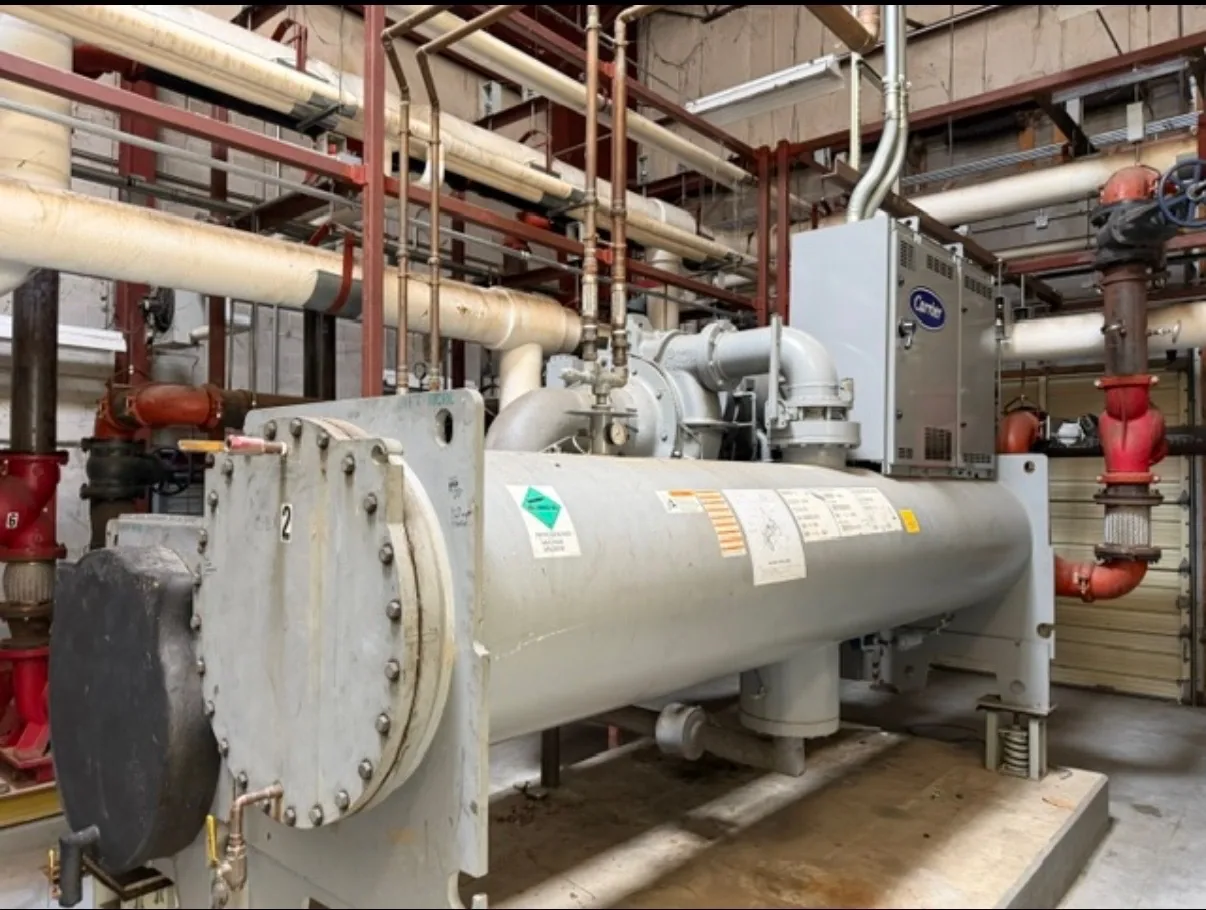
A centrifugal chiller uses a centrifugal compressor, but individual machines differ in size, controls, refrigerant and physical arrangement. Photograph the full assembly and its identification plates. If the starter or control cabinet is separate, tell us whether it is included and show where it sits in relation to the chiller.
Large components and restricted plant-room doors can make the exit route an important early question. Share any equipment dimensions or removal drawings you already have, and describe obstacles without attempting a lift or dismantling. A nonrunning centrifugal machine can still be submitted for review; no operational testing is required.
Consider the needs of a manufacturing facility
At a manufacturing site, a chiller may have served either the building or a production process. Tell us what it cooled if known, but do not assume that its prior duty establishes its current condition. A production calendar, restricted loading area or clearance around adjacent lines can shape the removal schedule. Mark any equipment that must stay in place and identify the person coordinating site access.
Separate capacity from plant totals
Capacity is useful only when its scope is clear. A building schedule may show the combined capacity of several chillers, while the sale may include just one. Send the individual machine rating if available and identify any uncertainty. If there are several units, number them and photograph each plate. This avoids mistaking a plant total for the size of a single chiller.
Access through a shared building
When an exit route passes through common space, identify who controls that space and whether there are access hours or tenant restrictions. Elevators, corridors and doors can be relevant, but their suitability cannot be determined without the actual dimensions and site review. Do not promise a route based on an old drawing alone. A current photo and the right building contact are a good beginning.
Working around an active plant
If the rest of the cooling plant must stay in service, identify the chiller to be removed and explain the boundaries around active equipment. The site team can flag operating constraints and preferred work windows. Do not disconnect shared piping or electrical equipment yourself to accelerate the sale. We cover disconnects and coordinate the removal scope for the unit being purchased.
Coordinate ownership and access separately
Ownership and physical access may be controlled by different people. A landlord, tenant, contractor or project manager may know the equipment without being authorized to sell it. Confirm the owner and the person who can approve a transfer; also identify whoever can provide safe access to the unit. If an internal approval is pending, mention the expected process rather than treating a tentative decision as final.
What our removal scope covers
We cover rigging, crane service when needed, disconnects, refrigerant recovery, loading and freight for the chiller we buy. That scope is intended to avoid leaving the seller to arrange the major steps separately. The method and sequence depend on the actual unit and site. Tell us about known access restrictions, nearby active equipment and any relevant facility requirements at the outset.
From first photos to an offer
Show the equipment as it is and send the pictures to (614) 715-3047. Add the model, rated tons and refrigerant if known, plus a short note about access. We are a chiller buyer and make cash offers with upfront payment. We do not require operational testing and do not sell replacement chillers. An accurate description helps keep the transaction focused.
Agree on the timing
Tell us about an intended shutdown, a property handover or a date when access changes. If the timetable is tentative, describe it as tentative. A site contact can then coordinate the removal around the actual decision and operating schedule. Before work begins, make sure the equipment included and any nearby systems that remain in place are understood by the relevant parties.