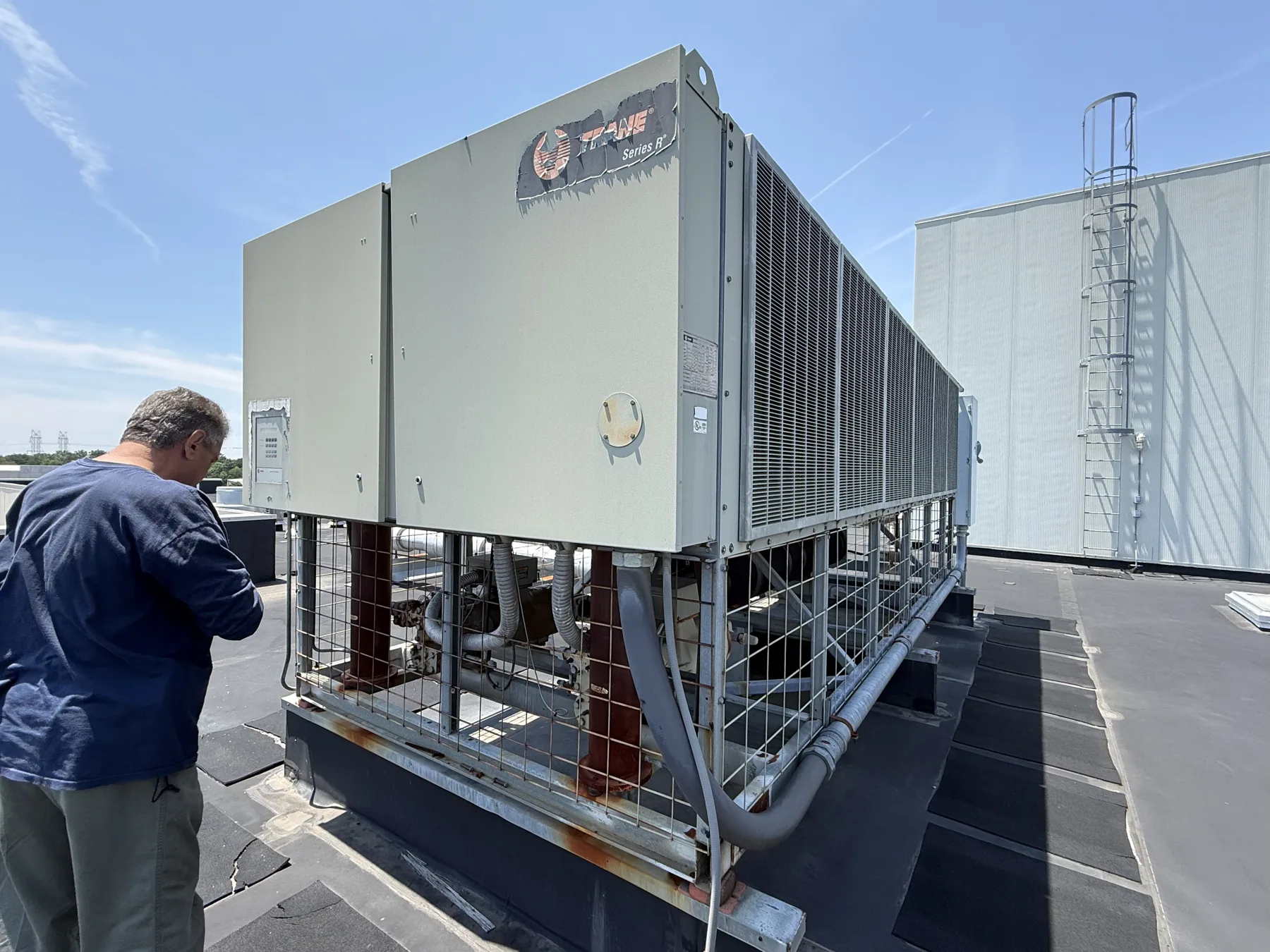


If you need to sell an air-cooled chiller in Upshur County, WV, start with the equipment you actually have, not an assumed market value or a test run. We buy commercial and industrial chillers from 20 tons to 2,000-plus tons, including air-cooled and water-cooled units. Our buying process includes cash offers and upfront payment, and a test is not required. The guidance below explains how to identify the machine and prepare for removal.
Describe your air-cooled chiller
An air-cooled chiller rejects heat through an air-facing condenser. In photographs, show the complete unit, the visible coil surfaces, fan section and control cabinet where safely accessible. Share whether the equipment is at ground level, on a raised platform or on a roof. That physical setting is important for planning removal and does not determine the offer by itself.
Read the actual plate for model, capacity and refrigerant rather than guessing from the footprint. Note any missing fan assemblies, damaged panels or parts that have been detached. Do not climb onto equipment or open an energized cabinet for a photo. We buy air-cooled chillers without requiring an operational test.
Consider the needs of a food-processing facility
A food-processing site may have hygiene, traffic or production restrictions that affect the removal route. Explain any site-specific requirements to the removal coordinator and identify whether the retired chiller served a process or a building loop, if known. Do not disturb nearby equipment for a photograph. List the machine and any components being sold separately from systems that must remain active.
Clarify equipment ownership
Before a sale is finalized, confirm who owns the chiller and who is authorized to transfer it. The building owner, tenant, property manager and maintenance contractor may have different roles. If the equipment is part of a larger replacement project, specify what is included and who controls access. Clear ownership and a named site contact prevent delays without requiring the machine to be tested.
Overhead clearance and obstacles
For equipment near low ceilings, utility lines or overhead structures, mention the constraints you can see and share existing measurements if available. Avoid approaching an electrical hazard or climbing for a better angle. The crew can plan the actual rigging around the verified conditions. A description of obstacles is useful whether the machine is inside a plant room or outside in an equipment area.
If the chiller is already retired
A unit that has been off for months or years can still be submitted. Tell us when it was last known to operate if that information exists, but do not start it merely for a sale. Describe what is connected, what has been removed and whether the site is accessible. A practical account of the present condition matters more than an unsupported performance claim.
Tell us how the cooling was used
A chiller might have served a building's comfort cooling, a manufacturing process or another load. That history can help explain the installation, but it does not prove the machine's present capacity or condition. Share what is known and identify any equipment that still serves an active load. If the previous use is uncertain, say so; the actual chiller plate and photographs remain useful starting points.
Coordinating a safe handoff
Share any known restrictions around active equipment and access to the chiller. We cover disconnects, refrigerant recovery, rigging, crane service when needed, loading and freight for the purchased equipment. The people coordinating the work can use the information you provide to plan the appropriate sequence. You do not need to open cabinets, break connections or attempt a lift for an initial review.
Request an offer from photos
Send the nameplate, a whole-unit photo and a short description to (614) 715-3047. Include the West Virginia location, condition and the best contact for access. We buy rather than sell chillers and can make a cash offer with upfront payment. You do not need to run a test, repair the chiller or obtain a new performance report before reaching out.
Agree on the timing
Tell us about an intended shutdown, a property handover or a date when access changes. If the timetable is tentative, describe it as tentative. A site contact can then coordinate the removal around the actual decision and operating schedule. Before work begins, make sure the equipment included and any nearby systems that remain in place are understood by the relevant parties.