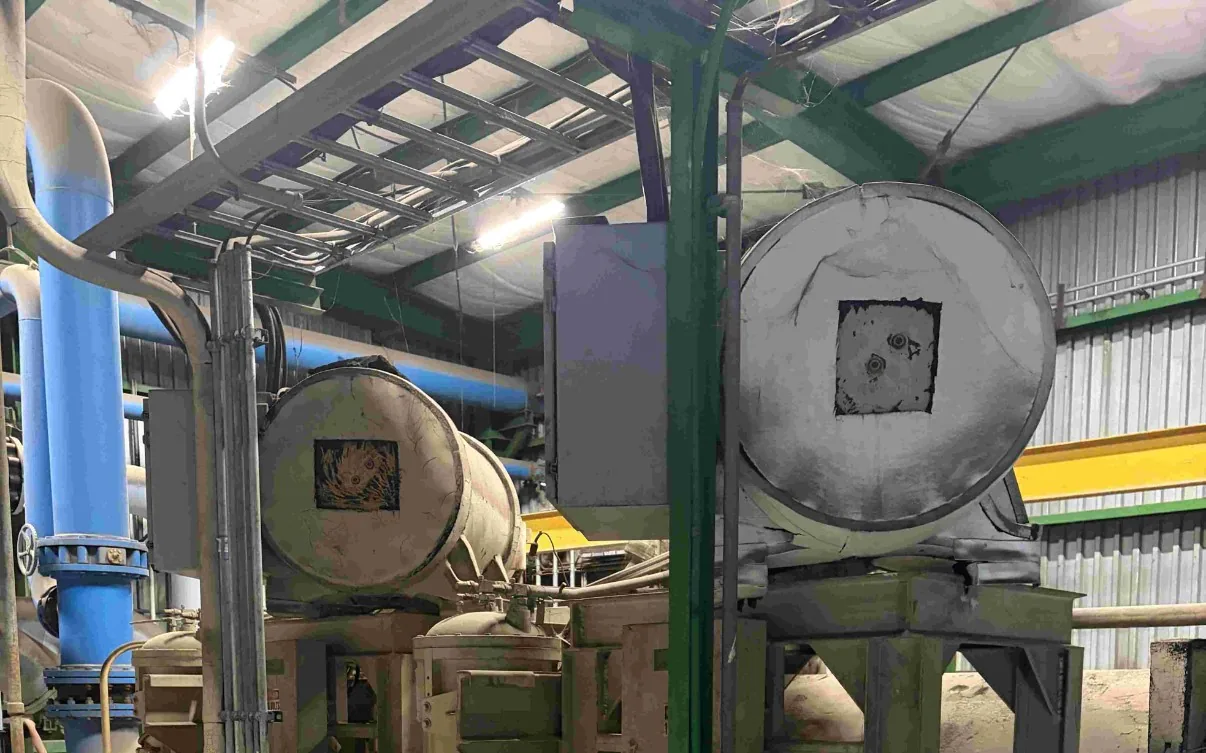

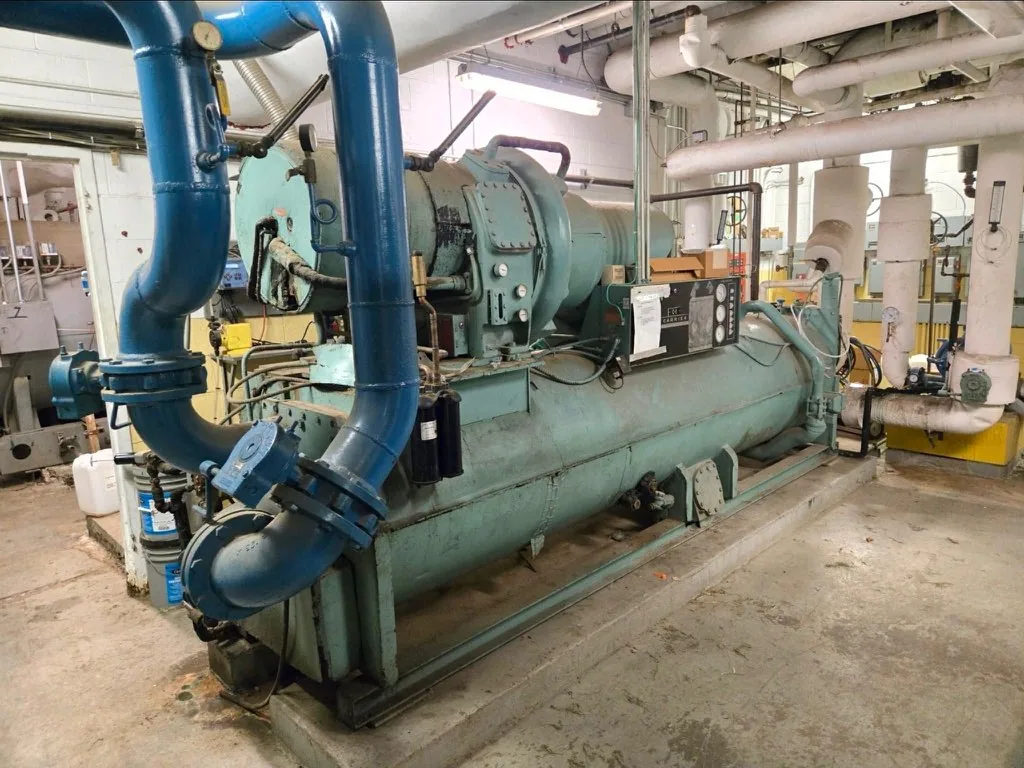
A chiller sale in Gilmer County, WV starts with a clear picture of the equipment. If you own an air-cooled chiller, tell us its location, rated capacity if known and present condition. We buy commercial and industrial air-cooled and water-cooled chillers from 20 tons to 2,000-plus tons. Cash offers and upfront payment are part of our process, and we do not require testing. The following details help the owner and site team prepare.
Describe your air-cooled chiller
An air-cooled chiller rejects heat through an air-facing condenser. In photographs, show the complete unit, the visible coil surfaces, fan section and control cabinet where safely accessible. Share whether the equipment is at ground level, on a raised platform or on a roof. That physical setting is important for planning removal and does not determine the offer by itself.
Read the actual plate for model, capacity and refrigerant rather than guessing from the footprint. Note any missing fan assemblies, damaged panels or parts that have been detached. Do not climb onto equipment or open an energized cabinet for a photo. We buy air-cooled chillers without requiring an operational test.
Consider the needs of a hospital
A healthcare facility may need to keep other building systems operating while one chiller is retired. Identify which machine is available and whether nearby equipment must remain accessible. If a facilities team has restrictions on noise, patient routes, work windows or contractor access, share those requirements early. The seller does not need to put the chiller back into service or run a test for us.
Use service records carefully
Existing service records can help identify modifications, shutdown history or a refrigerant change, but they may refer to a different machine in the same facility. Match records to the serial number when possible and label anything uncertain. It is fine to say that the history is unknown. Do not create a new performance report or start the chiller just to request a cash offer.
Considering a tight equipment yard
An outdoor equipment yard may contain fences, piping, curbs or other units that limit access. Take a wide picture from a safe position and note any gates or sections that cannot be disturbed. Show where the chiller ends and neighboring equipment begins. A clear boundary helps the removal discussion without assuming the machine can simply be rolled onto a truck.
Coordinating multiple chillers
A site with several chillers may want to retire them together or in stages. Identify each machine, its condition and the order in which it becomes available. Explain whether access to one unit is blocked by another and whether anything must remain in operation. Separate equipment information from schedule preferences so the sale and removal scope can be understood clearly.
Selling one unit from a larger group
When only one chiller in a group is being retired, identify it by model and serial number and mark it on a wide photograph. Explain whether other units continue to serve the building and whether the access route passes close to them. Give the removal contact an opportunity to coordinate with facility staff. The equipment sold and the equipment that remains should be clearly distinguished before work begins.
What our removal scope covers
We cover rigging, crane service when needed, disconnects, refrigerant recovery, loading and freight for the chiller we buy. That scope is intended to avoid leaving the seller to arrange the major steps separately. The method and sequence depend on the actual unit and site. Tell us about known access restrictions, nearby active equipment and any relevant facility requirements at the outset.
How the cash offer works
Text current photos and the machine's basic details to (614) 715-3047. We buy chillers; we do not sell replacement equipment. We review the information and can make a cash offer, with upfront payment for a purchase. No operational testing is required. If the model, capacity or condition is uncertain, tell us rather than delaying the conversation or guessing.
Be clear about the equipment history
If you know the chiller was modified, damaged or taken out of service, say so and provide the available records. Unknown is an acceptable answer when a prior owner or contractor handled the work. Avoid assuming that a recent repair applies to every component in a multi-unit plant. The buyer can review what is documented without asking for a new operating test.