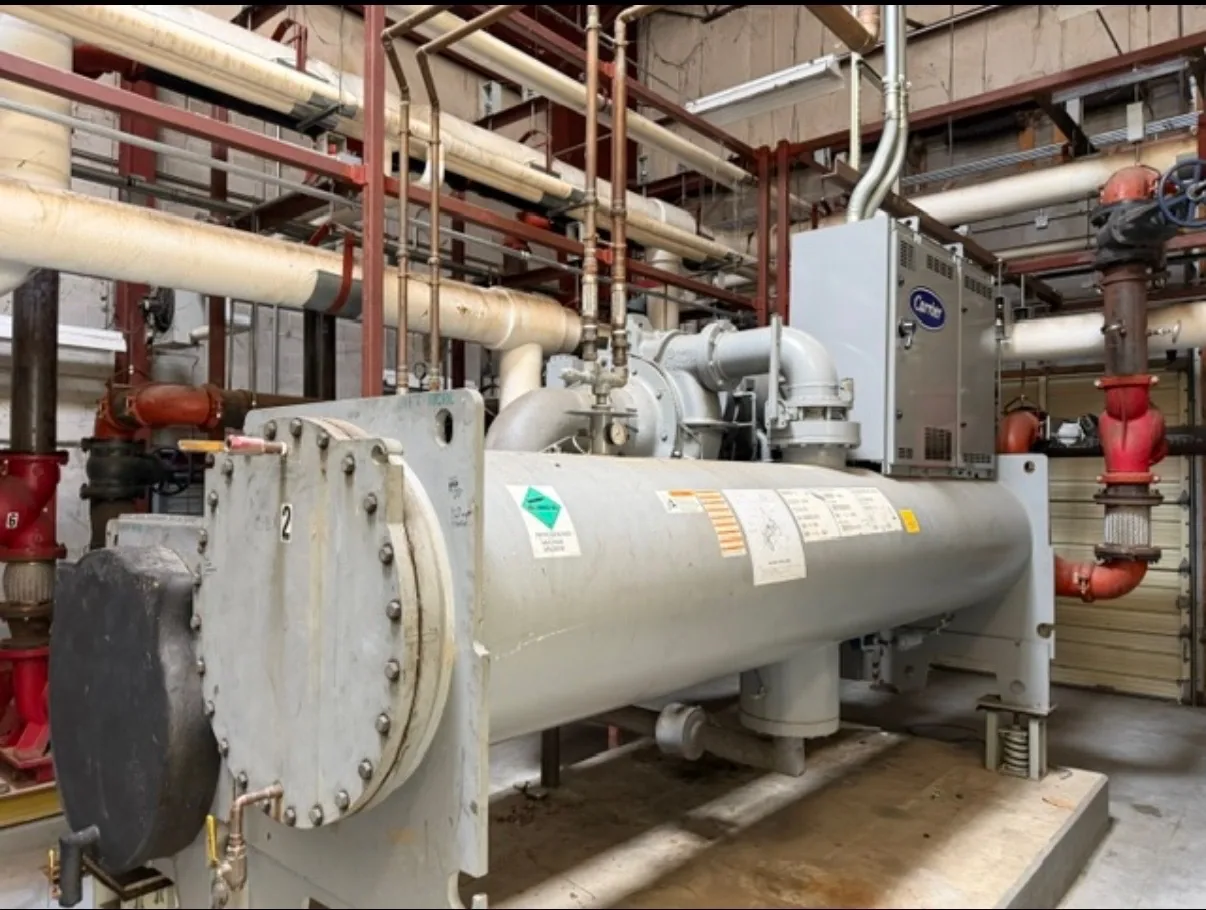
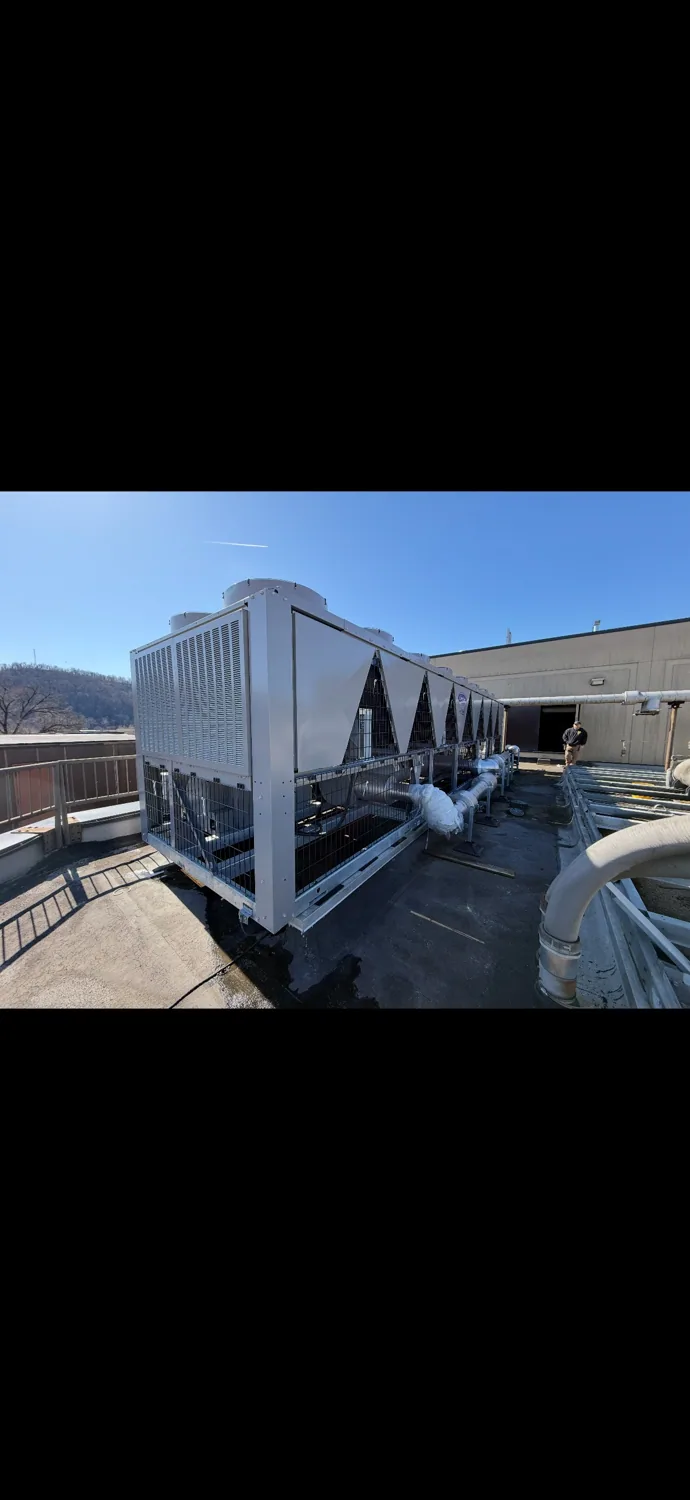
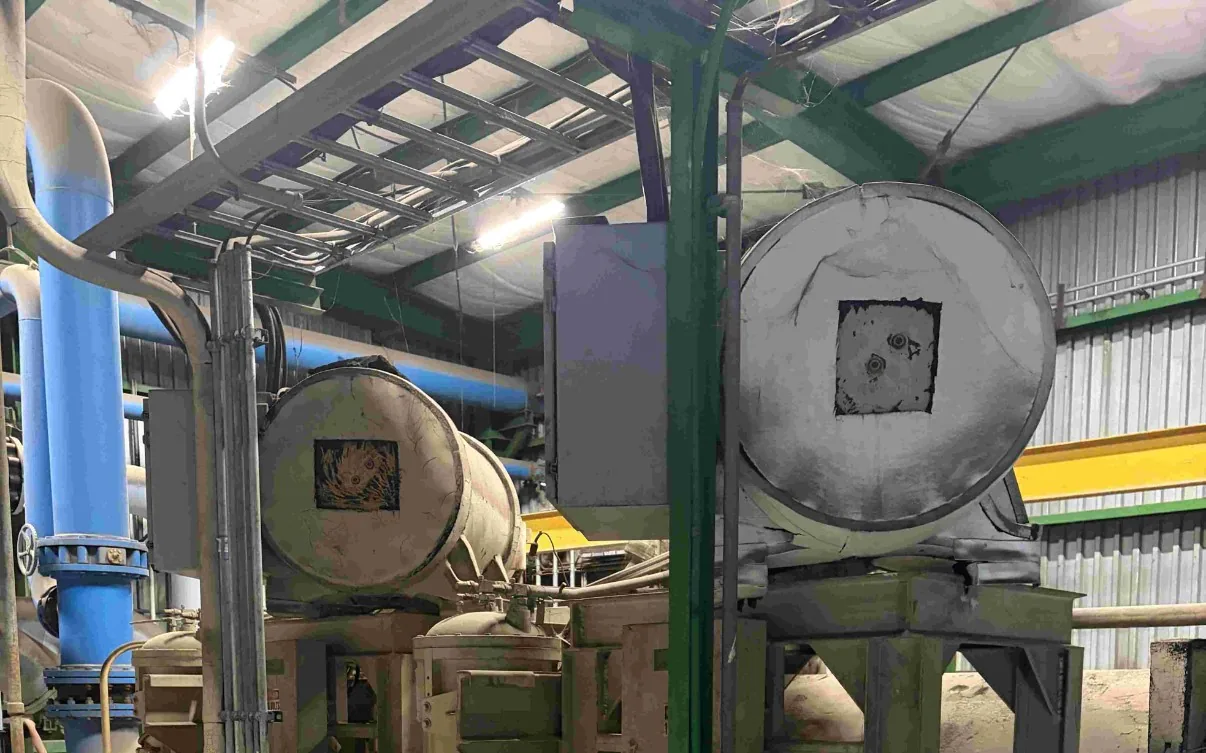
Finding a buyer for an air-cooled chiller in Marshall County, WV should not require restarting the machine just to demonstrate it. We buy industrial and commercial chillers from 20 tons to 2,000-plus tons, including air-cooled and water-cooled units. We make cash offers, provide upfront payment and do not require testing. A few current photographs and an honest description of the equipment and site are a useful place to begin.
Describe your air-cooled chiller
An air-cooled chiller rejects heat through an air-facing condenser. In photographs, show the complete unit, the visible coil surfaces, fan section and control cabinet where safely accessible. Share whether the equipment is at ground level, on a raised platform or on a roof. That physical setting is important for planning removal and does not determine the offer by itself.
Read the actual plate for model, capacity and refrigerant rather than guessing from the footprint. Note any missing fan assemblies, damaged panels or parts that have been detached. Do not climb onto equipment or open an energized cabinet for a photo. We buy air-cooled chillers without requiring an operational test.
Consider the needs of a food-processing facility
A food-processing site may have hygiene, traffic or production restrictions that affect the removal route. Explain any site-specific requirements to the removal coordinator and identify whether the retired chiller served a process or a building loop, if known. Do not disturb nearby equipment for a photograph. List the machine and any components being sold separately from systems that must remain active.
Identify each machine separately
For a multi-unit sale, give each chiller a simple number and use the same number on its plate, overall photo and condition notes. Tell us whether capacities are individual ratings or a combined figure. An existing inventory is helpful, but a short handwritten list can work too. Separate identification lets the discussion focus on the equipment actually being offered.
Planning a roof lift
If the chiller is on a roof, provide its location on the building, a safe overall photo and any known route from the street or yard. Mention parapets, overhead obstructions and areas that must remain open. The actual lift method depends on the machine and site; do not try to move a unit yourself. We cover the crane when needed as part of the coordinated removal.
If the chiller is already retired
A unit that has been off for months or years can still be submitted. Tell us when it was last known to operate if that information exists, but do not start it merely for a sale. Describe what is connected, what has been removed and whether the site is accessible. A practical account of the present condition matters more than an unsupported performance claim.
Read capacity and electrical information separately
Tons describe cooling capacity, while a motor or electrical rating describes a different characteristic. Do not convert an electrical number into a chiller capacity by assumption. If the plate lists several values and you are unsure which applies, send a clear photo rather than choosing one. For a plant with multiple machines, distinguish the individual unit's rating from any aggregate capacity shown on a building schedule.
What to tell the removal coordinator
Identify the chiller's location, the site contact and any restrictions on working hours or the route to a truck. We cover rigging, a crane when needed, disconnects, refrigerant recovery, loading and freight. Existing measurements or drawings are useful, but do not guess at the weight. The removal method is planned for the actual machine and verified site conditions.
From first photos to an offer
Show the equipment as it is and send the pictures to (614) 715-3047. Add the model, rated tons and refrigerant if known, plus a short note about access. We are a chiller buyer and make cash offers with upfront payment. We do not require operational testing and do not sell replacement chillers. An accurate description helps keep the transaction focused.
Keep the right contacts together
The person who can authorize a sale is not always the person who can open the equipment room. Provide a contact for ownership decisions and, if different, a site contact for entry and work coordination. Note any requirements for notifying building occupants. That simple handoff is especially useful when a chiller is being removed from a property that continues to operate.