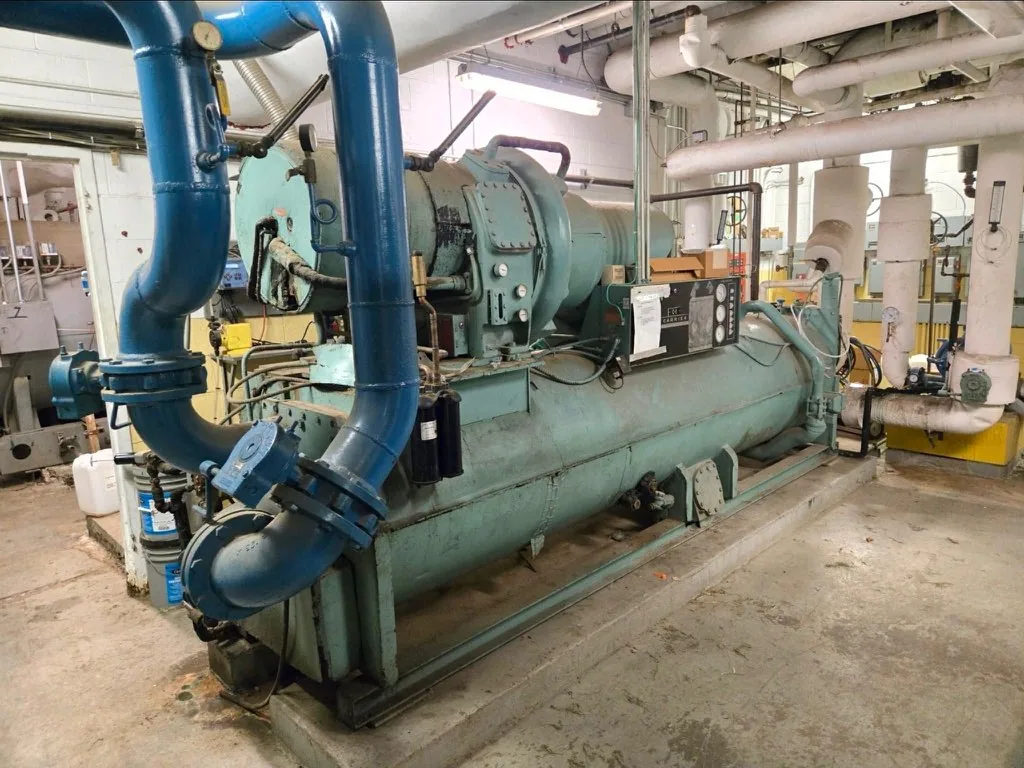
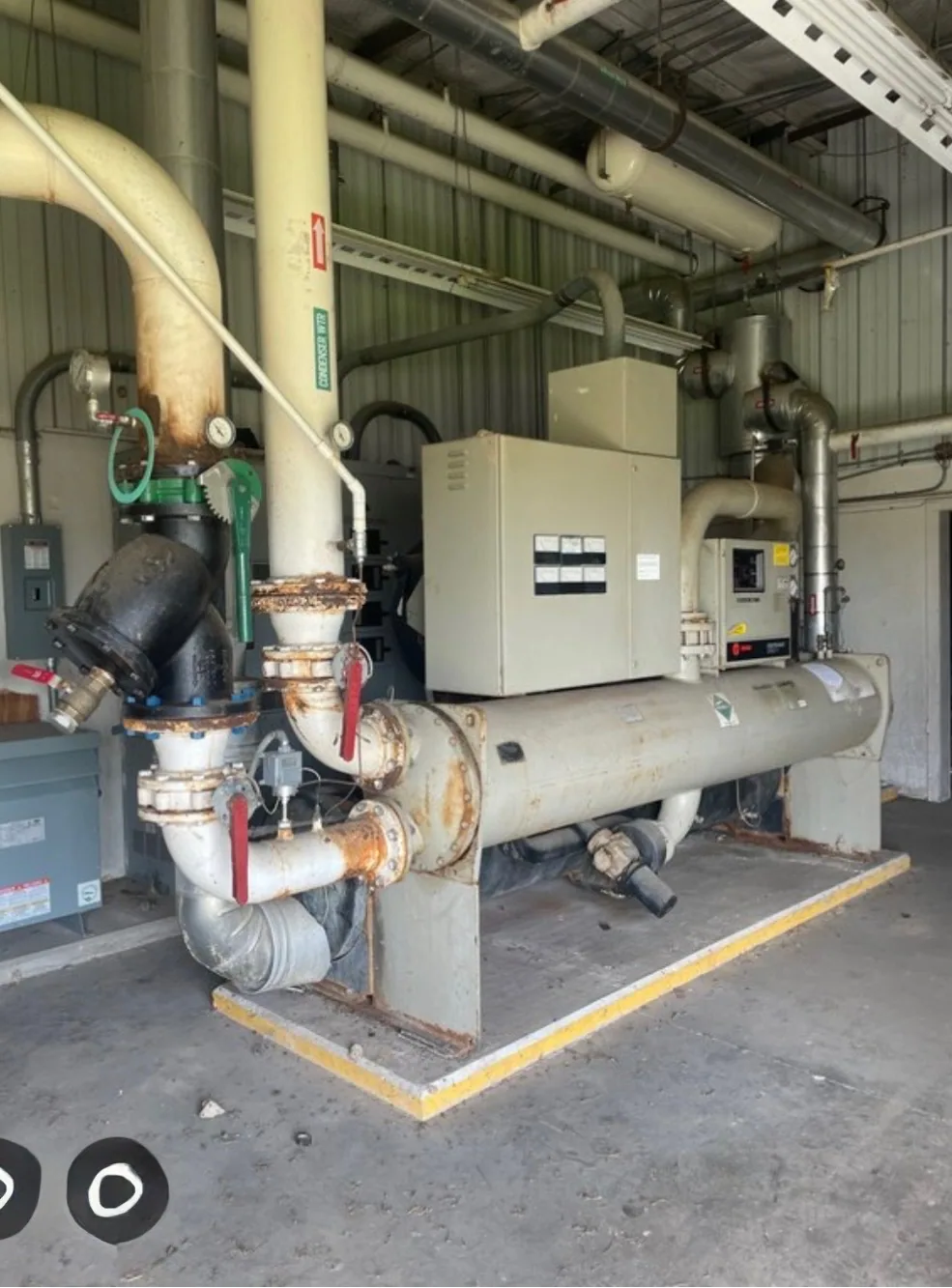
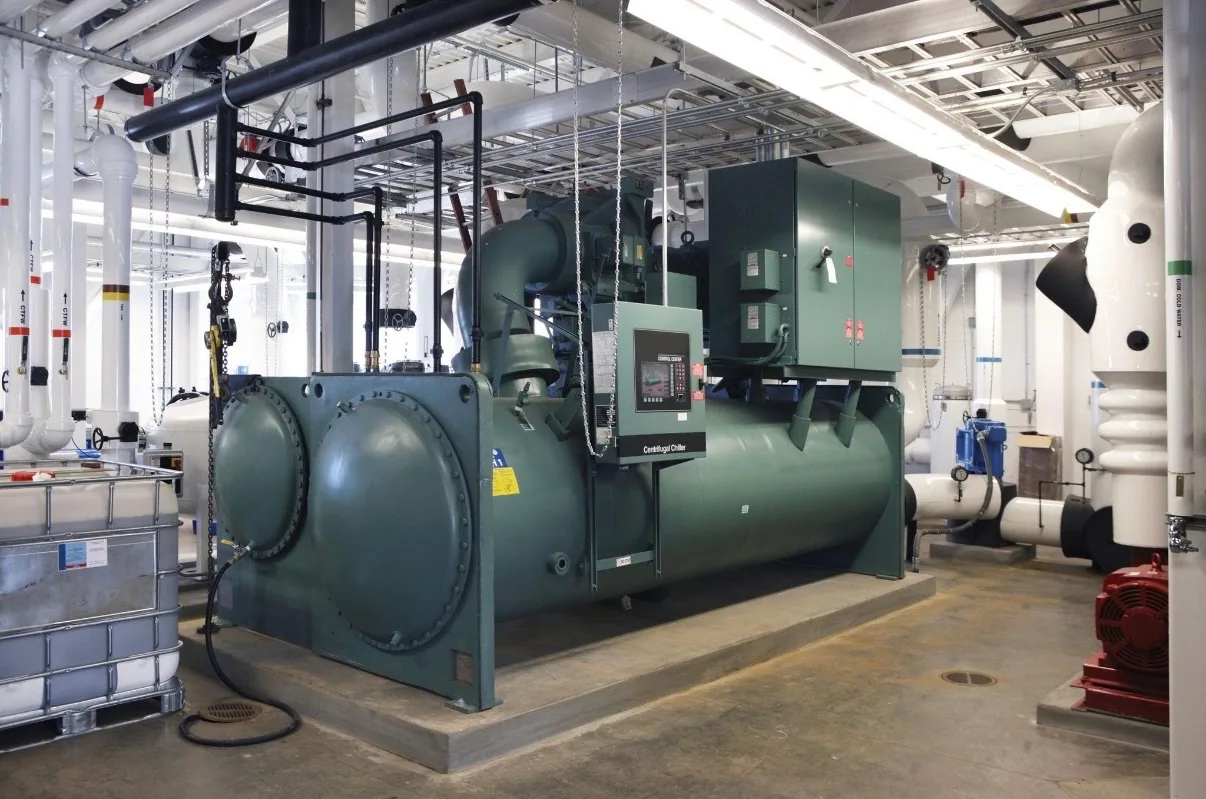
There is no need to restart a chiller to ask about selling an air-cooled chiller in Lincoln County, WV. We buy industrial and commercial chillers between 20 tons and 2,000-plus tons, including water-cooled and air-cooled equipment. We make cash offers and provide upfront payment, with no test required. Existing photos, identification and information about the site can help define the equipment and prepare for a practical removal discussion.
Describe your air-cooled chiller
An air-cooled chiller rejects heat through an air-facing condenser. In photographs, show the complete unit, the visible coil surfaces, fan section and control cabinet where safely accessible. Share whether the equipment is at ground level, on a raised platform or on a roof. That physical setting is important for planning removal and does not determine the offer by itself.
Read the actual plate for model, capacity and refrigerant rather than guessing from the footprint. Note any missing fan assemblies, damaged panels or parts that have been detached. Do not climb onto equipment or open an energized cabinet for a photo. We buy air-cooled chillers without requiring an operational test.
Consider the needs of a hotel
For a hotel or other occupied lodging property, flag guest areas, delivery hours and any access routes that must remain open. A roof or mechanical-room location can affect how the unit leaves, so include a safe photograph of the surroundings. The previous cooling load does not need to be calculated to start a sale. Existing equipment identification and a practical access contact are more useful.
Use service records carefully
Existing service records can help identify modifications, shutdown history or a refrigerant change, but they may refer to a different machine in the same facility. Match records to the serial number when possible and label anything uncertain. It is fine to say that the history is unknown. Do not create a new performance report or start the chiller just to request a cash offer.
Raised platforms and supports
A chiller on a platform or structural support may require a different approach from one sitting at ground level. Send an overall view and note the approximate elevation if known. Describe nearby stairs, railings or openings without loosening anything yourself. The appropriate rigging and crane plan depends on the actual installation, including its weight, support and available clearance.
If several departments are involved
A disposal decision may involve facilities, accounting and the property owner. Agree on the equipment being sold and appoint one contact to collect the model details and photographs. A second contact can coordinate site access if necessary. That division keeps the equipment description separate from the logistics and helps prevent a removed component from being mistaken for something still needed.
If parts have already been removed
A partially dismantled chiller can still be described for a purchase discussion. Make a simple list of components that remain on the machine, items stored separately and parts that are missing or not for sale. Label the corresponding photos and provide the equipment location. There is no need to reassemble or operate it to request an offer. Accurate scope helps the buyer understand what would actually be collected.
A practical removal discussion
An offer discussion can include the equipment's current location and how a crew could reach it. We cover rigging, crane service when needed, disconnects, refrigerant recovery, loading and freight. Let us know about occupied spaces, gates, plant-room doors or roof access, as applicable. The actual plan will depend on the unit and site, not an assumed standard procedure.
Contact the buyer directly
For a cash offer, text photos and a description of your chiller to (614) 715-3047. We buy industrial chillers from 20 tons to 2,000-plus tons and provide upfront payment for a purchase. We do not ask for an operational test and do not sell chillers. Mention the equipment's location, condition and any known removal constraints in your first message.
Protect the active operation
If other equipment must remain in service, show which chiller is being sold and tell the site coordinator what cannot be interrupted. Do not make assumptions about shared connections from appearance alone. Facility staff can provide existing drawings and explain operational boundaries. The removal plan should address the actual installation rather than treating every machine in a plant as independent.