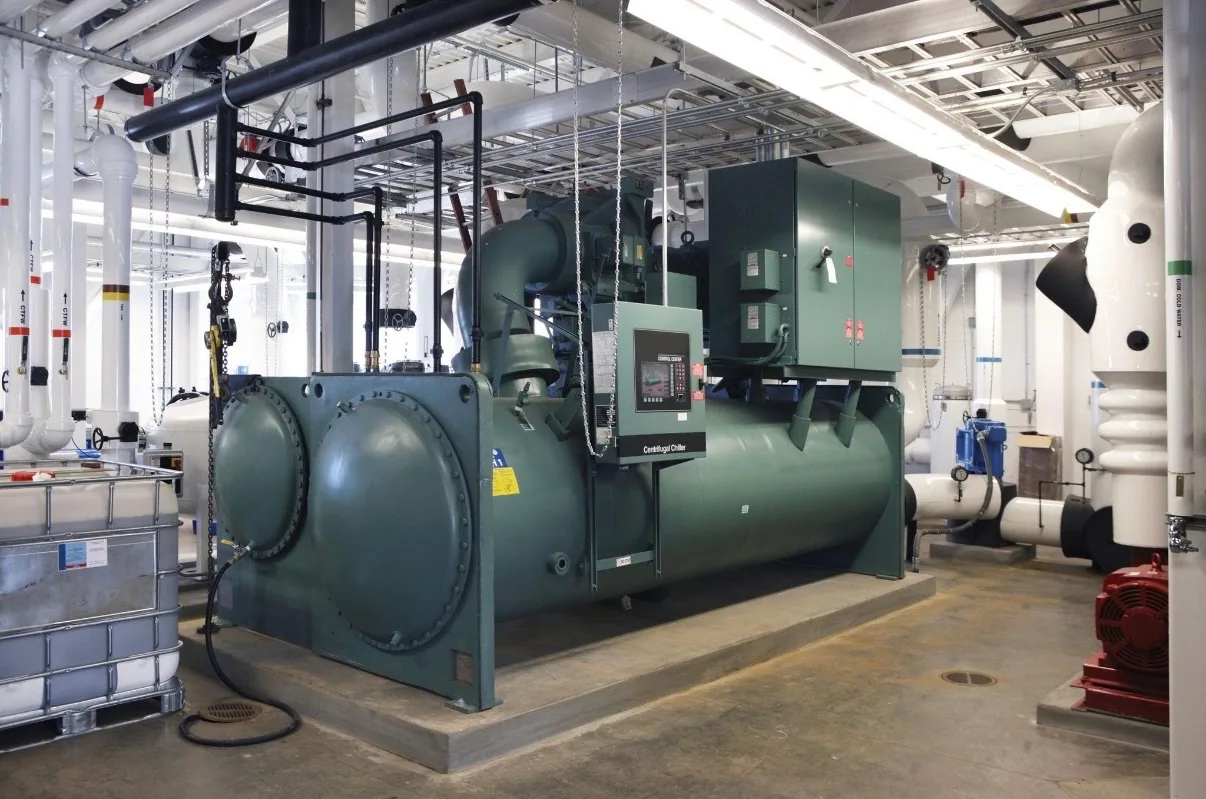


Facilities in Jackson County, WV can contact us about selling an air-cooled chiller, even if the machine has already been retired. We buy air-cooled and water-cooled industrial chillers from 20 tons to 2,000-plus tons and provide cash offers and upfront payment. Testing is not required. Explain the machine's condition and what is included, then identify any access needs so the covered removal can be coordinated around the actual site.
Describe your air-cooled chiller
An air-cooled chiller rejects heat through an air-facing condenser. In photographs, show the complete unit, the visible coil surfaces, fan section and control cabinet where safely accessible. Share whether the equipment is at ground level, on a raised platform or on a roof. That physical setting is important for planning removal and does not determine the offer by itself.
Read the actual plate for model, capacity and refrigerant rather than guessing from the footprint. Note any missing fan assemblies, damaged panels or parts that have been detached. Do not climb onto equipment or open an energized cabinet for a photo. We buy air-cooled chillers without requiring an operational test.
Consider the needs of a manufacturing facility
At a manufacturing site, a chiller may have served either the building or a production process. Tell us what it cooled if known, but do not assume that its prior duty establishes its current condition. A production calendar, restricted loading area or clearance around adjacent lines can shape the removal schedule. Mark any equipment that must stay in place and identify the person coordinating site access.
Separate capacity from plant totals
Capacity is useful only when its scope is clear. A building schedule may show the combined capacity of several chillers, while the sale may include just one. Send the individual machine rating if available and identify any uncertainty. If there are several units, number them and photograph each plate. This avoids mistaking a plant total for the size of a single chiller.
Working from a mechanical room
An interior plant room calls for a look at more than the equipment footprint. Describe doors, corridor turns and changes in floor level between the chiller and the outside, if known. Indicate whether nearby equipment must stay in service. Existing drawings and a few safe photographs can help the removal team plan; you do not need to cut a path or dismantle the machine before asking for an offer.
If several departments are involved
A disposal decision may involve facilities, accounting and the property owner. Agree on the equipment being sold and appoint one contact to collect the model details and photographs. A second contact can coordinate site access if necessary. That division keeps the equipment description separate from the logistics and helps prevent a removed component from being mistaken for something still needed.
Read capacity and electrical information separately
Tons describe cooling capacity, while a motor or electrical rating describes a different characteristic. Do not convert an electrical number into a chiller capacity by assumption. If the plate lists several values and you are unsure which applies, send a clear photo rather than choosing one. For a plant with multiple machines, distinguish the individual unit's rating from any aggregate capacity shown on a building schedule.
From connection points to freight
We cover the disconnects, refrigerant recovery, rigging, crane work when needed, loading and freight for the purchased chiller. If the machine is connected to a shared system, identify the equipment that stays and explain any operating restrictions. The crew can plan around the real installation; the seller does not need to take apart piping or electrical connections to request an offer.
Sell the chiller as it sits
Whether the machine is operating, shut down or partially dismantled, explain its actual state and text photos to (614) 715-3047. We are buyers, not equipment resellers offering units to this site's visitors. Our process starts with a cash offer and provides upfront payment for a purchase; operational testing is not required. Identify missing components so the offer discussion reflects what is available.
Bring existing information, not a test
A manufacturer plate, existing service record or clear photograph can answer many initial questions. You do not need to commission a report or start the chiller to establish an operating history. Send what you have, label estimates and explain missing information. Once the equipment and access are understood, the offer and covered removal can be coordinated with the appropriate owner and site contact.