Selling a water-cooled chiller in Parkersburg, WV begins with a clear description of the unit and the place where it sits. We purchase industrial and commercial chillers from 20 tons to 2,000-plus tons, both air-cooled and water-cooled. You can request a cash offer without testing, and purchases include upfront payment. Use the guidance below to gather existing details and think through the site requirements before the equipment leaves.
Describe your water-cooled chiller
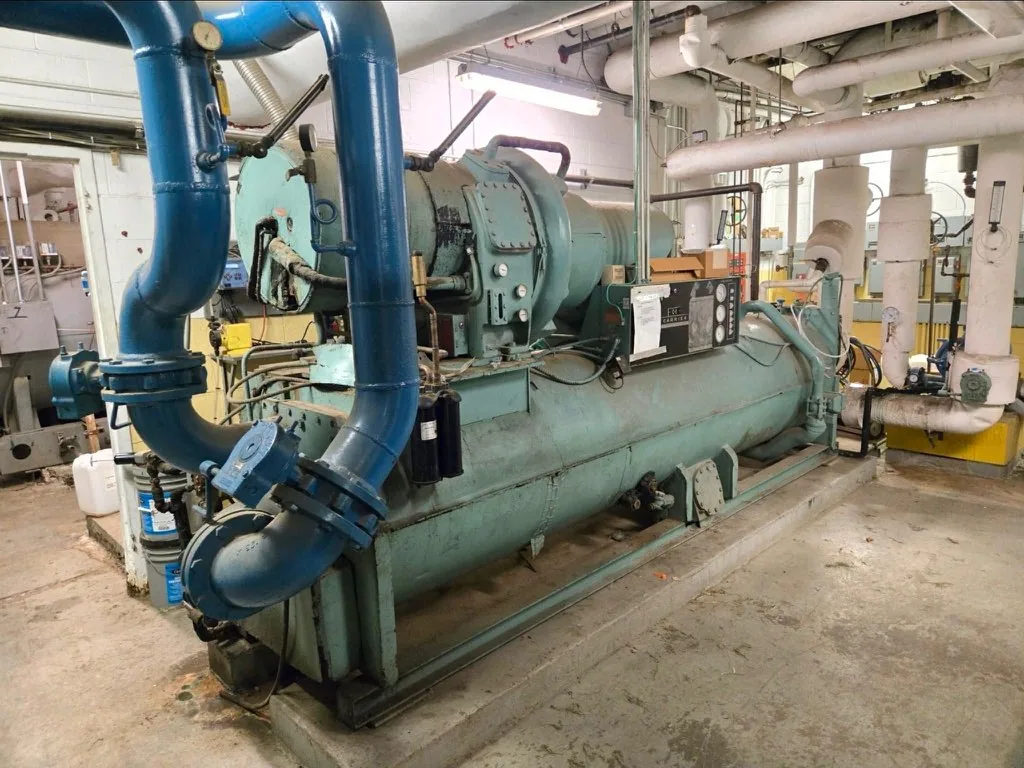
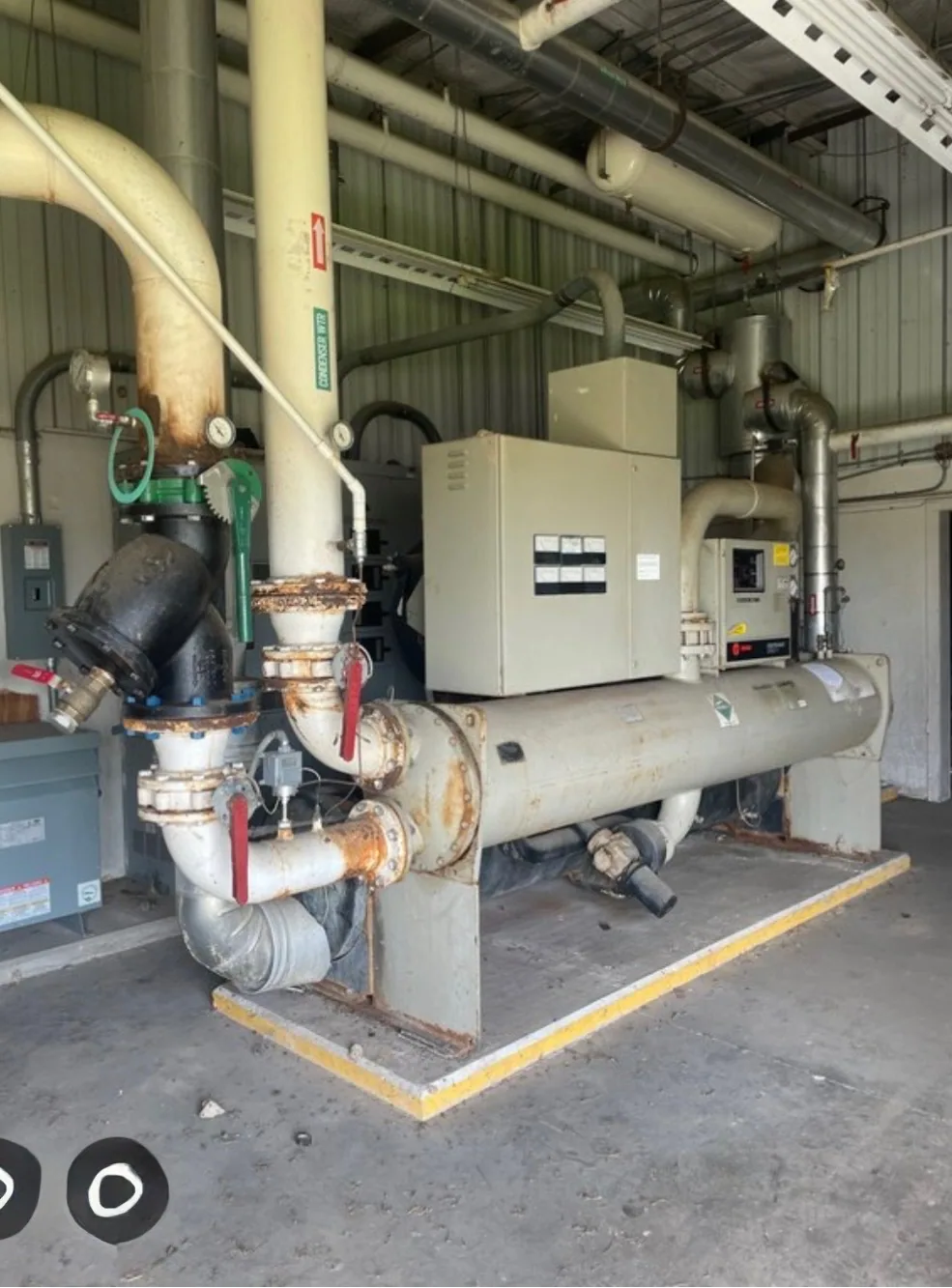
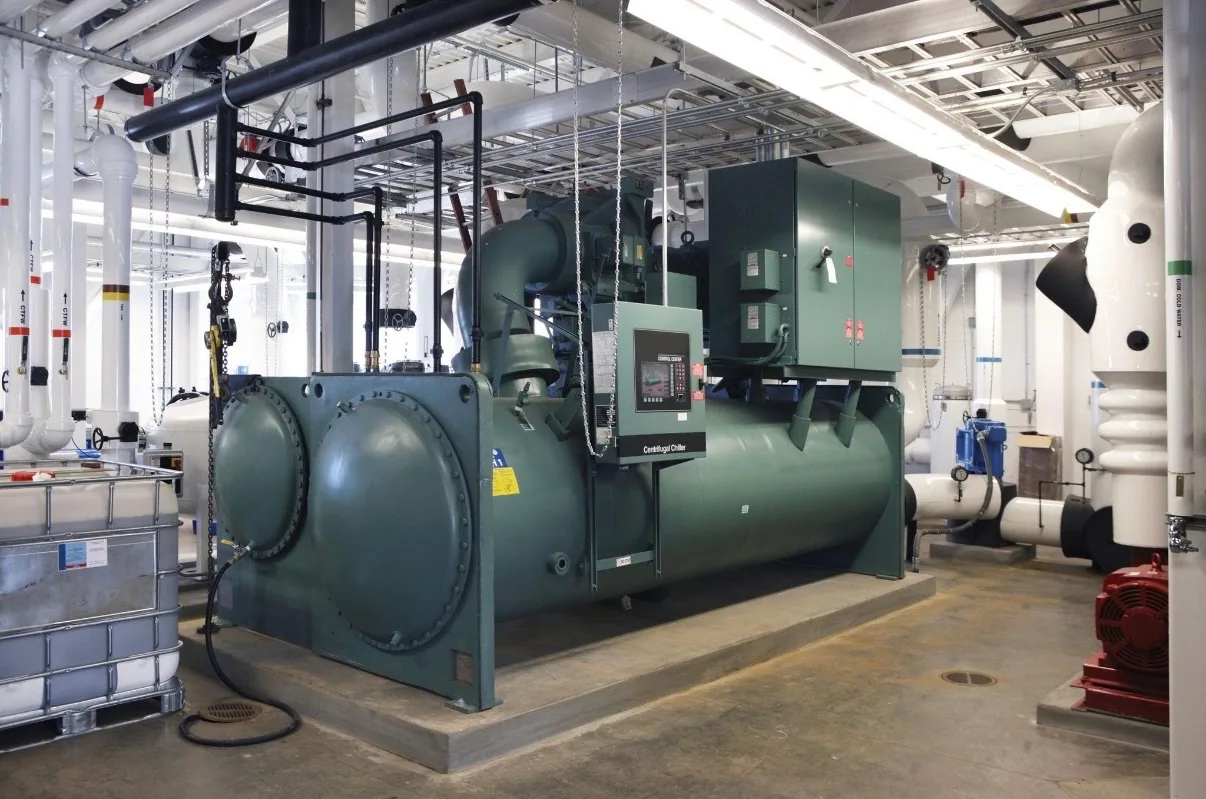
A water-cooled chiller typically connects to a separate condenser-water system as well as the chilled-water circuit. For the sale, identify the chiller itself and explain which associated items, if any, are included. A wide photo of the machine and its connections is more helpful than assuming that every pump, tower or pipe in the plant is part of the transaction.
Record the plate information if it is accessible, and note whether the unit is still connected or has already been isolated. The location of the equipment room, the opening out of the building and the space around the machine all influence the removal plan. There is no requirement to operate the unit for an offer.
Consider the needs of a manufacturing facility
At a manufacturing site, a chiller may have served either the building or a production process. Tell us what it cooled if known, but do not assume that its prior duty establishes its current condition. A production calendar, restricted loading area or clearance around adjacent lines can shape the removal schedule. Mark any equipment that must stay in place and identify the person coordinating site access.
When the plate is hard to read
A faded or inaccessible plate should not lead you to make up a model or capacity. Provide a safe photo of what is visible, plus any drawing, invoice or maintenance record you already have. Tell us which details are estimates. Another person familiar with the plant may be able to identify the machine, but no one should enter a hazardous area merely to gather information.
Raised platforms and supports
A chiller on a platform or structural support may require a different approach from one sitting at ground level. Send an overall view and note the approximate elevation if known. Describe nearby stairs, railings or openings without loosening anything yourself. The appropriate rigging and crane plan depends on the actual installation, including its weight, support and available clearance.
Coordinating with a facility manager
The person selling the equipment may not be the person with the keys or the site drawings. Introduce a facilities contact who can explain where the chiller is, which systems remain active and when the work can take place. Keep the initial photo set simple and avoid sharing sensitive access codes. Detailed site arrangements can be coordinated directly once the equipment is identified.
Describe the route without guessing the lift
A roof, equipment yard or interior plant room can each present different constraints. Note the location, accessible openings and nearby obstructions if you know them, and provide safe wide-angle photographs. Do not estimate a crane size or lift weight from the chiller's appearance. Those decisions depend on verified equipment and site details. We cover rigging and crane service when needed as part of the removal.
Coordinating a safe handoff
Share any known restrictions around active equipment and access to the chiller. We cover disconnects, refrigerant recovery, rigging, crane service when needed, loading and freight for the purchased equipment. The people coordinating the work can use the information you provide to plan the appropriate sequence. You do not need to open cabinets, break connections or attempt a lift for an initial review.
A straightforward seller conversation
Start by texting (614) 715-3047 with the manufacturer, model, capacity if known, location and a few photos. We buy industrial and commercial chillers and can make a cash offer with upfront payment. The machine does not have to be operating, and no operational test is required. We do not sell chillers; this service is for owners who want to sell theirs.
Protect the active operation
If other equipment must remain in service, show which chiller is being sold and tell the site coordinator what cannot be interrupted. Do not make assumptions about shared connections from appearance alone. Facility staff can provide existing drawings and explain operational boundaries. The removal plan should address the actual installation rather than treating every machine in a plant as independent.