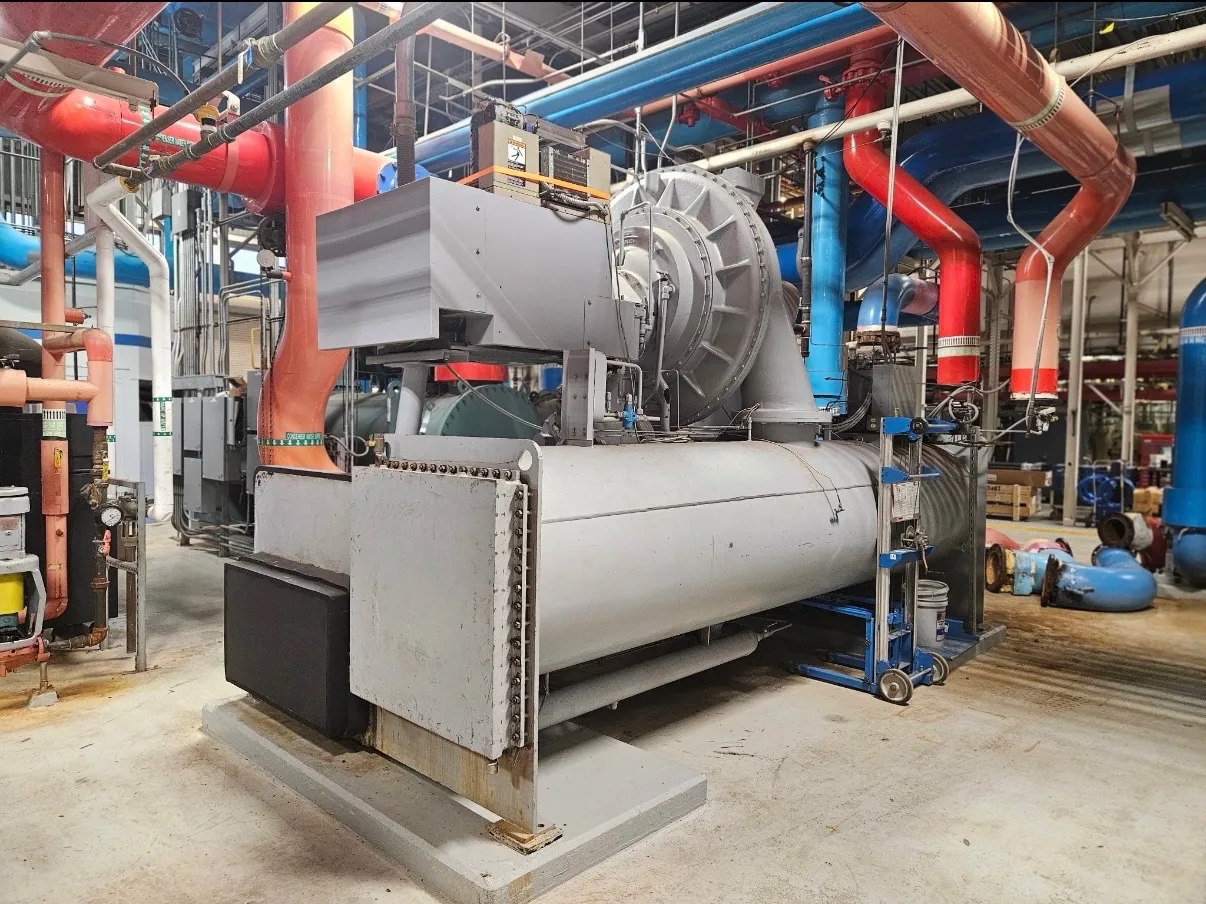
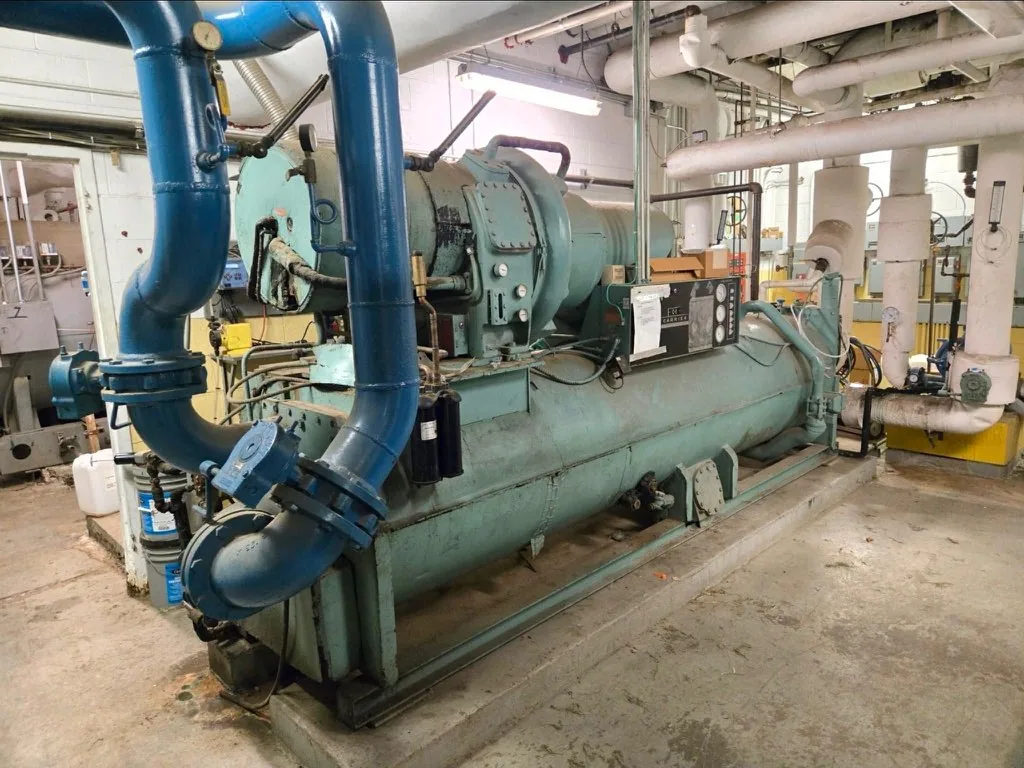
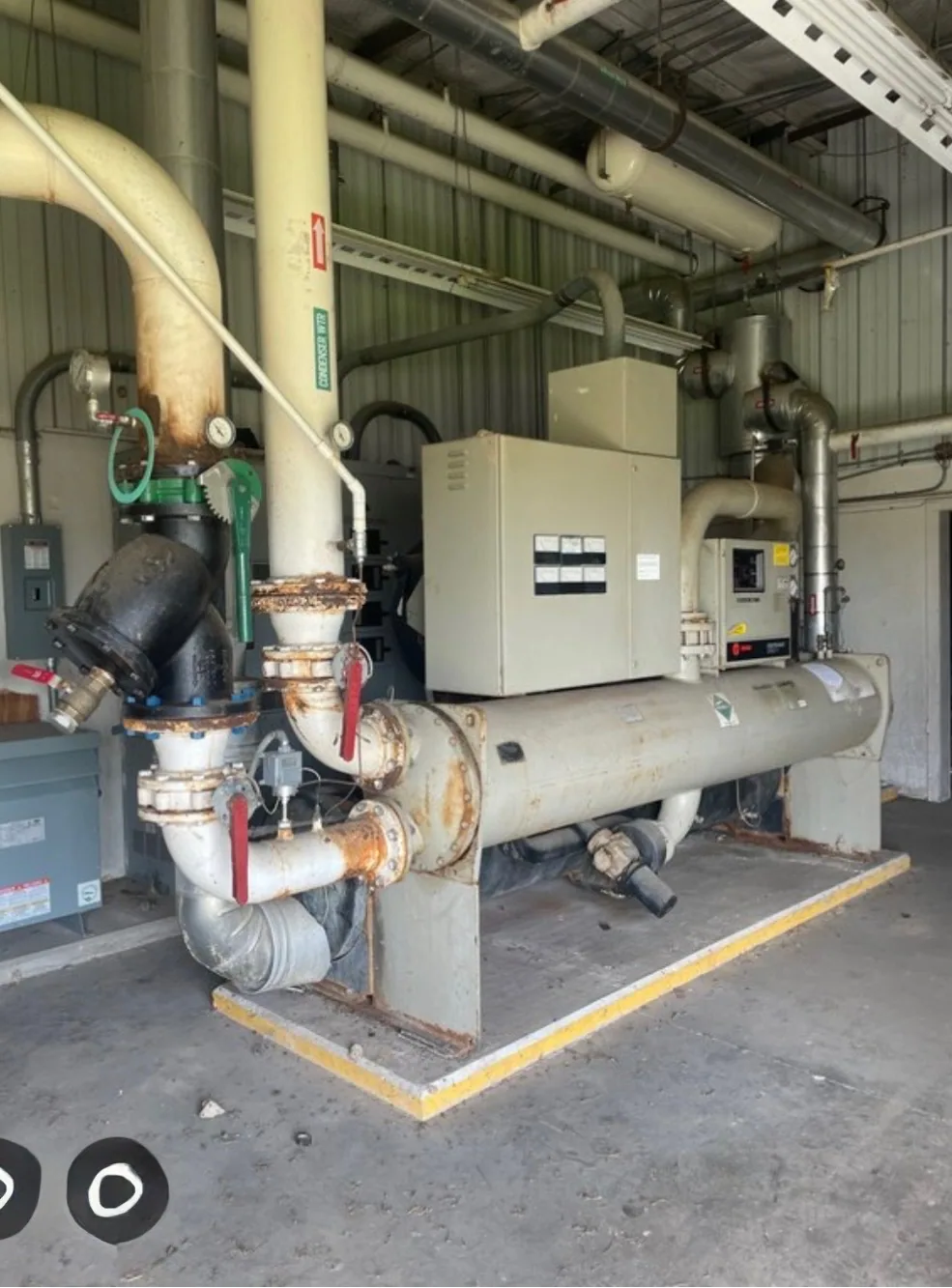
A chiller sale in Wirt County, WV starts with a clear picture of the equipment. If you own a used chiller, tell us its location, rated capacity if known and present condition. We buy commercial and industrial air-cooled and water-cooled chillers from 20 tons to 2,000-plus tons. Cash offers and upfront payment are part of our process, and we do not require testing. The following details help the owner and site team prepare.
A practical way to sell a retired chiller
An industrial chiller can be available because a plant is being modernized, a property is changing hands or a machine has already been shut down. Whatever the reason, identify the actual unit rather than the entire cooling plant. Photograph the manufacturer plate, the machine and its surroundings. If several chillers are present, explain which one the owner intends to sell.
We buy air-cooled and water-cooled chillers from 20 tons to 2,000-plus tons. Running condition is not a prerequisite for asking about a sale, and no operational test is required. Describe the known condition, any missing pieces and the unit's location so the initial conversation can address the real equipment.
Consider the needs of a hotel
For a hotel or other occupied lodging property, flag guest areas, delivery hours and any access routes that must remain open. A roof or mechanical-room location can affect how the unit leaves, so include a safe photograph of the surroundings. The previous cooling load does not need to be calculated to start a sale. Existing equipment identification and a practical access contact are more useful.
Separate capacity from plant totals
Capacity is useful only when its scope is clear. A building schedule may show the combined capacity of several chillers, while the sale may include just one. Send the individual machine rating if available and identify any uncertainty. If there are several units, number them and photograph each plate. This avoids mistaking a plant total for the size of a single chiller.
Checking the loading area
A truck-accessible loading area is useful information even when the chiller itself is indoors. Note dock height, gate width if known, vehicle restrictions and whether another tenant controls the approach. These are planning questions, not a request for the seller to arrange transport. We cover loading and freight and coordinate the practical route with the site contact after reviewing the equipment.
Preparing without extra work
There is no need to clean, repair or restart a chiller just to begin a conversation. Gather existing pictures and the information you can safely read, then describe the location and condition. Tell us about known deadlines and the person responsible for access. We can review the machine without operational testing and coordinate the covered removal services as part of the transaction.
Know the difference between idle and disconnected
A chiller can be shut down while still connected to electrical power, piping or other building systems. Conversely, an equipment tag saying disconnected does not describe which components remain with the machine. Tell us what is known and share existing work records if available. Do not open a cabinet or disconnect anything to investigate; the removal coordinator can plan the work around the actual starting condition.
What our removal scope covers
We cover rigging, crane service when needed, disconnects, refrigerant recovery, loading and freight for the chiller we buy. That scope is intended to avoid leaving the seller to arrange the major steps separately. The method and sequence depend on the actual unit and site. Tell us about known access restrictions, nearby active equipment and any relevant facility requirements at the outset.
What to send for a cash offer
A nameplate photo, a view of the entire unit and a description of its present condition are a good start. Text them to (614) 715-3047 along with the city or county and a contact name. We buy chillers, provide upfront payment for a purchase and do not require operational testing. If you have more than one machine, label each photo set separately.
Keep the right contacts together
The person who can authorize a sale is not always the person who can open the equipment room. Provide a contact for ownership decisions and, if different, a site contact for entry and work coordination. Note any requirements for notifying building occupants. That simple handoff is especially useful when a chiller is being removed from a property that continues to operate.