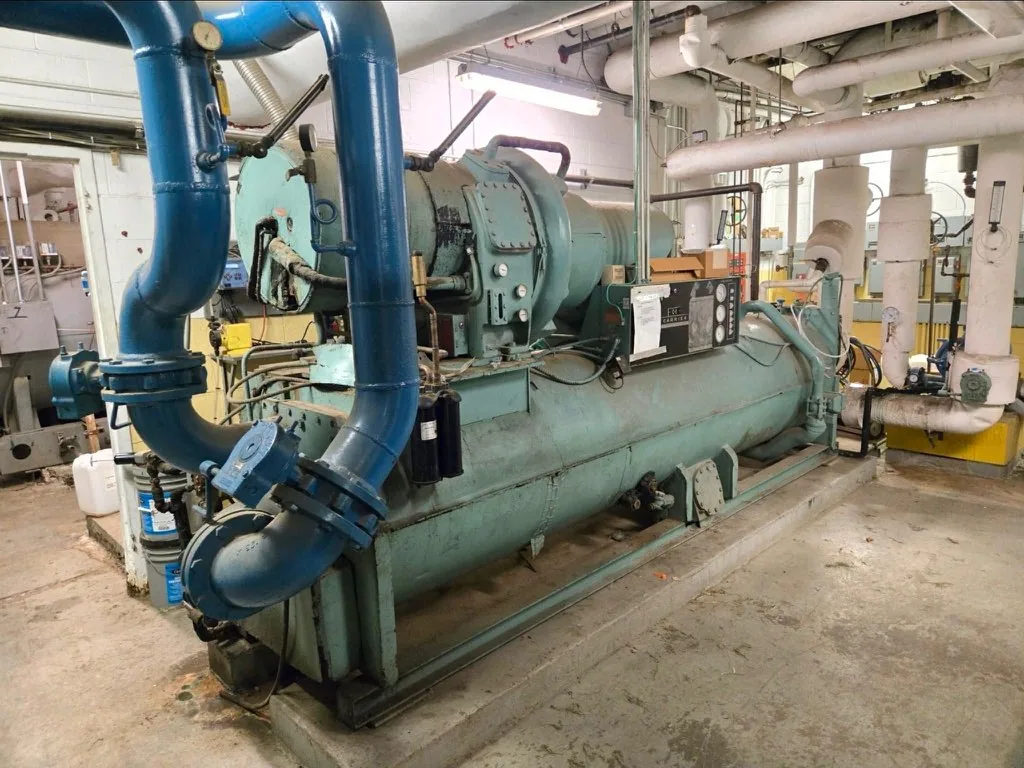


Finding a buyer for a used chiller in Weirton, WV should not require restarting the machine just to demonstrate it. We buy industrial and commercial chillers from 20 tons to 2,000-plus tons, including air-cooled and water-cooled units. We make cash offers, provide upfront payment and do not require testing. A few current photographs and an honest description of the equipment and site are a useful place to begin.
Separate the chiller from the rest of the plant
A cooling plant can contain chillers, pumps, controls and other equipment owned by different parties or serving different loads. Identify the exact chiller for sale and flag what needs to remain. A marked photograph and the unit's model plate can make that distinction clear. Describe any components that were removed before the sale discussion.
Our buying range covers air-cooled and water-cooled industrial chillers from 20 tons to 2,000-plus tons. A machine need not be running, and an operational test is not required. Existing records are useful when available, but current information about the actual equipment is equally important.
Consider the needs of an office building
At an occupied office building, decide which chiller is included and whether an active tenant, parking area or loading dock affects access. The facilities team can flag building rules and the best contact for coordinating work. A photograph of the machine and its plate is more valuable than trying to estimate how much office space it once cooled. An operational demonstration is not needed.
Document a partially dismantled unit
If the chiller was partly dismantled before you contacted us, describe what remains and where the removed parts are located. Send current pictures of both the machine and any components included in the sale. You do not need to reassemble the equipment for review. The important point is to distinguish the actual available items from parts that are missing or staying at the property.
Access through a shared building
When an exit route passes through common space, identify who controls that space and whether there are access hours or tenant restrictions. Elevators, corridors and doors can be relevant, but their suitability cannot be determined without the actual dimensions and site review. Do not promise a route based on an old drawing alone. A current photo and the right building contact are a good beginning.
Coordinating with a facility manager
The person selling the equipment may not be the person with the keys or the site drawings. Introduce a facilities contact who can explain where the chiller is, which systems remain active and when the work can take place. Keep the initial photo set simple and avoid sharing sensitive access codes. Detailed site arrangements can be coordinated directly once the equipment is identified.
Account for building operations
A building does not have to be empty to sell a chiller, but ongoing operations may affect the work window. Consider deliveries, employees, visitors and access to other mechanical equipment. Let the facility contact describe the actual restrictions instead of assuming the removal can happen at any hour. Keeping the sale decision separate from the site's access plan makes it easier to involve the right people at the right time.
Removal without arranging separate crews
Our purchase includes covered rigging, crane service when needed, disconnects, refrigerant recovery, loading and freight. A roof installation, a crowded mechanical room and a ground-level yard may each need a different sequence. Describe the actual setting and any known facility rules. The point is to coordinate the whole removal around the equipment rather than ask the seller to organize those services independently.
What to send for a cash offer
A nameplate photo, a view of the entire unit and a description of its present condition are a good start. Text them to (614) 715-3047 along with the city or county and a contact name. We buy chillers, provide upfront payment for a purchase and do not require operational testing. If you have more than one machine, label each photo set separately.
Use one inventory for multiple units
When selling several machines, keep an inventory with the same identifiers used in your photographs. Include each unit's location, model and capacity if known, plus the related loose parts. Mark units that are not for sale. This makes it easier to coordinate a staged pickup and avoids confusing a plant-wide capacity with the equipment included in one purchase.