

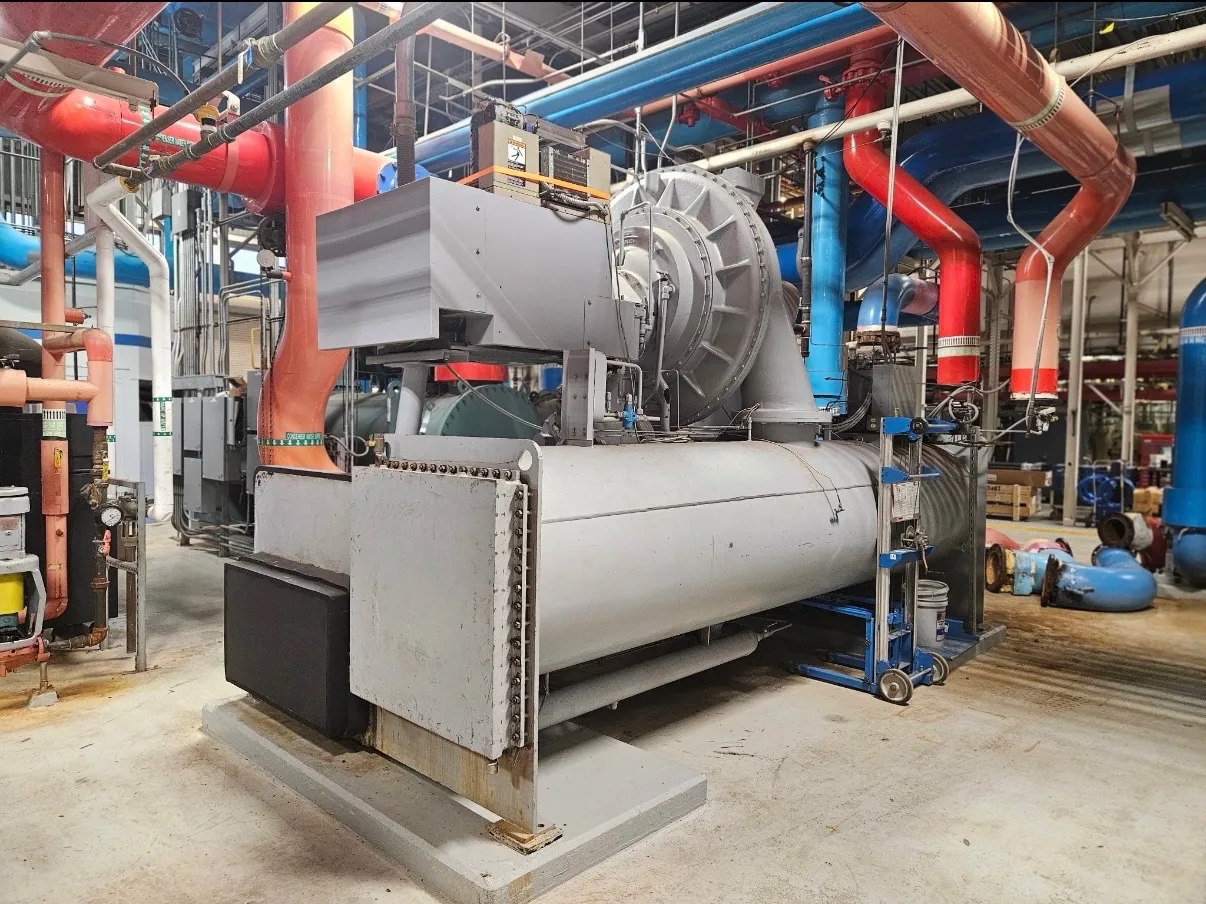
If a used chiller is scheduled for replacement or already shut down in Harrison County, WV, a sale can start with current photos and the information you have. We buy commercial and industrial air-cooled and water-cooled chillers from 20 tons to 2,000-plus tons. Our process offers upfront payment and a cash offer without requiring testing. This page covers equipment identification, facility access and the removal work we handle.
Turn existing information into an offer request
Start with information already at hand: a full-unit photograph, the equipment plate and a note about where the chiller is located. Add a current description of any damage or missing parts. If a building has multiple machines, label the one being offered. Do not enter a hazardous space or disturb connections simply to prepare a more complete file.
We buy industrial water-cooled and air-cooled chillers from 20 tons to 2,000-plus tons. Whether the equipment is connected or retired, a seller can ask for a cash offer without running an operational test. Unknown model or history details can be explained as unknown.
Consider the needs of a warehouse or distribution facility
At a warehouse or distribution facility, coordinate around loading traffic, delivery appointments and any temperature-sensitive spaces that remain in operation. Identify the chiller rather than assuming that every piece of refrigeration equipment is included. Photos should show the unit and a safe view of the surrounding route. Let the site contact explain any required separation from ongoing vehicle or pedestrian activity.
Record the present condition
Describe the equipment as it sits today: connected or disconnected, complete or partly removed, running or shut down. Note visible damage or missing pieces and distinguish what you know from what is uncertain. Photos and an honest account are more useful than promising a performance level. We can review nonrunning equipment and do not require operational testing.
Raised platforms and supports
A chiller on a platform or structural support may require a different approach from one sitting at ground level. Send an overall view and note the approximate elevation if known. Describe nearby stairs, railings or openings without loosening anything yourself. The appropriate rigging and crane plan depends on the actual installation, including its weight, support and available clearance.
Describing previous disconnection
If another contractor has already disconnected part of the chiller, explain exactly what has been done and what remains attached. Do not assume all connections were handled simply because a machine is shut down. Current photos and any available work records can help the removal team understand the starting point. We cover the required disconnects and coordinate the remaining removal work.
Describe the route without guessing the lift
A roof, equipment yard or interior plant room can each present different constraints. Note the location, accessible openings and nearby obstructions if you know them, and provide safe wide-angle photographs. Do not estimate a crane size or lift weight from the chiller's appearance. Those decisions depend on verified equipment and site details. We cover rigging and crane service when needed as part of the removal.
Removal without arranging separate crews
Our purchase includes covered rigging, crane service when needed, disconnects, refrigerant recovery, loading and freight. A roof installation, a crowded mechanical room and a ground-level yard may each need a different sequence. Describe the actual setting and any known facility rules. The point is to coordinate the whole removal around the equipment rather than ask the seller to organize those services independently.
Sell the chiller as it sits
Whether the machine is operating, shut down or partially dismantled, explain its actual state and text photos to (614) 715-3047. We are buyers, not equipment resellers offering units to this site's visitors. Our process starts with a cash offer and provides upfront payment for a purchase; operational testing is not required. Identify missing components so the offer discussion reflects what is available.
Agree on the timing
Tell us about an intended shutdown, a property handover or a date when access changes. If the timetable is tentative, describe it as tentative. A site contact can then coordinate the removal around the actual decision and operating schedule. Before work begins, make sure the equipment included and any nearby systems that remain in place are understood by the relevant parties.