
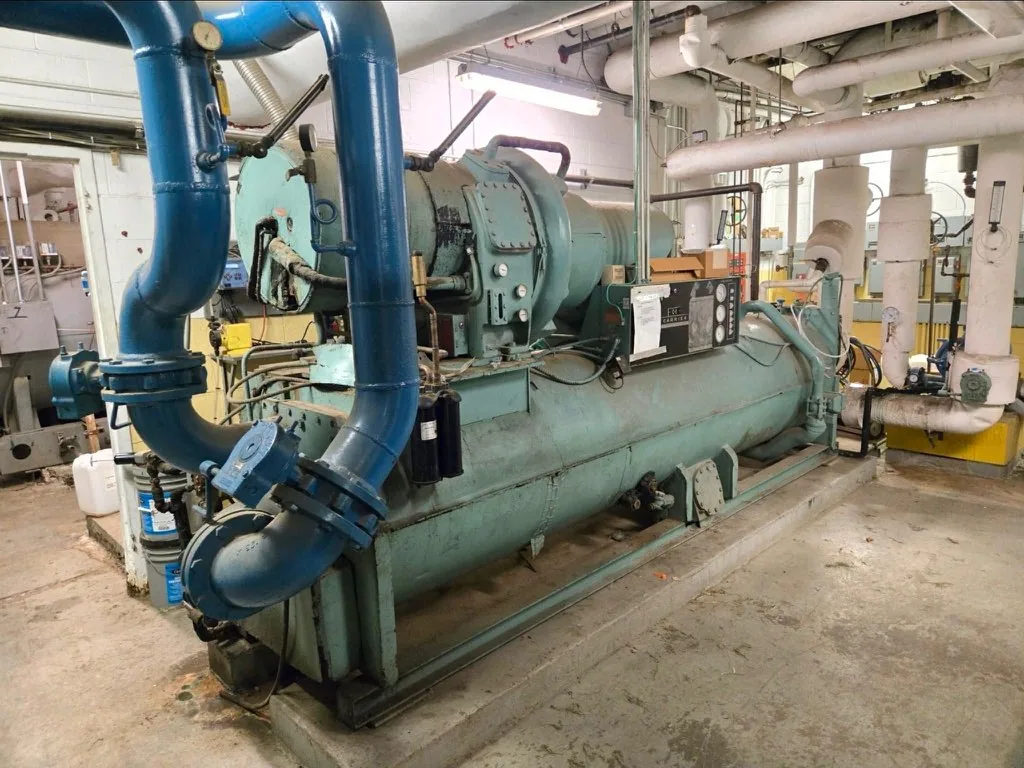
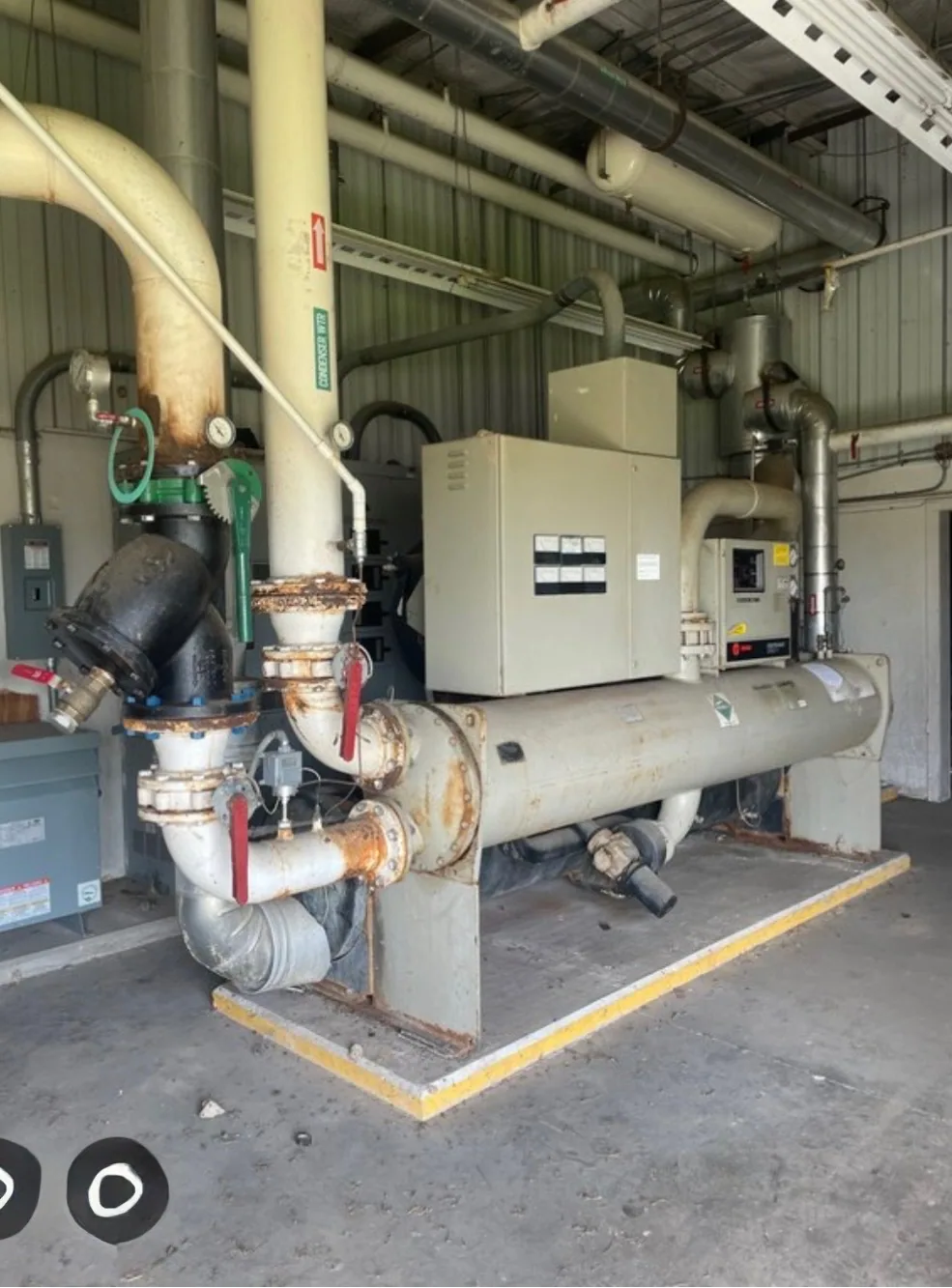
If you need to sell a chiller from a school or education facility in Beckley, WV, start with the equipment you actually have, not an assumed market value or a test run. We buy commercial and industrial chillers from 20 tons to 2,000-plus tons, including air-cooled and water-cooled units. Our buying process includes cash offers and upfront payment, and a test is not required. The guidance below explains how to identify the machine and prepare for removal.
Identify the chiller at a school or education facility
At a school or education facility, begin by identifying the specific chiller the owner wants to sell. A cooling plant may contain several machines along with pumps, controls and other equipment that are not part of the transaction. Photograph the unit, its model and serial plate, and any separate components included. Mark other systems that need to stay in place.
Share the chiller's rated capacity and whether it is air-cooled or water-cooled if known. We buy industrial and commercial chillers from 20 tons to 2,000-plus tons. An idle machine can be reviewed in its current condition; you do not need to run an operational test or produce a new performance report to start a sale conversation.
Consider the needs of a school or education facility
A school or education facility may need to coordinate work around classes, events or an unoccupied period. Identify the equipment owner and the person authorized to arrange the sale, then describe any site-entry and scheduling requirements. Note whether other chillers must remain available during the work. Those details help plan a removal without assuming that every campus has the same equipment or calendar.
Show the whole machine
A useful photo set begins with a full view, then closer pictures of the manufacturer plate, controls and any visible damage. Add a picture of the surrounding area from a safe position. If a part has already been removed, photograph it separately and say whether it is included. Pictures do not have to be polished; they need to show what is actually available.
Access around occupied operations
An occupied property may have delivery vehicles, staff movement or customer areas near the proposed route. Indicate the times or places that need special coordination and identify the person who can approve access. Photographs taken from a safe location can show the general setting. The goal is to plan the chiller removal around the real site, not assume that every facility has a clear path.
When the schedule is uncertain
You can begin with equipment details even if the exact pickup date is not yet known. Explain the decision milestones, any proposed shutdown window and who must approve access. An early discussion helps define what information is missing without forcing the site to rush a removal. The final plan should reflect the actual unit, the facility's operating needs and an agreed schedule.
Account for building operations
A building does not have to be empty to sell a chiller, but ongoing operations may affect the work window. Consider deliveries, employees, visitors and access to other mechanical equipment. Let the facility contact describe the actual restrictions instead of assuming the removal can happen at any hour. Keeping the sale decision separate from the site's access plan makes it easier to involve the right people at the right time.
One coordinated exit plan
Our covered scope includes rigging, a crane when needed, disconnects, refrigerant recovery, loading and freight. The chiller's location, weight and route determine how those tasks are coordinated. Share available dimensions and site drawings, but do not attempt to rig or lift the machine yourself. An informed site contact can help the crew understand what must remain accessible during the work.
What to send for a cash offer
A nameplate photo, a view of the entire unit and a description of its present condition are a good start. Text them to (614) 715-3047 along with the city or county and a contact name. We buy chillers, provide upfront payment for a purchase and do not require operational testing. If you have more than one machine, label each photo set separately.
Keep the right contacts together
The person who can authorize a sale is not always the person who can open the equipment room. Provide a contact for ownership decisions and, if different, a site contact for entry and work coordination. Note any requirements for notifying building occupants. That simple handoff is especially useful when a chiller is being removed from a property that continues to operate.