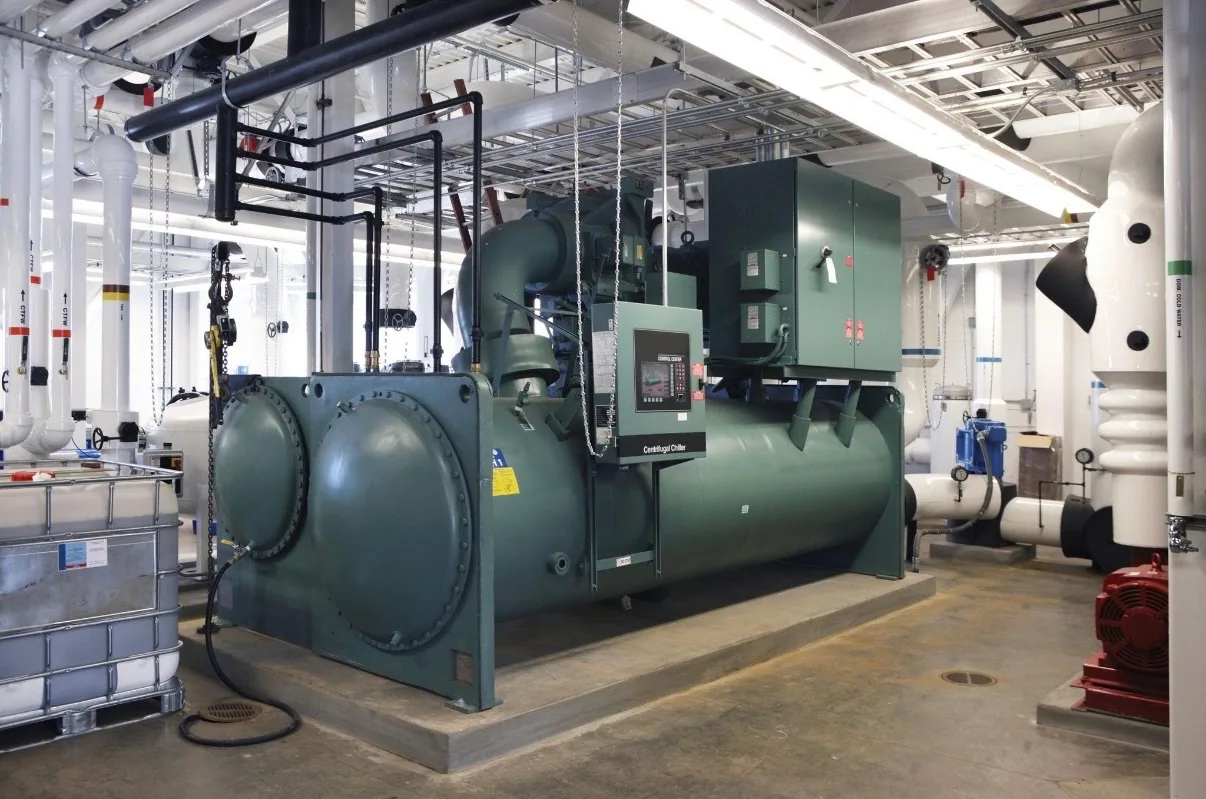
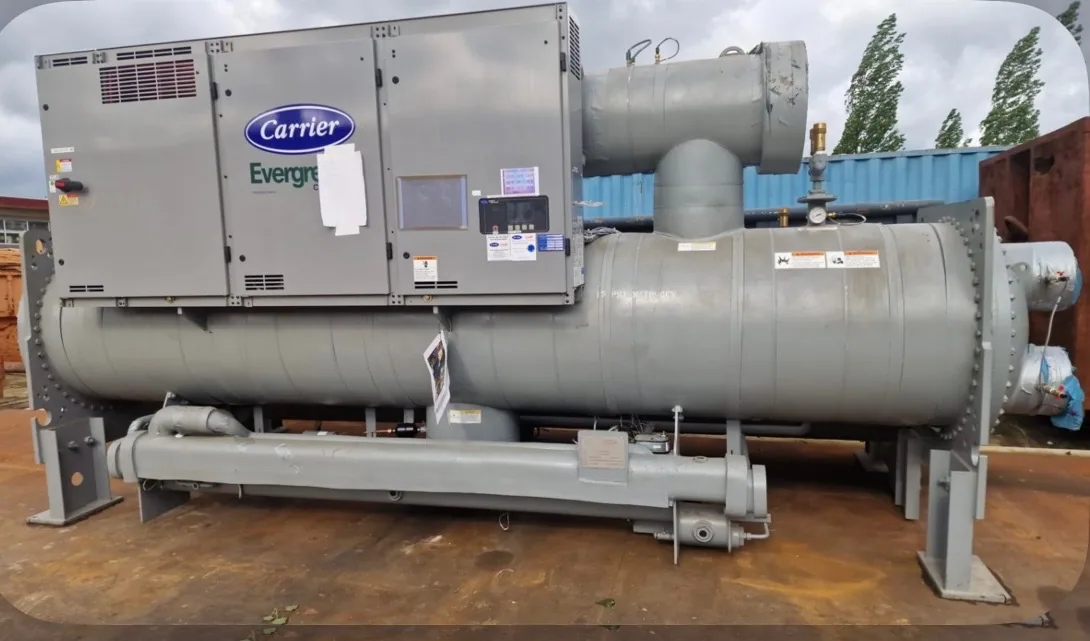
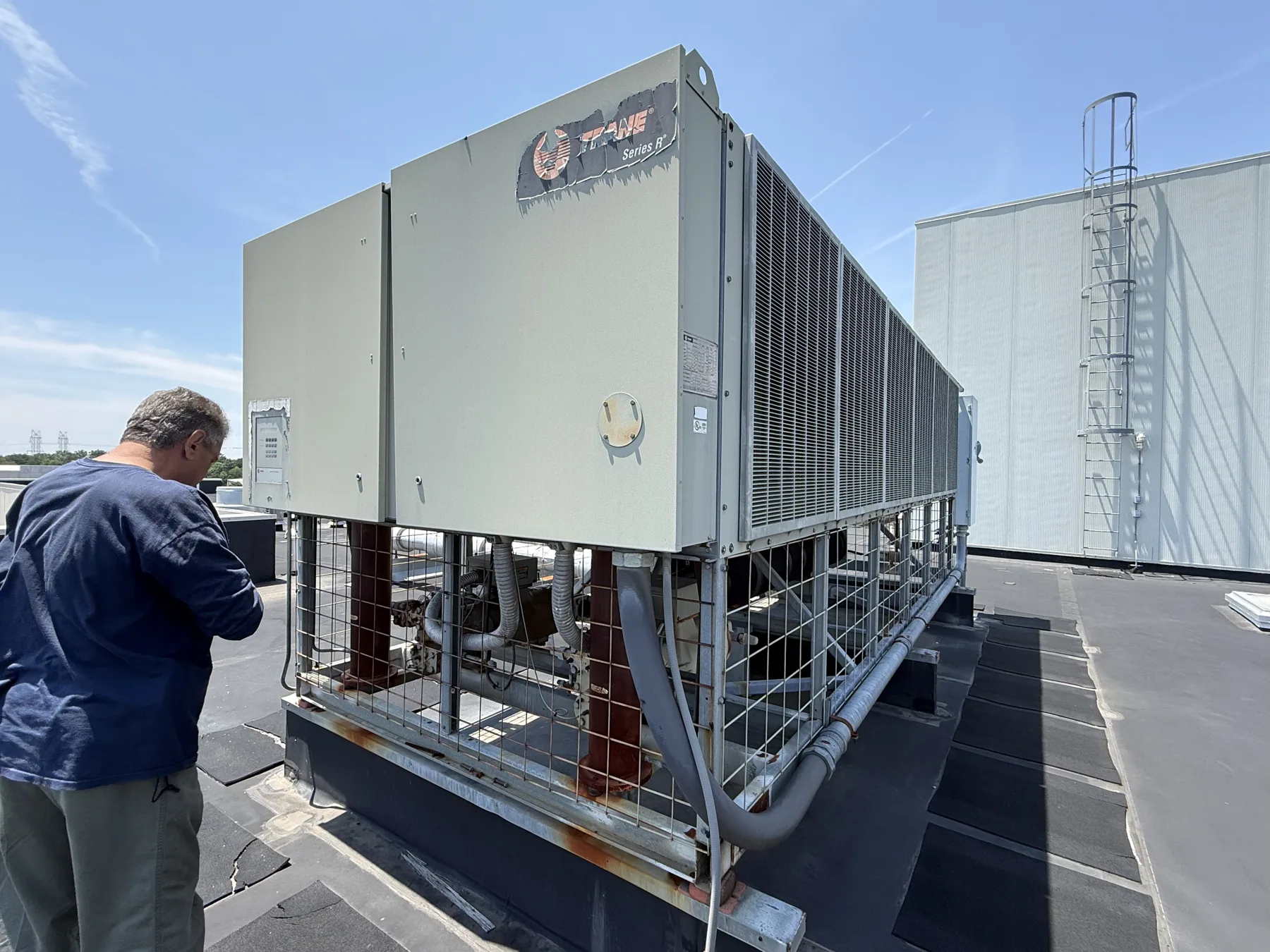
If you need to sell a commercial chiller in Wyoming County, WV, start with the equipment you actually have, not an assumed market value or a test run. We buy commercial and industrial chillers from 20 tons to 2,000-plus tons, including air-cooled and water-cooled units. Our buying process includes cash offers and upfront payment, and a test is not required. The guidance below explains how to identify the machine and prepare for removal.
Identify the chiller at a warehouse or distribution facility
At a warehouse or distribution facility, begin by identifying the specific chiller the owner wants to sell. A cooling plant may contain several machines along with pumps, controls and other equipment that are not part of the transaction. Photograph the unit, its model and serial plate, and any separate components included. Mark other systems that need to stay in place.
Share the chiller's rated capacity and whether it is air-cooled or water-cooled if known. We buy industrial and commercial chillers from 20 tons to 2,000-plus tons. An idle machine can be reviewed in its current condition; you do not need to run an operational test or produce a new performance report to start a sale conversation.
Consider the needs of a warehouse or distribution facility
At a warehouse or distribution facility, coordinate around loading traffic, delivery appointments and any temperature-sensitive spaces that remain in operation. Identify the chiller rather than assuming that every piece of refrigeration equipment is included. Photos should show the unit and a safe view of the surrounding route. Let the site contact explain any required separation from ongoing vehicle or pedestrian activity.
Clarify equipment ownership
Before a sale is finalized, confirm who owns the chiller and who is authorized to transfer it. The building owner, tenant, property manager and maintenance contractor may have different roles. If the equipment is part of a larger replacement project, specify what is included and who controls access. Clear ownership and a named site contact prevent delays without requiring the machine to be tested.
Access through a shared building
When an exit route passes through common space, identify who controls that space and whether there are access hours or tenant restrictions. Elevators, corridors and doors can be relevant, but their suitability cannot be determined without the actual dimensions and site review. Do not promise a route based on an old drawing alone. A current photo and the right building contact are a good beginning.
Coordinating multiple chillers
A site with several chillers may want to retire them together or in stages. Identify each machine, its condition and the order in which it becomes available. Explain whether access to one unit is blocked by another and whether anything must remain in operation. Separate equipment information from schedule preferences so the sale and removal scope can be understood clearly.
If parts have already been removed
A partially dismantled chiller can still be described for a purchase discussion. Make a simple list of components that remain on the machine, items stored separately and parts that are missing or not for sale. Label the corresponding photos and provide the equipment location. There is no need to reassemble or operate it to request an offer. Accurate scope helps the buyer understand what would actually be collected.
What to tell the removal coordinator
Identify the chiller's location, the site contact and any restrictions on working hours or the route to a truck. We cover rigging, a crane when needed, disconnects, refrigerant recovery, loading and freight. Existing measurements or drawings are useful, but do not guess at the weight. The removal method is planned for the actual machine and verified site conditions.
What to send for a cash offer
A nameplate photo, a view of the entire unit and a description of its present condition are a good start. Text them to (614) 715-3047 along with the city or county and a contact name. We buy chillers, provide upfront payment for a purchase and do not require operational testing. If you have more than one machine, label each photo set separately.
Keep the right contacts together
The person who can authorize a sale is not always the person who can open the equipment room. Provide a contact for ownership decisions and, if different, a site contact for entry and work coordination. Note any requirements for notifying building occupants. That simple handoff is especially useful when a chiller is being removed from a property that continues to operate.